Key Technical Points for the Construction and Management of Zhandong No. 2 Winter Jujube Greenhouses
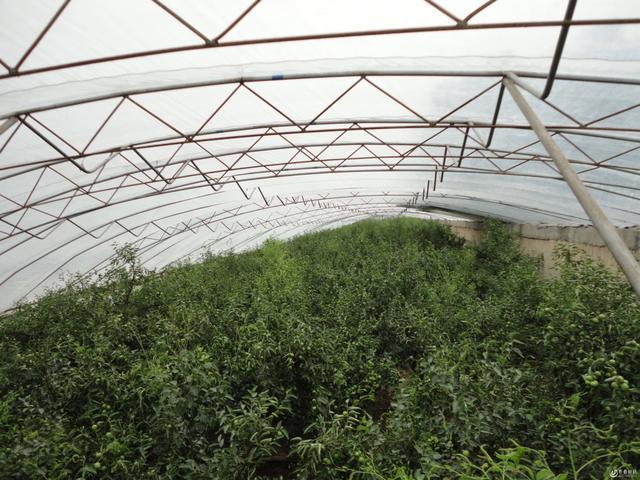
Construction and Management Techniques for Zhandong No. 2 Winter Jujube Greenhouses
"Zhandong No. 2" is a new high-quality late-maturing fresh-eating jujube variety developed through bud mutation and selective breeding from Zhanhua winter jujube. Its fruit has an attractive appearance, is rich in nutrients, and has excellent quality. However, "Zhandong No. 2" is prone to fruit cracking before harvest, its fruit surface is relatively sensitive to external stimuli and susceptible to fruit russeting, and it has poor resistance to natural disasters such as wind, rain, hail, fog, frost, snow and low temperatures [1,2]. Practice has proven that using spring-warm greenhouses for cultivation can effectively solve these problems, while also allowing the fruit to mature and reach the market appropriately earlier, improving economic returns. Therefore, exploring the greenhouse construction and management techniques for "Zhandong No. 2" to achieve high quality and efficiency for this variety can promote the large-scale production of this excellent variety.
1 Greenhouse Construction
1.1 Site Selection
Winter jujube greenhouses should be built on plots with flat terrain, convenient transportation, and good drainage and irrigation conditions, in orchards with neat layout, relatively wide row spacing, relatively young trees, relatively short tree stature, and fertile soil. To ensure the sturdiness of the greenhouse, try to avoid building greenhouses in low-lying areas prone to water accumulation or on high ridges exposed to wind gaps.
1.2 Determination of Greenhouse Orientation
Taking into overall consideration the convenience of planting, wind resistance, and light transmittance, building the greenhouse along the row direction is most conducive to management. Since the main production area of "Zhandong No. 2" - the Binzhou region of Shandong - experiences strong winds of force 7 or above mostly from the southwest, northwest, or north-northeast directions, a north-south orientation should be adopted to reduce the windward surface, increase the greenhouse's wind resistance coefficient, and increase the light-capturing area [3].
1.3 Main Structure of the Greenhouse
1.3.1 Selection of Materials
Uprights can be made of bamboo poles, cement purlins, or galvanized steel pipes; the frame can be made of bamboo poles or galvanized steel pipes.
(1) Cost
A greenhouse with an all-bamboo pole structure costs about 5,000 yuan, a greenhouse with cement purlin uprights and a bamboo pole frame costs about 7,000 yuan, a greenhouse with cement purlin uprights and a galvanized steel pipe frame costs about 10,000 yuan, and a greenhouse with an all-galvanized steel pipe structure costs 15,000-25,000 yuan.
(2) Characteristics
The all-bamboo pole structure is economical and affordable, simple in structure, easy to build, and requires little investment, but it is not durable and has poor wind resistance; the all-galvanized steel pipe structure is sturdy and durable, aesthetically pleasing, has the best light transmittance, the strongest wind resistance, and allows for the largest building space, which is beneficial both for agricultural operations and for improving winter jujube quality, but requires a relatively large one-time investment. A greenhouse with cement purlin uprights combined with a galvanized steel pipe frame has moderate cost, is sturdy and durable, and has a long service life, and is recommended for use.
1.3.2 Greenhouse Body Structure
(1) Greenhouse Height
Side columns should not be lower than the tree height, generally 2-2.5 m. Center columns should be 1-1.5 m higher than side columns, generally 3.5-4 m, so that the tree tops remain at least 1 m below the greenhouse roof, preventing sunscald of the jujube fruit caused by excessively high temperatures under the film.
(2) Greenhouse Frame Span
The general structural span should preferably be 12-15 m. Too large a span reduces the arch slope of the greenhouse or lowers the side columns, which is not conducive to light capture and wind protection. Too small a span causes greater temperature fluctuations inside the greenhouse and increases construction and management costs.
(3) Greenhouse Frame Length
Determined by the plot, preferably 60-80 m. Uprights and ground anchor cables should preferably be installed along the tree rows to facilitate fertilization, spraying, harvesting, and other field management.
(4) Greenhouse Roof Curvature
Based on the solar radiation angle, 30° provides the highest light transmittance, the fastest temperature rise in spring, the smallest wind pressure coefficient, and the sturdiest greenhouse roof.
1.3.3 Film Covering
Years of practice have proven that covering in winter for a spring greenhouse is an effective way to also prevent low-temperature freeze damage to "Zhandong No. 2," and is also what distinguishes it from ordinary greenhouse winter jujube (which is covered in February). Therefore, the covering time for "Zhandong No. 2" should be from late November to early December (before the ground freezes), and can be carried out once the forecast shows no rain, snow, or cold wave weather within the coming week.
The greenhouse film should be a drip-free film with high light transmittance and durability. Nano light-conversion grouting film is recommended (it has multiple functions such as long service life, good light transmission, heat preservation, cooling, light conversion, diffuse scattering, and pest and disease reduction). The greenhouse film should use three or four panels. In addition to leaving a skirt film of at least 1 m from the ground, it is best to set a 0.8-1 m ventilation skylight at the top of the greenhouse to facilitate raising ground temperature in the early stage and ventilation and cooling inside the greenhouse in the later stage. The greenhouse surface is the part of the greenhouse structure most easily damaged, mainly at the corners, edges, and ridge of the greenhouse surface, so focus on anti-abrasion reinforcement when covering the film.
2 Greenhouse Temperature Regulation and Ventilation Management
Because the flowers and fruit of "Zhandong No. 2" are relatively sensitive to external changes and stimuli, the most critical aspects throughout the entire growth period of "Zhandong No. 2" greenhouse cultivation are temperature control and ventilation management. Problems such as few flower buds, difficult fruit set, and low yield are mostly caused by excessively high temperatures inside the greenhouse and too aggressive ventilation. Greenhouse temperature control should grasp the basic principle of "insulation in the early stage and cooling in the later stage, raising temperature without being reluctant to lose it," and is carried out in the following 6 stages.
2.1 Film-Covered Freeze-Protection Period
From after covering the greenhouse to mid-February of the following year, only the top film is retained during this period, mainly to prevent freezing rain and freezing snow, with the skirt film kept open for ventilation for a long time to control temperature and prevent it from getting too high.
2.2 Closed-Greenhouse Bud-Forcing Period
In late February, begin focusing on closing the greenhouse for insulation, close the skirt film to rapidly raise ground temperature (covering with plastic film can be added to effectively raise ground temperature). Control daytime temperature at around 30°C, with the maximum temperature kept below 35°C, and nighttime temperature above 10°C. If daytime temperature is too high, ventilate through the roof, and try not to ventilate through the sides. When ventilating through the roof, note that vents should be left between tree rows, avoiding directly above the trees. This period lasts about 15 d, until buds begin to sprout.
2.3 Sprouting Period
The sprouting period refers to the stage from the appearance of sprouting to uniform bud break. Daytime temperature control should be somewhat lower than the previous period, with the maximum temperature kept below 30°C and nighttime temperature above 10°C. Ventilation during this period should mainly be through the roof, with less side ventilation, to maintain good ground temperature.
2.4 Flower Bud Differentiation Period
The flower bud differentiation period is the jujube bearing branch growth period, also called the flower bud formation period. From uniform bud break to before flowering is the flower bud differentiation period. The main tasks during this period are nighttime insulation and daytime cooling. Control daytime temperature at around 30°C, with the maximum temperature kept below 35°C. The greatest flower formation and fullest buds occur at 18-30°C. Excessive temperature will affect flower bud differentiation, causing no buds, few buds, or bud drop. Ventilation and cooling are key during this period. To lower the midday temperature, ventilate early, using both roof ventilation and side ventilation.
2.5 Fruit-Setting Period
The most suitable temperature for fruit setting is 25-30°C. The daytime maximum temperature should be kept within 35°C; above 35°C, fruit-setting activity stops. During this period, the outside temperature is already high, and the temperature inside the greenhouse rises quickly. Pay attention to daytime ventilation and cooling, and appropriate nighttime insulation. Ventilation during this period should be early and timely. Remember not to wait until the greenhouse temperature rises to the required level before ventilating; also avoid too aggressive ventilation, which causes excessive temperature differences and can easily lead to flower drop, leaf scorch, and difficulty in fruit setting.
2.6 From After Fruit Set to Before Harvest
During this period, the outside temperature is already high. Strengthen greenhouse ventilation, prevent excessively high temperatures inside the greenhouse, and maintain a small difference between the temperature inside and outside the greenhouse to promote normal growth of the jujube fruit.
3 Cultivation Management
3.1 Fertilization
High demand for nutrients and water is a major characteristic of "Zhandong No. 2." Throughout its entire growth period, it must absorb large amounts of nutrients and water from the soil to meet the needs of flowers and fruit; otherwise, the fruit-setting rate will be low, fruit size will become smaller, and fruit shrinkage in the later stage will be severe. The basic requirements for fertilization are: primarily organic fertilizer, combined with nitrogen-phosphorus-potassium compound fertilizer and medium and trace element fertilizers, with an appropriate supplement of rare element fertilizers.
Base fertilizer is best applied in autumn after the greenhouse jujube harvest is completed and before leaf fall, but can also be applied before sprouting in early spring. It is recommended to apply decomposed farmyard manure (or finished organic fertilizer) + nitrogen-phosphorus-potassium compound fertilizer + medium and trace element fertilizer, and an appropriate amount of compound microbial bacterial fertilizer can also be added. Finally, mix the various fertilizers thoroughly with soil and apply, then firm the soil. Trench fertilization is advocated, opening trenches 50-60 cm from the tree trunk, with trench depth and width of 40 cm each.
Topdressing begins in mid-June, applying a high-quality water-soluble fertilizer once every 20 d, for 3 consecutive applications. For the first two applications, choose a medium-nitrogen, low-phosphorus, high-potassium fertilizer; for the third application, choose a low-nitrogen, low-phosphorus, high-potassium fertilizer. In mid-to-late September, after the winter jujube harvest is complete, apply one more water-soluble fertilizer containing equal amounts of the three elements. Topdressing should be applied at multiple points [4].
3.2 Watering
Before covering the greenhouse, irrigate once in combination with autumn base fertilizer application. After covering the greenhouse, generally no heavy watering is needed. If drought is severe, small amounts of watering can be done by drip irrigation, seepage irrigation, or border irrigation. Avoid flood irrigation, which causes excessive humidity inside the greenhouse and damages the greenhouse. "Zhandong No. 2" greenhouse cultivation should preferably integrate water and fertilizer technology to maintain stable soil and air humidity inside the greenhouse, preventing sunscald, fruit shrinkage, and fruit drop caused by drought in the later stage of jujube fruit growth.
3.3 Training and Pruning
Unlike ordinary winter jujube, "Zhandong No. 2" generally adopts top-grafting and crown replacement as the main method of orchard establishment because of its extremely low planting survival rate. In addition, "Zhandong No. 2" has strong light preference, so its training method uses the open-center shape or small-crown thinning-layer shape to determine the selection and retention of grafted mother branches, and then the new grafted branches are directionally guided through tying to cultivate the ideal tree shape. For ease of management, tree height can be appropriately controlled, preferably about 1 m below the greenhouse film. Because the branch groups of "Zhandong No. 2" are prone to aging, pruning should mainly use branch thinning and delayed heading. Remove overly dense branches sprouting from the base. For branches with growth space, change their upright growth direction by propping, pulling, bending, or twisting, then leave them unpruned to use the effective growth space and increase the number of branches in the tree. In combination with summer pruning, use methods such as bud removal and pinching to control nutrient consumption and stabilize the tree architecture [5].
3.4 Flower and Fruit Retention
Flower and fruit retention is the most important cultivation technique in "Zhandong No. 2" production. It mainly refers to girdling, spraying plant regulators, fruit thinning, and other methods carried out on the basis of early summer pruning such as bud removal, branch pulling, and pinching. When the jujube flowers in the greenhouse reach 30% bloom (early full-bloom stage), girdle the main trunk or main branches of the tree. The girdling width must be determined according to different tree ages and different tree vigor. 2-3 d after girdling, spray "920" plus 0.2% boric acid 1-2 times, which can significantly increase the fruit-setting rate. Starting in early July, manual fruit thinning can be carried out on "Zhandong No. 2," determined according to the orchard's tree vigor, tree age, and management level, to create conditions for high quality and efficiency.
3.5 Pest and Disease Control
Compared with ordinary winter jujube, "Zhandong No. 2" has no specially susceptible pests or diseases. Because greenhouse temperatures are high, attention should be paid to the prevention and control of red spider mites in the early stage. In early May, use 34% spirodiclofen suspension concentrate at 4000-5000 times dilution for uniform spraying, and apply insect-sticking glue to the tree trunks for control. Because the fruit surface of "Zhandong No. 2" is relatively sensitive to pesticides, the dosage and number of applications should be reduced compared with ordinary Zhanhua winter jujube, and the use of all growth regulators is prohibited; otherwise, it will affect quality and cause mottling on the fruit surface, reducing market appeal. Fundamentally, pest and disease control for "Zhandong No. 2" should start with healthy cultivation, strive to build tree vigor, and improve the tree's ability to resist pests and diseases, so that various pest and disease prevention measures can achieve ideal results.
3.6 Disaster Prevention
While doing a good job of cold protection against late spring cold in spring, winter jujube greenhouses should also be reinforced for disaster prevention. Jujube farmers must, without affecting ventilation, reinforce the top film well. Especially in the last month before "Zhandong No. 2" matures, frequently patrol and reinforce the greenhouse body to prevent disastrous weather such as wind, rain, hail, fog, and frost after fruit set. Otherwise, disasters such as film breakage or greenhouse lifting off will cause serious economic losses.
In summary, greenhouse cultivation is currently the most suitable cultivation method for producing high-grade fruit of "Zhandong No. 2." It both adapts to the physiological characteristics of "Zhandong No. 2" and meets market demand, and is suitable for large-scale promotion.