Gynura bicolor leaves are two different colors on top and bottom - this wild vegetable nourishes the blood and relieves summer heat
Disclaimer
Hemu Report aims to share and popularize information about various plants and their uses, for reference only. If medicinal use is needed, it is recommended to consult a professional physician to avoid problems!
Nowadays, friends living in rural areas mostly open up a vegetable plot in their own backyard and plant some vegetables they like to eat or some seasonal vegetables, such as green peppers, tomatoes, eggplants, pumpkins, cucumbers and so on - these are common vegetables in many farmers' backyard gardens.
However, as rural living standards improve, many rural friends have also started to pay attention to health preservation, and they also plant some valuable wild vegetables in their own gardens, such as Houttuynia cordata, purslane, wild amaranth and so on. And now there is another special wild vegetable that has become a favorite for farmers to plant in their gardens - it is "Gynura bicolor".
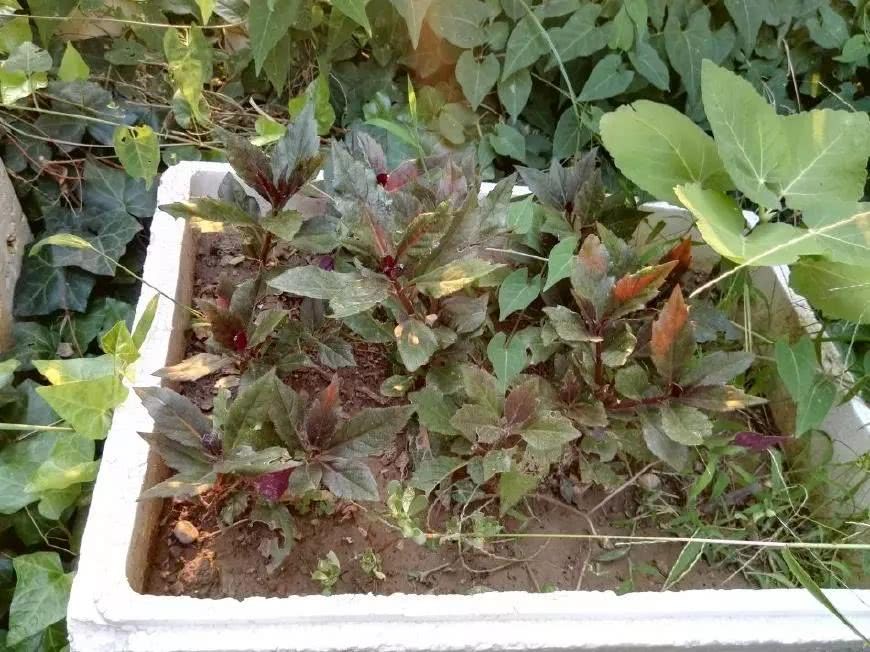
This was taken in the afternoon at the neighbor's house next door - Gynura bicolor. Actually, Gynura bicolor is very easy to identify because the color of its leaves is special: the top and bottom sides have 2 different colors. The top side is entirely green, while the bottom side is entirely purple.
Speaking of Gynura bicolor, I think many friends living in rural areas should be fairly familiar with it. It is a traditional "mountain wild vegetable" in China. It is said that in ancient times it was a very popular wild vegetable among the people, with a history of nearly a thousand years, and it is equally loved by farmers today, especially in Sichuan, Hubei and Guangdong, where it has almost become a home-style dish.
That is exactly the case with my neighbor. According to her, she has been growing this Gynura bicolor in her garden for almost 2 months, and she picks a handful to eat every few days. Whether served as a cold dish, in soup, stir-fried plainly or with noodles, it is very tasty. She also said this wild vegetable is very suitable for women to eat, because eating Gynura bicolor can nourish the blood.
I have actually eaten Gynura bicolor before, but I found its taste a bit strange so I did not like eating it. I also remember that when I was a child, my family raised pigs and often went into the mountains to pick wild vegetables and wild grasses to feed the pigs, and Gynura bicolor was one of those pig-feed vegetables. I never expected that Gynura bicolor would become so popular today.
So I also looked up some relevant information and learned that Gynura bicolor is actually so highly valuable. According to the records, every 100 grams of Gynura bicolor contains 1.4 grams of calcium, 2.8 grams of potassium, 209 milligrams of iron, as well as various vitamins and other mineral elements. In particular, its potassium content and iron content are quite high, so regularly eating Gynura bicolor also has a blood-nourishing effect. It is very suitable for people with anemia, women, those prone to menstrual cramps and those with weak qi and blood. Therefore, among the people, Gynura bicolor is also called "blood-nourishing vegetable" or "natural blood tonic".
Besides being highly nutritious and edible, Gynura bicolor also has medicinal value. According to the records, Gynura bicolor contains anthocyanins, which allow it to be used as medicine. It has the effects of clearing heat and cooling blood, invigorating blood, stopping bleeding, detoxifying and reducing swelling. It can be used to treat symptoms such as coughing blood, abnormal uterine bleeding, traumatic bleeding, menstrual cramps, dysentery, sores and ulcers, bruises and injuries, and ulcers that do not heal for a long time. In addition, its roots, when boiled in water and drunk, also have the effect of quenching thirst and relieving summer heat.
It is precisely because Gynura bicolor has these values that it is now increasingly loved by people. In rural areas (such as with my neighbor), many farmers plant this wild vegetable in their gardens.
Friends, have you ever eaten "Gynura bicolor"? You are welcome to leave a message and share your thoughts!
Text/Hemu Report, Images/Internet
If you like Hemu's articles, you are welcome to follow