Are you still playing the mini game Jump Jump?
By: DaDa
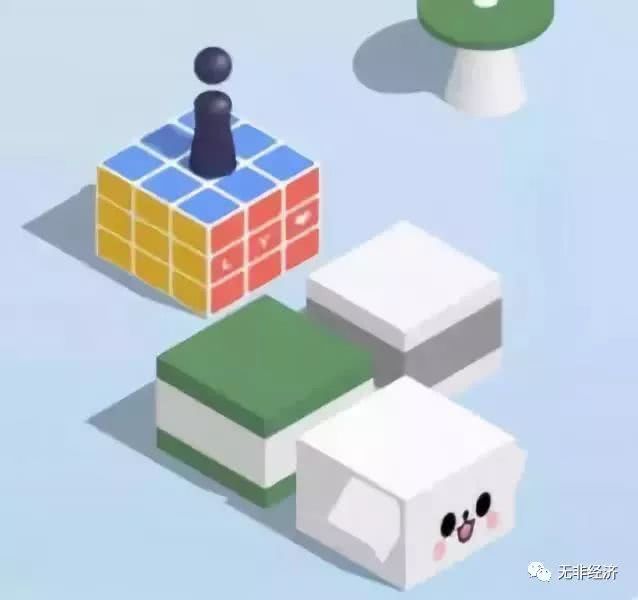
Are you still playing Jump Jump? DaDa asks this question with genuine sincerity from the depths of the soul. A while ago, at the beginning of 2018, the WeChat Mini Program "Jump Jump" could be said to have swept the whole country overnight. Regardless of gender, regardless of age, its background music could be heard almost everywhere. It was almost more popular than hit online games, and of course, DaDa was one of its enthusiastic fans too. But after all, a mini game is just a mini game: simple to operate, no brainpower required, and it only stayed hot for a little over half a year. However, "Jump Jump" became the door through which WeChat Mini Programs opened up business opportunities. Although "Jump Jump" is no longer as hot as it once was, mini program games keep emerging one after another, and invitation messages from friends keep popping up in all kinds of WeChat groups, like idiom contests, match-three games, pinball, and so on. Clearly, the development of mini programs is gradually entering people's field of vision.
One reason WeChat Mini Programs are so popular has to do with their own "attributes." Today, DaDa will give everyone a proper introduction to them. WeChat Mini Program, or mini program for short, is called Mini Program in English. (Yes, it even has an English name.) It is an application that can be used without downloading or installing. Listen up!!! This is the key point: no download or installation required. What good news this is for so many phone users. Although phone storage is getting bigger and bigger, it cannot keep up with the growing number of apps and the growing amount of space they take up. Do you often feel that, hey, you have only downloaded a few apps and your phone storage is already insufficient? But then mini programs appeared! Everyone can use applications without downloading them, play a few mini games, and neither use their brain nor kill time in a boring way. This is the fundamental reason mini programs have become popular. As the saying goes: demand creates the market. Clearly, this saying is not just empty talk.
On January 9, 2017, Zhang Xiaolong released mini programs at the WeChat Open Class Pro, and they officially went online. Users can experience all kinds of services through mini programs. On December 28, 2017, the WeChat 6.6.1 update opened up mini games, and the WeChat launch page also highlighted the mini game "Jump Jump." Judging from the popularity of "Jump Jump," there is no doubt that mini programs have successfully entered the public eye. For users, there is no longer any need to worry about having too many apps; applications will be everywhere, available at any time, with no need to install or uninstall them. For developers, the threshold for developing mini programs is relatively low, and the complexity and difficulty of development are far lower than for apps, while at the same time they can still meet basic application needs. In addition, mini programs will form a parallel system with subscription accounts, service accounts, and enterprise accounts, and they can jump to one another.
Zhang Xiaolong, the father of WeChat, once mentioned that WeChat was never intended to be just a platform for spreading content, but rather a platform for providing services. That is why the WeChat team specifically spun off service accounts, but service accounts mainly provide services, based on one demand. "This is not what we want to see. Now we will develop a new form, called application accounts." Today's mini programs are exactly the application accounts proposed back then.
The biggest highlight of mini programs is that WeChat provides a rich set of framework components and API interfaces for developers to call. Specifically, these include: interface, view, content, buttons, navigation, multimedia, location, data, network, gravity sensing, and more. With the help of these components and interfaces, mini programs built on WeChat can maintain the same experience as independent application software in terms of operating capability and smoothness. Mini programs fit most closely with WeChat's strategic demand to "connect people and services." WeChat has successively launched the WeChat rumor-busting assistant, Tencent Ride Code, and others, bringing great convenience to our lives. It can be seen that WeChat attaches great importance to the development of mini programs, and the functions, pace, and permissions released by mini programs are beyond our imagination. It can be seen that in the future, mini programs will become a main axis of the entire WeChat ecosystem.
The development and rise of mini programs undoubtedly provides a good opportunity for innovators and entrepreneurs. The app development market has already begun to approach saturation, and a series of problems have emerged, such as apps taking up relatively large storage, high promotion costs, and reduced traffic. Light applications like mini programs are gradually becoming a trend. Their emergence has solved some of the problems that apps have, and has also provided innovators and entrepreneurs with an entry point. Where mini programs will go in the future still depends on whether consumers Pick them or not.