These highly toxic succulents, foodies must be careful
History Maker
History Maker
DEAN FUJIOKA
00:00/03:10
BGM: Dean Fujioka - History Maker
A recent news story caught the editor's attention,
Here, take a look
What, succulents are toxic and hallucinogenic? That's practically a drug, can we still grow succulents with peace of mind?
First, let's see what the succulent reported in the news looks like.
It really is a bit ugly, not at all as cute as Crassulaceae succulents!
Crassulaceae: Sorry, I'm just not as pretty
Now let's look at the information - Lophophora williamsii is a plant in the Cactaceae family, Lophophora genus, native to western North America. Plants in this genus contain an alkaloid called mescaline, which causes hallucinations when ingested.
The body is flat and spherical, with many ribs, the epidermis is blue-green to gray-green, covered with white powder, the hairs at the top are white and thick, and the flowers are pink, purplish-red, or pale yellowish-white.
Look for where Lophophora williamsii is!
As for the price, around 550 for about 7cm, you'd be better off eating a few American lobsters to satisfy your cravings.
Now that we're on the topic of toxic succulents, let's take a look at which common succulents are toxic~
- Euphorbiaceae -
1. Crown of Thorns (Euphorbia milii)
The plant's wounds secrete a white milky sap that irritates human skin and mucous membranes. Accidental ingestion can cause nausea, vomiting, diarrhea, and dizziness. When growing at home, do not casually break off flowers for children to play with. It's all thorns, and it doesn't look appetizing anyway.
2. Euphorbia neriifolia
The white milky sap in the stems and leaves is toxic, and care should be taken during cultivation.
3. Euphorbia trigona
An internet-famous plant, the white sap is toxic. Contact with the skin may cause allergic symptoms, and it especially must not come into contact with broken skin or eyes.
- Crassulaceae -
1. Jade Plant (Crassula ovata)
Its branches and leaves both contain large amounts of euphorbia resin. When human skin comes into contact with the sap flowing from the leaves, it causes skin redness, swelling, pain, and blistering. If it accidentally gets into the eyes, it can cause blindness. Especially do not let young children accidentally ingest the sap.
Also, the Crassulaceae genus Tylecodon is toxic, but it is not very common.
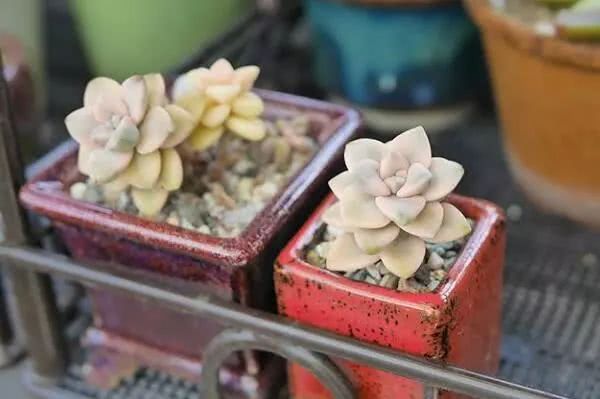
As for the rest of the Crassulaceae we love so much, they, simply, are, not, toxic at all!Some can even be eaten~
- Succulents can also be eaten as a dish? -
1. Graptopetalum paraguayense
In Taiwan, China, the leaves of Graptopetalum paraguayense are sold as salad greens, for beauty and skincare~
Also commonly known as jewel plant, stone lotus
2. Ice Plant (Mesembryanthemum crystallinum)
The ice plant commonly seen in restaurants is also a type of succulent, Mesembryanthemum crystallinum (Aizoaceae, Mesembryanthemum genus), and it tastes great.
3. Lithops
Lithops can also be stir-fried and eaten. Chinese people really eat everything, impressive!
I don't know how it tastes, but I do know this plate should be a bit expensive
If you come across edible succulents in your life, leave a comment and share~
- Review of last issue's content -
Note: Some images and text are from the internet. If there is any infringement, please contact us to delete.