How to handle Dipladenia after the flowers fade? Care for it this way and it will bloom even more the second time
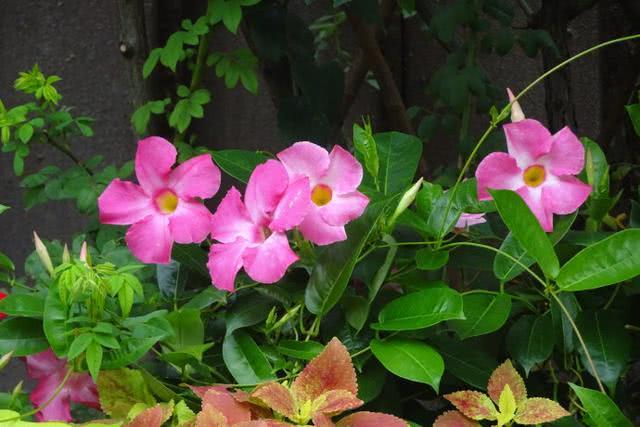
Dipladenia is often also called "Double Happiness Vine". It has pink flowers, slender upright stems, and a rather unique way of blooming: the whole plant opens its flowers from the bottom upward, and what is especially distinctive is that as the blooming progresses, the color of the flowers becomes deeper and deeper, which is why it is so sought after by flower enthusiasts. So for friends who grow Dipladenia, the common problem is: after the flowers fade, how should you handle it so that it blooms even more the second time?
1. Insufficient light
There are several reasons why Dipladenia fails to bloom. The first is the issue of light. Since Dipladenia loves sunlight, only by ensuring certain light conditions will it produce more and more vivid flowers; if it does not get enough light during the growing period, it may fail to bloom or the buds may wither prematurely. The solution is to move it promptly to a sunny spot, with 8-12 hours of indirect light per day, and after a period of time it will be fine.
2. Temperature imbalance
It is also quite sensitive to temperature, and generally grows best in an environment of 18-28 degrees. If during the hotter period of summer the plant is not moved to a semi-shaded place or given some shading treatment, the high temperature has a great impact on the buds and pollination, which may prevent the flowers from opening, and in serious cases the plant may even die. The same applies in the colder winter: too low a temperature will inhibit the plant's growth. The way to handle it is to place it indoors in a warm, ventilated spot, and move it back once spring arrives.
3. Improper watering
Water absorption is also an important aspect for Dipladenia. It tolerates neither drought nor waterlogging, so the amount of water given must be controlled fairly strictly. Normally you only need to water until the potting soil is thoroughly soaked. If Dipladenia fails to bloom, and it is summer, it is very likely that insufficient watering caused the potting soil to become too dry, thus affecting its blooming. Specifically, first give the plant a certain amount of water, but not too much, keeping the soil moist as the standard; in addition, you can spray the leaves appropriately, which can compensate for the lack of water as much as possible.
If you want Dipladenia to bloom even more, besides meeting the standards in the aspects above, there is also the matter of fertilizing it. Reasonable fertilization is also very important for its blooming. For Dipladenia at the seedling stage, you can usually fertilize about once a week, and the nutrients must be balanced, that is, use a compound fertilizer for application; around the time before and after it blooms, the frequency of fertilization can be a bit higher, about twice a week is suitable.
I believe that as long as you care for Dipladenia reasonably, it will surely bloom more and more beautifully.