Introduction to Huangshan pine bonsai: varied shapes, auspicious meaning
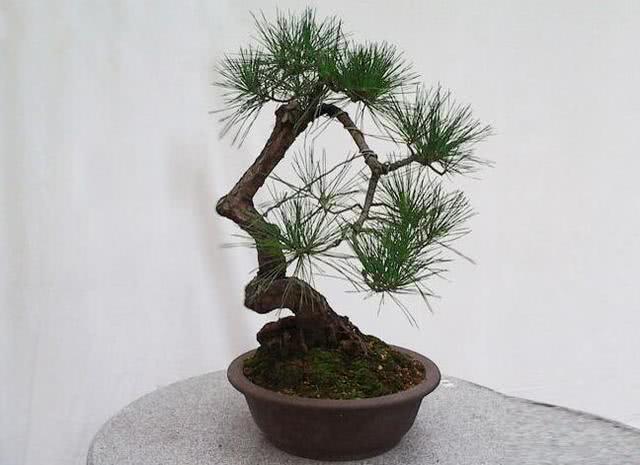
Huangshan pine is an evergreen tree unique to China, distributed across most regions of the country, mainly in Anhui and Zhejiang; those from Tianmu Mountain in Zhejiang are also called Tianmu pine. Huangshan pine has a myriad of postures, and its natural form is extremely beautiful, making it very suitable for bonsai. Among Huangshan pine bonsai, the famous ones include Yingkesong (Guest-Welcoming Pine), Wolongsong (Crouching Dragon Pine) and Heihusong (Black Tiger Pine). Introduction to Huangshan pine bonsai: varied shapes, auspicious meaning!
Huangshan pine bonsai not only has great ornamental value, but also carries deep symbolic meaning. Because Huangshan pine is evergreen all year round, never dying, and proudly upright, it symbolizes unwavering integrity and tenacious struggle. Among them, the Guest-Welcoming Pine symbolizes warmth and hospitality, and today symbolizes the peaceful friendship between the Chinese people and the peoples of the world.
Huangshan pine has strong vitality, but once made into a bonsai it is somewhat more fragile than one growing naturally, so it needs careful maintenance: one is to ensure the survival of the Huangshan pine bonsai, and the other is to ensure its ornamental quality.
Placement: Huangshan pine likes sunlight; only with sufficient light do the needles grow stiff and straight, with a glossy green, and the side branches grow neatly. Therefore, it needs to be placed in a bright, well-ventilated spot, and the location should also be relatively humid. In summer's high temperatures, shade it; in winter's low temperatures it can still be placed outdoors in a sunny, wind-sheltered spot. For small Huangshan pine bonsai, the pot should be buried. If brought indoors to overwinter, ensure ventilation and that the indoor temperature is not too high, otherwise growth will be affected.
Watering: Huangshan pine is drought-tolerant and dislikes overly wet conditions, so it does not need frequent watering; slightly dry soil is most suitable for growth, and it should be watered only when very dry. The needles can be misted often, which is good for growth. In spring and summer, reduce the frequency of watering, so the needles that grow are short and small, giving a more beautiful appearance.
Fertilizing: Huangshan pine does not need much fertilizer; too much may instead damage the roots. In early summer, apply a little fertilizer, then before winter arrives apply once with rotted cake crumbs. In addition, some alum fertilizer water can be applied to improve the soil's pH.
Pruning: Huangshan pine does not require much attention when it comes to pruning; the main task is bud removal during March to April. Usually the terminal buds are removed, and the amount depends on the tree shape and styling; if no new branches are wanted, they can all be removed, while for weak branches, remove few or none. In addition, during winter dormancy, some branches and leaves can be appropriately cut according to the styling, and after cutting the wounds should be sealed with wax or paint.
Repotting: Huangshan pine bonsai is suitable for repotting once every 3-5 years, best done during February to March; if in a greenhouse, it can be moved up to January. When repotting, cut off rotten roots, dead roots and overly long roots, and replace with new soil, but keep part of the original soil.
Pests and diseases: Huangshan pine bonsai requires attention to the prevention and control of pests such as red spider mites, aphids, pine tip borers and black leaf sawflies, as well as diseases such as leaf blight, pine needle rust and pine-oak rust; spraying the appropriate solution according to the symptoms will control them.