How do you create a mixed container planting? Master these few combinations and easily take beautiful garden lifestyle photos
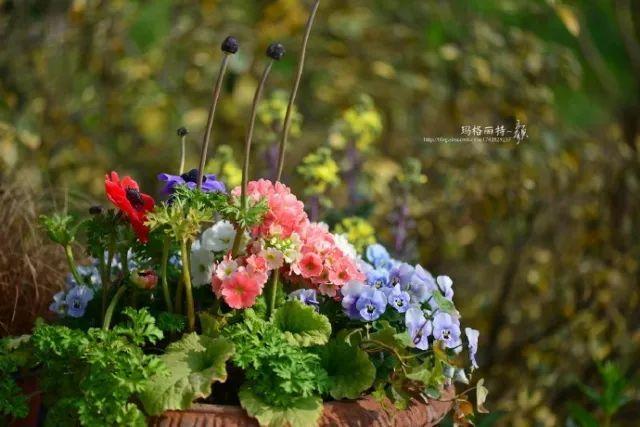
A mixed container planting is actually a "mini garden." It can spark the creativity of plant lovers and is a great joy for gardening enthusiasts. It greatly enhances the ornamental value and artistry of plants, and compared with flower arranging, mixed container plantings are more vibrant, last longer, and show dynamic changes.
Today, through the editor-in-chief's demonstration, we introduce 2 simple ways to combine potted plants: double-potting and container planting.
01
Double-potting
Everyone knows about double-potting. Its advantage is that it is quite convenient to switch plants, making it very suitable for beginners. When you are not sure whether plants have similar needs, try double-potting first. If it does not work, you can change it immediately, and daily maintenance is also relatively simpler. This method is also very suitable for scene building needs, achieving a good visual effect in a short time.
02
Container planting
If you want to plant in a container, then there are more issues we need to consider:
1. Plants have compatible needs, that is, similar requirements for light and water, so maintenance will be more convenient
2. Color coordination, determining the main tone, matching colors, and accents
3. Layering coordination, the selection of the main feature plant, companion plants, and the pot
4. Predict the flowering state and time of the plants, and give them a certain amount of growing space
Mixed container plantings can be done in many creative ways. Just like matching clothes and shoes, plant pairing is also an art. Here are a few more heat- and sun-tolerant combinations for summer.
Creative combinations
The first: Sedum Symphony
Plants: one clump of Carex buchananii, one Loropetalum chinense var. rubrum; one clump each of Hylotelephium spectabile and variegated Hylotelephium spectabile, one pot each of Sedum spurium 'Coccineum' and Sedum makinoi
The several sedums selected are naturally quite drought-tolerant and resistant to intense sun. They grow better in sunlight, and their colors become even more brilliant. In autumn, Hylotelephium spectabile also produces small pink flowers, giving a distinctive charm.
Before planting, you can first arrange the plants together to see the effect before making adjustments.
The second: Beauty's Beach Bath
Plants: Gaillardia; two pots each of Artemisia schmidtiana and Vinca major var. variegata, one pot each of Trachelospermum asiaticum 'Ogon Nishiki', Amaranthus tricolor, and Verbena
The arrangement of these plants is absolutely the most seasonal scenery in summer. The several plants shown also have fairly consistent requirements for sunlight and water, so care will be very convenient.
The unique color of Amaranthus tricolor in the middle brightens the tone of the entire mixed container planting, while the silvery Artemisia schmidtiana is relatively soft. The rectangular trough planter is very suitable for windowsills and balconies. Trachelospermum asiaticum and Vinca major will grow quickly, with branches hanging down.
The premise of combining plants is still to understand them first. If you do not understand their habits and mix shade-loving and sun-loving plants together, there will always be one that does not grow well. For north-facing balconies and corners with relatively little sunlight, which are relatively suited to cool, humid environments, we recommend the following 3 combinations, which can also safely get through summer in Jiangsu, Zhejiang, and Shanghai.
Shade plants generally do not bloom very brightly, so when pairing them, more consideration should be given to the contrast of leaf shapes and leaf colors.
The third: Purple Air Comes from the East
Plants: one plant each of Hosta, Ajuga genevensis, Aucuba japonica 'Variegata', and Ophiopogon japonicus
The purple-leaved Aucuba japonica 'Variegata' and Ajuga genevensis are cleverly combined, while the slender-leaved Ophiopogon japonicus naturally trails down, instantly making the whole container planting lively. This variety of Ophiopogon japonicus really does produce small light purple flowers, and in autumn it also bears strings of gorgeous sapphire-blue berries.
The fourth: Bear's Paw Leisure
Plants: one plant each of Fatsia japonica, Aucuba japonica 'Variegata', Ophiopogon planiscapus 'Nigrescens', and Saxifraga stolonifera
Just hearing the names sounds imposing, so one dares not neglect them, yet put together they can also get along harmoniously. The broad leaves of Fatsia japonica look very much like little open umbrellas. The colors of Ophiopogon planiscapus 'Nigrescens' and Aucuba japonica 'Variegata' are both very special, while the shade-loving Saxifraga stolonifera also grows long trailing stems, producing more small plantlets.
The fifth: Green Leaves Hold the Meaning of Flowers
Plants: one plant each of Liriope muscari 'Variegata', Vinca major var. variegata, Hedera helix, and Platycodon grandiflorus
Platycodon grandiflorus is in season, and its deep blue flowers dotted over the green container planting are especially eye-catching. The variegated broad-leaved Liriope muscari and Vinca major var. variegata do not lose their color interest even when there are no flowers.
Once all the mixed container plantings are planted and watered, remember to take a gorgeous group photo first!
DIY process
1. Prepare the medium, tools, pots, and plant materials
Medium: a mix of peat and perlite is recommended
Slow-release fertilizer is also needed, as it can provide a certain period of fertility for potted plants. Later, apply appropriate additional fertilizer according to growth conditions.
2. For the design, compare the container with the plants you want to grow and see the effect
3. Remove the plants from their pots, trying not to damage the root system
4. Planting: you can place a layer of large-particle pumice or expanded clay at the bottom of the pot, which helps with drainage and aeration.
Cover with soil according to the needs of the container planting. At this time you can also apply base fertilizer, making later care even simpler!
Plant one by one, and adjust according to the effect on site
Finally, fill the gaps between the plants with medium and press it firm.
5. Water thoroughly!
Alright! Mixed container plantings are simple and easy to understand, with high hands-on practicality, suitable for both beginners and garden owners. Even without a big garden, creating a small flower border can also be surprising! Once you have learned it, remember to post pictures to the back end and share your DIY process and finished work. Get started and create!
Text and photos | Margaret-Yan
Layout | Huaye Editorial Department