After repotting, English ivy grows lush and leafy, staying cool through the summer
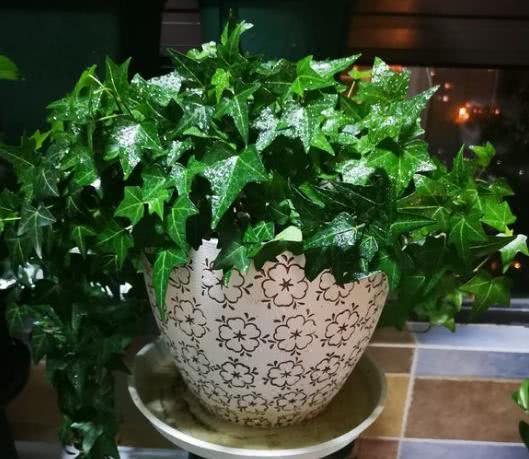
Many people love growing green, leafy plants, especially now that temperatures are getting higher and higher. These fresh plants are not only easier to care for than flowering plants, but also look very refreshing when placed at home. So today, what Huahua recommends to everyone is English ivy, which is easy to care for and very easy to grow into a full, bushy pot!
When it comes to English ivy, you are surely familiar with it. Its leaves are very distinctive, green all year round, and especially when the vines hang down, no matter where it is placed at home, it looks full of vitality. Of course, the most important reason to choose it is that it is easy to care for!
When we go to buy English ivy, what we need to pay attention to is its leaves: check whether there are yellow leaves or signs of pests. Because it is a typical foliage plant, this directly affects its growth. After buying it, it is best to repot it first, as this not only lets you check the condition of its roots, but also helps it adapt to its new home environment as quickly as possible.
Before repotting, be sure not to water it, because this offers some protection to the plant's roots. As long as the potting soil is soft, we can gently lift the plant with our hands and take it out of the pot. But if the soil is too hard, we need to use a tool to pry along the edge of the pot, being careful not to damage its roots.
After taking it out, we should clean off the old soil as much as possible to expose its roots, then check whether any are blackened or rotten. If there are, they must be cut off, then soaked in a disinfecting solution for a while. After taking it out, let it dry in a ventilated place before planting it in a new pot, otherwise the roots will continue to rot later on.
Because English ivy is a plant that grows especially fast, we can choose a hanging pot, so its vines will trail downward and the decorative effect will be greatly enhanced. When planting, we should hold the plant upright with one hand while filling in soil with the other. After filling it full, gently press the soil down with your hands. Finally, we need to give it one thorough watering!
After planting, we should check how the vines are growing. If we find yellowed and dried-up leaves, we should immediately cut them off with scissors. If the vines feel too long and messy, we can also clean them up with scissors.
By the way, we should not waste the cuttings we trim off. We can propagate them, either in water or in soil. Remember, during the period when they are rooting, do not frequently pull them up to check just because you are impatient, because even if roots have formed, this action will damage them beyond saving.
Then we should place the English ivy in a warm, ventilated spot where it can get some sunlight. It does not need to be fully shaded; we just need to watch out for the strong summer sun. Because a certain amount of light will keep its vines from growing long, thin and weak, and its leaves will also become more glossy!
As for watering, it does not need much; just keep the soil moist. You can use a spray bottle to mist its leaves regularly. Besides increasing air humidity, which is good for growth, this also keeps the leaves looking glossy, so that dust does not block their shine.
Because it has just been repotted, it is in a recovery period, so it is not recommended to fertilize it, otherwise it can easily cause the leaves to wilt. In spring and autumn, we can occasionally give it a nutrient solution, and that is enough.