Pruning and propagating Kalanchoe after flowering: fast rooting, vigorous growth, every pot blooming into a ball of flowers
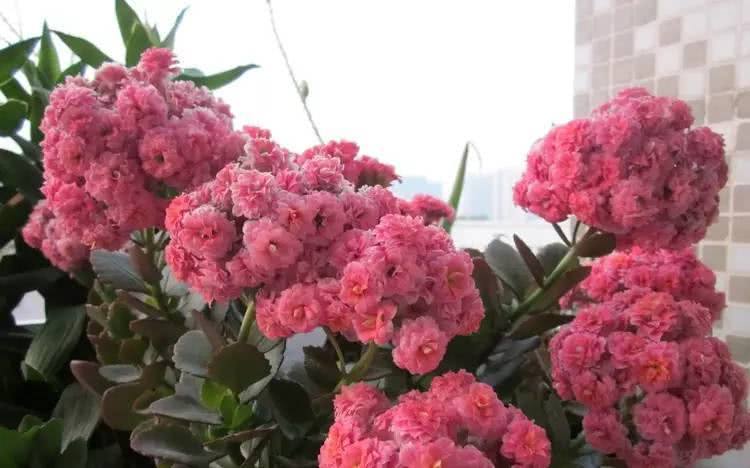
Kalanchoe has become very popular in recent years, because kalanchoe comes in diverse flower colors, has an extremely long flowering period, and is also very easy to care for. So how do you propagate kalanchoe?
Kalanchoe is a succulent plant, so propagating it is also very simple; you can propagate by leaf cuttings or by stem cuttings.
1. Leaf cuttings: take a few healthy leaves, gently twist them off without damaging the leaf stalk, then lay the leaves flat on slightly moist soil, or insert them shallowly into the soil. The soil must be loose and breathable.
Do not insert them too deep; if too deep, they will only grow roots and will not sprout. Then place them in a shaded, ventilated spot. Generally, roots will form in about a week, but sprouting buds takes longer, about several months. So if we want to get a kalanchoe quickly, it is best to use stem cuttings.
2. Stem cuttings: propagating by stem cuttings is relatively simple. Take the stems of a kalanchoe that has finished flowering and been pruned, cut off the spent flowers, then leave them in a ventilated place to dry for a day, and propagate once the wounds have closed up.
The propagation soil must be loose and breathable. You can use nutrient soil, or you can use plain soil, such as river sand, vermiculite, perlite, and so on. Roots form in about a month. When propagating, it is best to use stems that have just finished flowering in the current year; such stems are rich in nutrients, root quickly, and grow very well later on. Stems from old growth root more slowly and do not grow quite as well.
After rooting, once the leaves show obvious growth, you can care for them normally in the sun. Fertilizing must keep up during the growth period. You can use your own composted organic fertilizer, or a compound fertilizer mainly based on nitrogen and potassium.
If you propagate in autumn, then when the temperature is suitable in winter, they can bloom. Because the nutrients in the soil are plentiful, and the new kalanchoe stems also have particularly strong growth vigor, they will bloom abundantly, forming clusters of flowers that are especially pleasing to the eye.