How to best care for Clivia in winter? Watering and fertilizing methods explained
If you like Clivia, then you must be familiar with it. It is a very common winter and spring flower, with bright and beautiful blooms and a long flowering period, giving it high ornamental value. Let's take a look at how to care for it in winter.
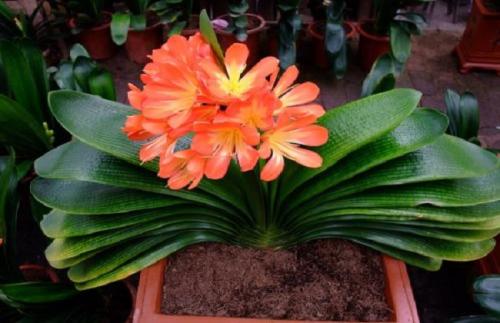
Light: Unlike autumn, in winter Clivia can receive plenty of light. Place them frequently in a spot with ample light, as this helps with the plant's photosynthesis. Also, remember not to place them at night in an environment where they can be exposed to light; make sure they get more than 10 hours of complete darkness.
Watering: After bringing Clivia indoors, water it as you normally would. Once you see the flower stalk starting to emerge and the plant shows signs of being stuck in the leaf axils, reduce watering appropriately, keeping the potting soil just moist. Especially after flowering, avoid the potting soil becoming too wet or too damp.
Bringing indoors: The first priority in Clivia care is ensuring temperature. In winter, you need to move them indoors or into an enclosed balcony promptly, otherwise they are easily frostbitten.
Fertile soil: Good fertile soil is key to plant growth. You can loosen the potting soil to increase its aeration, then mix in some leaf mold, or add some decomposed pine needles. Changing and adding soil is essential in the process of growing flowers. If the soil for your Clivia at home has not been used for long, there is no need to change it, and during this period it is also not recommended to replace it with new soil.
Fertilizing: Apply some dilute phosphorus and potassium fertilizer to promote flower bud differentiation. After the flower stalk bolts, stop fertilizing. Do not fertilize during the flowering period, as this can extend the flowering period.
In winter, fertilizer must be dilute and fully decomposed, with strict quantity control. It is best to choose the evening for fertilizing.