Detailed Explanation of Huangbailuo (Phellodendron amurense) Seedling Cultivation and Artificial Afforestation Techniques
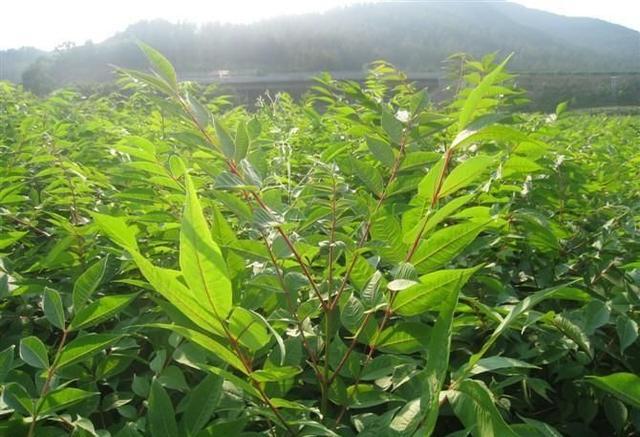
Huangbailuo (Phellodendron amurense) Seedling Cultivation and Artificial Afforestation Methods
1 Growth Habits of Huangbailuo
Huangbailuo is a deciduous tree. Mature trees grow to about 20 m tall, and the trunk diameter can reach about 50 cm. It is an important military timber raw material in China. The bark of the common Huangbailuo is light gray or dark gray, while the inner bark is bright yellow. The seeds are obovate, slightly flattened, with a thousand-grain weight of about 16 g. It generally flowers from May to June and matures in September. Based on long-term production practice, Huangbailuo grows best in sunlight and moist soil and has strong cold resistance, which are also important biological characteristics of the main production areas in Northeast China. However, young Huangbailuo seedlings are not resistant to frost, and if effective measures are not taken, they are easily killed by freezing. In naturally growing Huangbailuo forest areas, seedlings mostly grow in areas such as riverbanks, hillsides, and forest edges.
2 Seedling Cultivation and Artificial Afforestation Methods for Huangbailuo
In modern forestry engineering construction, Huangbailuo is one of the tree species often used in Northeast China. After years of seedling cultivation research and artificial afforestation exploration, certain achievements have been made, the level of Huangbailuo seedling cultivation has improved significantly, and the scale of artificial afforestation and the area of established forests are increasing year by year. Since the 18th National Congress, the state has taken further steps in the development and protection of forestry, not only increasing the speed of seedling cultivation and artificial afforestation, but also clarifying the quality of forestry development.
2.1 Scientifically Select Seedling Planting Sites and Prepare the Land Rationally
According to the growth habits of Huangbailuo, it is best to choose open forest land with more natural distribution as the seedling cultivation site. Through on-site soil investigation and research, choose loose, fertile forest land with deep soil layers and good drainage, build seedling greenhouses and related supporting facilities, and try to choose sunny, wind-sheltered areas to provide favorable natural light for seedling growth. After selecting the seedling cultivation site, surface debris should be cleared, and then the soil should be deeply plowed. If the soil is poor, base fertilizer should be applied during deep plowing and land preparation, generally 4,000 kg/667 sq m of farmyard organic fertilizer is appropriate. Finally, level the plowed plots. The prepared plots must maintain loose soil until sowing.
2.2 Make Good Use of Germination Promotion Techniques and Sowing Measures
According to Huangbailuo seedling cultivation techniques and production experience, sowing and seedling cultivation of Huangbailuo in Northeast China can be carried out either in spring or autumn. When sowing in autumn, the seeds generally do not need special treatment, while spring sowing requires the seeds to be treated first. According to relevant techniques, Huangbailuo seeds used for spring sowing should be mixed with sand and buried in the autumn of the previous year. The ratio of seeds to sand is preferably 1:2. After mixing evenly, dig a pit outdoors according to the volume of the mixture and bury it, then cover with soil until it is level with the ground layer.
When sowing in spring the following year, first dig out the seed and sand mixture, and use a greenhouse to promote germination, turning it 2 to 3 times a day. Sowing can be carried out when 1/3 of the Huangbailuo seeds have sprouted. Sowing is mostly done by ridging, with each ridge 10 cm wide. After evenly broadcasting the seeds, cover with a layer of fine soil about 2 cm thick to press the seeds down, and it is best to sprinkle an appropriate amount of water to keep the soil moist until emergence [1]. Commercial Huangbailuo seedling cultivation and sowing generally use spring sowing, which has a short emergence time and good seedling growth quality. Especially under the current Huangbailuo artificial afforestation conditions, the afforestation area is large, the number of seedlings required is large, and the quality requirements are high, so the Huangbailuo seedlings cultivated are basically all from spring sowing. The autumn sowing method is roughly the same as spring sowing, except that the seeds do not need to be treated; other conditions are the same.
2.3 Implement Forest Tending Work and Strengthen Forest Protection Measures
In Huangbailuo artificial afforestation operations, select robust seedlings for planting, with healthy seedlings grown for 2 to 3 years being best. When planting seedlings, the plant spacing is preferably 2 m, and the row spacing can be 3 m or 4 m, determined specifically according to the conditions of the forest land and the shape and size of the seedlings. For forest land in the same area, it is best to choose seedlings of the same specifications from the same seedling base, and complete planting in the shortest possible time. Within 7 d after planting is completed, the survival status of the seedlings should be checked in a timely manner, and replanting should be done promptly. In addition, the tending work in the forest area must be implemented item by item, with timely watering and irrigation and timely additional fertilization to keep the soil moist and nutrient-rich. Before fertilizing and irrigating, weeds and other non-target tree species in the forest land should be cleared, and the soil around the roots of Huangbailuo seedlings should be loosened. This can both ensure water use efficiency and reduce the input of production resources. When the Huangbailuo saplings in the forest area have basically grown stably, in addition to timely tending and ecological thinning operations, forest protection must also be strengthened.