Cultivation Techniques for Propagation, Pest and Disease Control of Potted Clivia
PottedCultivation Techniques for Propagation, Pest and Disease Control of Clivia
1 Biological Characteristics
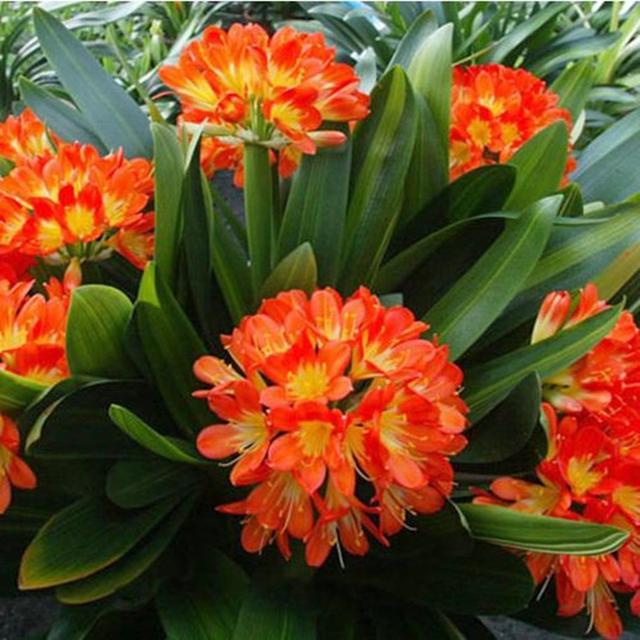
Clivia is a perennial herbaceous flower that is not cold-tolerant and also dislikes high temperatures and intense summer heat. It prefers a semi-shaded and humid environment, fearing both cold and heat. The suitable growth temperature is 15 to 25 °C, and the flowering period should be maintained at 15 to 20 °C. When the temperature drops below 10 °C, the plant's growth and development slow down. In winter, the temperature should not fall below 5 °C. When it drops below 5 °C, growth and development are inhibited. When it drops below 0 °C, in mild cases the leaves are frostbitten, and in severe cases the entire plant dies. When the temperature exceeds 30 °C, the plant is forced into dormancy, resulting in a short flowering period and pale flower colors. Ventilation and cooling should be carried out; otherwise, the plant will grow leggy with thin, long, soft, and thin leaves. Clivia requires an air humidity of 60% to 80%, under which conditions the leaves are dark in color, appearing tender green, short, wide, and neatly arranged. When the humidity is below 60%, the tender leaves become lighter in color and yellow, even wilting, and in severe cases the entire plant wilts and dies. When the humidity exceeds 90%, the stems and leaves grow leggy. When the water content is 20% to 40%, excessive soil moisture easily causes root rot. The loam soil should be loose, fertile, well-drained, rich in humus, slightly acidic, and sandy in nature. It prefers ventilated, deep, fertile, and loose leaf mold. Clivia roots are thick and well-developed fleshy fibrous roots. The leaves are dark green, broad, leathery, with the leaf bases forming a pseudobulb. The leaves are arranged in two opposite rows, stacked and shaped like swords with entire margins. The scape emerges from the leaf cluster, arranged in a semi-circular or flat-rounded umbel, with funnel-shaped flowers. The flowering period is year-round, mainly in spring and summer. The fruit is a spherical berry, each fruit containing 1 to multiple seeds, and the fruit maturation period is about 10 months.
2 Propagation Methods
In northern regions, Clivia is mainly propagated by division, while seed propagation is common in southern regions where the climate is close to that of its place of origin. Remove the mother plant that can be divided from the pot, remove the old soil and dried roots, and use tools or manual methods to separate the connection between the offset and the mother plant. Then apply some plant ash to the wound to absorb the exuding fluid and prevent rot. Let it air-dry for a few hours, and after it is slightly dry, replant it in a pot. Division propagation is the most widely used method and can be carried out throughout the year as long as the temperature can remain stable at around 20 °C. Plants propagated by division have the most stable genetic traits.
3 Cultivation Management
3.1 Fertilization
The main fertilizers required by Clivia include nitrogen fertilizers (decomposed soybean cake, peanut cake, peanuts, sesame, sesame oil residue, castor beans, etc.), phosphorus fertilizers (fermented and decomposed rice bran, bone meal, fish waste, etc.), and potassium fertilizers (charcoal, rice straw, plant ash, rice husk ash, etc.). Clivia fertilization follows the principle of "light fertilizer applied frequently," mainly using organic fertilizers, appropriately combined with inorganic fertilizers. Fertilizer should not directly touch the roots to avoid burning them. Apply fertilizer amounts according to growth characteristics. In spring and autumn, growth is rapid, so more fertilizer can be applied. In summer and winter, apply less or stop fertilizing. At the same time, observe the effect of fertilization. In winter, if spots appear on new leaves and the root system turns yellow, it indicates excessive fertilization. If new leaves are narrow, thin, and particularly pale in color, it indicates a fertilizer deficiency.
3.2 Watering
Clivia prefers humidity and must not lack water throughout the plant's growth period. It has relatively well-developed fleshy roots that store a certain amount of water, so this flower also has a certain degree of drought tolerance. The amount and frequency of watering should be controlled according to its growth cycle and different seasons. Watering should follow the principle of "water when dry, not when wet; do not water if not dry; water thoroughly when dry, but do not let it leak through." In summer, under high temperatures and dry air, severe water shortage must not occur; otherwise, it easily causes the potting soil to become too dry, making the leaves turn yellow and damaging the roots, which prevents new leaves from sprouting, not only affecting flowering but even causing plant death. In summer, it is advisable to spray the leaf surfaces and surrounding soil with clean water every morning or evening to maintain a cool environment. Overwatering can cause root rot and lead to pest and disease problems. Therefore, in spring and autumn, keep the potting soil moist, and in winter, keep it slightly dry. During the scape emergence period, do not water the leaves to avoid the occurrence of scape rot. After flowering, appropriately reduce watering. Be careful not to splash water droplets onto the flowers to avoid petal rot and shortened flower lifespan.
3.3 Light
Clivia is a semi-sun-loving, shade-preferring flower that prefers scattered light and does not require a long light duration. It grows poorly under both strong light and weak light conditions. From November each year to February of the following year, shading is not necessary. From March to October, shading should be chosen according to light intensity. In summer, place it in a ventilated and shaded area for maintenance. Exposure to scorching sun will cause sunscald and inhibit growth. In spring and autumn, shade from the strong midday sun. In winter, place it in a sunny spot indoors with full light exposure; the longer the sunlight exposure, the better. During the Spring Festival flowering period, weak light and scattered light can extend the flowering period. Clivia has phototropism. To make Clivia aesthetically pleasing in appearance with neatly arranged leaves, the plant shape should form a straight line when viewed from the side and appear like an open fan when viewed from the front. The direction of the flower pot should be frequently rotated as the sun's position changes. There are two methods for placing the flower pot indoors: one is to have the leaves parallel to the sunny window, and the other is to have the leaves perpendicular to the sunny window, with the latter being more effective than the former. If the leaves become twisted and misaligned, light-based shaping should be the primary approach, supplemented by manual mechanical shaping.
3.4 Pot Selection and Repotting
During the growth process of Clivia, the original pot cannot accommodate the further extension of its root system. When cultivating, the pot size should gradually increase as the plant grows. If the nutrients in the original soil have been completely absorbed, repotting is also needed. Clay pots have good air permeability and produce better cultivation results. When repotting, first, the pot diameter should be similar to the spread length of the Clivia leaves. Second, the planting depth should be appropriate when planting into the pot. When repotting, remove old, residual, and dead roots, being careful to protect the root tips from being broken, and artificially spread out the root cluster when planting. Repotting should be carried out in spring and autumn.
3.5 Temperature Control
The suitable growth temperature for Clivia is 15 to 20 °C. Temperatures that are too high or too low have a very large impact on Clivia. When the temperature is above 30 °C, the leaves become thin and elongated, and the leaves become lighter in color, yellow, and even wilt. The minimum critical temperature is 0 °C. If the temperature is below zero, frost damage may occur, and the leaf tips and margins will turn yellow. Therefore, temperature management is a very important part of Clivia management. In summer and winter, measures should be taken to cool down, protect against cold, and prevent freezing for Clivia. In winter, control the room temperature and increase the temperature through heating equipment such as radiators and fan heaters. If the temperature cannot meet the requirements, place the flower pot on a radiator padded with a wooden board. Otherwise, the growth and development of Clivia will be inhibited, and even leaf frostbite may occur, causing the leaves to turn yellow or develop "scape binding." This not only affects the ornamental effect but is also detrimental to the growth and development of Clivia. If "scape binding" occurs, the indoor temperature needs to be increased. In summer, greenhouse temperature regulation can be achieved by opening windows for ventilation and cooling, and by spraying water on the area around the potted flowers and the leaf surfaces, which serves to cool down and increase humidity. During the "scape emergence" stage, the temperature should be higher. During the flowering period, a temperature of around 15 °C can prevent the occurrence of "scape binding." A day-night temperature difference of about 8 °C is best, which is conducive to scape emergence. Otherwise, the flower scape will bloom before reaching the appropriate height, and "scape binding" is also easily formed.
3.6 Leaf Surface Care
Clivia is a flower whose flowers, leaves, and fruits are all ornamental. For large-flowered Clivia, there is a characteristic of "leaf viewing being better than flower viewing." Therefore, attention should be paid to the care of the leaf surface to improve its ornamental value. Glossy leaves are one of its main indicators. How to make the leaf surface glossy is related to the following factors: (1) Ensure the root system is well-developed and not rotting, apply fertilizer properly and reasonably, and scientifically balance the ratio of phosphorus and potassium fertilizers in the nutrient soil. (2) Maintain humidity and pay attention to the moisture level of the leaf surface. Spray water on the leaf surface daily, preferably with a mist-like water spray. In the high-humidity season of summer, spray once each morning and evening to reduce the evaporation of water inside the leaves. In high-temperature weather, to prevent leggy elongation of leaves, spraying water reduces the evaporation of water inside the leaves, lowers leaf temperature, and protects the leaves. (3) There should be sufficient light. In spring and autumn, it is recommended that the light duration should not be less than 8 h. In summer, avoid strong light exposure that causes chlorophyll destruction, and in winter, increase light as much as possible. When receiving light, pay attention to the angle between the plant and sunlight to avoid leaves tilting randomly. If the leaves become deformed due to factors such as light exposure, scape emergence and flowering, or fruit setting, they need to be reshaped in a timely manner. (4) Observe the condition of the leaf surface to determine whether the plant has pest or disease problems, adopt corresponding treatment measures, and carry out timely rescue. The optimal ornamental state for Clivia leaves is a leaf width-to-length ratio within 4, with rounded and blunt leaf tips and prominently protruding veins.
4 Common Problems and Pest and Disease Control
4.1 Root Rot
Common factors causing root rot: (1) Long-term heavy watering under high-temperature environments causes the fleshy roots of Clivia to lack oxygen, leading to root rot; (2) Excessive fertilizer use causes root burn and root rot; (3) The potting soil is not changed for a long time, the soil becomes compacted and impermeable, root respiration is blocked, leading to root rot; (4) Long-term water shortage causes root withering, and then excessive watering after that leads to root rot; (5) Undecomposed leaves and other organic fertilizers in raw soil ferment in the pot, generating heat that burns the root system, or improper soil selection. When root rot occurs, the main symptoms of Clivia are soft and yellow leaves that appear water-soaked. Corresponding measures should be taken: (1) Remove the Clivia from the pot and remove the rotten roots; (2) Wash the roots with potassium permanganate to disinfect and sterilize, or apply gentian violet, charcoal ash, rice straw ash, etc., to the wounds; (3) Replace with new soil, control the amount of watering, and add fertilizer at the same time.
4.2 Scape Binding
Scape binding is manifested as the flower stem developing too short to extend beyond the leaves before opening. It is usually caused by low temperatures, improper watering, or insufficient fertilization. The suitable temperature for Clivia scape emergence is around 20 °C. If the temperature during the scape emergence period is below 15 °C, the growth vigor of the flower stem is weakened. When Clivia enters the reproductive growth stage, its fertilizer requirement increases. If fertilizer and water are improper during this period, poor flower stem growth is caused under conditions of water and fertilizer deficiency. The method to prevent scape binding is to raise the soil temperature to around 20 °C during the scape emergence period and change the soil and pot in a timely manner. During the scape emergence period, Clivia requires more water than in other periods, so watering should be increased, but the soil should not be overly moist. The suitable soil water content is 30%. When watering, do not pour water between the two rows of leaves. When entering the reproductive growth stage, increase the frequency of fertilization and apply more liquid fertilizer.
4.3 Sunscald
Clivia easily grows under scattered light. Exposure to sunlight in summer can kill leaf cells and cause sunscald. Therefore, outdoors it should be placed in a shaded, humid, and ventilated area. Indoors, direct sunlight should be avoided.
4.4 Infertility
The main reason for not flowering is related to light duration. In its place of origin, Clivia's light duration does not exceed 13 h. However, indoor-cultivated Clivia, due to normal lighting and artificial lighting, has a light duration far exceeding 13 h. To prevent Clivia from failing to bloom, the light duration should be controlled at around 13 h. The phenomenon of flowering without fruiting is mainly due to pollination. The stigma of the Clivia pistil is higher than the anthers of the stamens. If the flowering season is indoors in winter or spring and there are no insects for pollination, artificial pollination is needed to facilitate fruit setting [Jishan Huayao].
4.5 Diseases
Common diseases of Clivia are soft rot, leaf spot, and anthracnose. Control methods: (1) Strengthen environmental sanitation and maintenance work, change soil in a timely manner, pay attention to soil disinfection, wash the fleshy roots with clean water when changing soil, and repot after drying; (2) Pay attention to ventilation and light transmission, and avoid problems caused by insufficient fermentation of nutrient soil and fertilizers, unsatisfactory soil disinfection, and mechanical damage; (3) Before or in the early stages of disease onset, the following chemicals can be sprayed: 50% Carbendazim wettable powder at 500 to 700 times dilution, or 75% chlorothalonil wettable powder at 600 to 800 times dilution; (4) Pay attention to fertilizer and water management, improve growth vigor, and enhance disease resistance.
4.6 Pests
There are not many common pest species on Clivia, mainly scale insects, snails, and earthworms. When they occur in small numbers, they can be gently removed with a soft brush, rag, or bamboo piece, or wiped off with a cloth ball dipped in kerosene, and then washed clean with water. Before germination, spray once with 3 to 5 times dilution lime sulfur mixture at Baume degrees. During the nymph stage, spray with 80% dichlorvos emulsion at 1,000 times dilution. For earthworms, irrigate with diluted 50% dichlorvos emulsion.