Key Control of Canker Disease in Fruiting Kiwifruit Orchards
Key control methods for kiwifruit canker disease in fruiting orchards
Kiwifruit bacterial canker is the number one disease of kiwifruit. Based on surveys and trials in different regions, the key periods for chemical control and the application scheme for this disease have been preliminarily determined, for reference.
1 Key periods for prevention and control
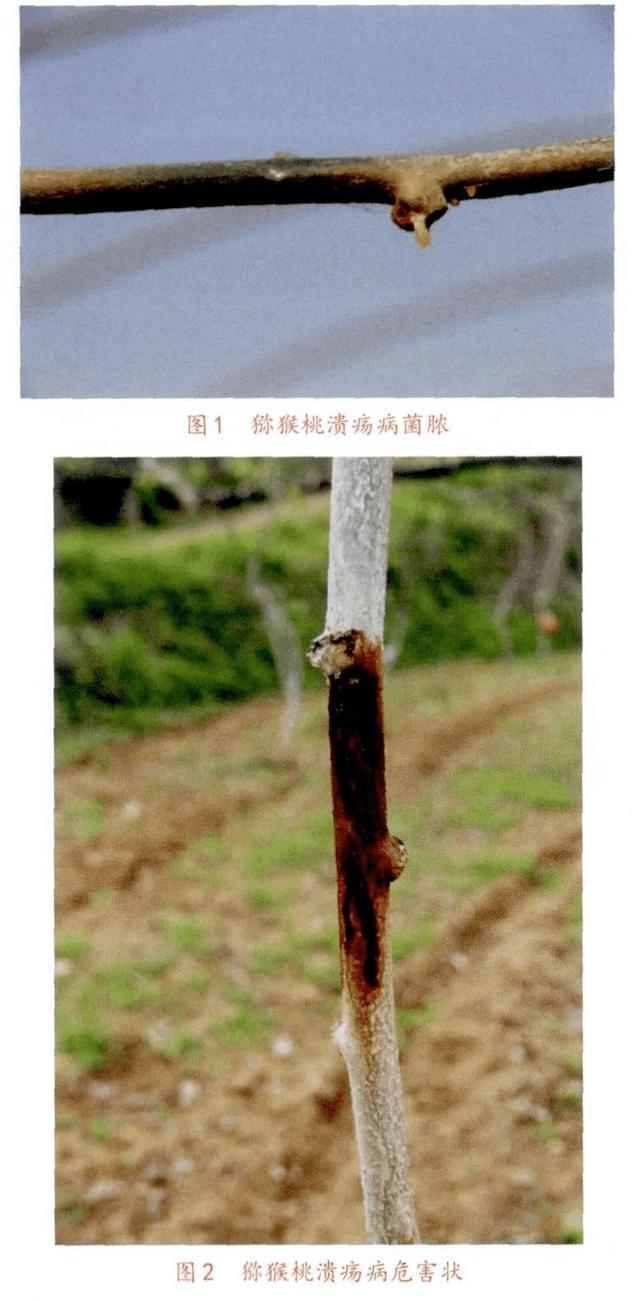
After kiwifruit canker disease causes damage, bacterial ooze flows out from the affected sites, with cankers on branches and trunks, and in severe cases, tree death (Figures 1-3). The disease is caused by Pseudomonas syringae pv. actinidiae (Figure 4). The five periods of after fruit harvest, leaf fall stage, after winter pruning to before bud break, after bud break to before flowering, and after flowering are the key periods for disease prevention and control.
2 Prevention and control techniques for different periods
2.1 After fruit harvest
Spray 1.5% (mass fraction, same below) thiabendazole aqueous emulsion 500-800 times dilution or 20% thiodiazole-copper suspension concentrate 600 times dilution, etc., applying to the whole tree once, to prevent pathogens from invading through fruit stalks, leaf veins and other parts.
2.2 Leaf fall stage
Spray 50% oxine-copper suspension concentrate 750 times dilution or 46% Kocide 3000 1,000-2,000 times dilution 1-2 times, to prevent the pathogen from infecting through leaf scars; if conditions permit, add 50 micrograms/milliliter BTH to the above agents to induce tree resistance.
2.3 After winter pruning to before bud break
Apply 1.6% thiabendazole paste directly to canker scars and pruning cuts, or apply 2% kasugamycin aqueous solution 20 times dilution + 72% streptomycin 20 times dilution, or 1.5% thiabendazole aqueous solution or aqueous emulsion 20 times dilution to pruning cuts and canker scars, combined with foot grafting and bridge grafting measures. At the same time, before bud break, spray the whole orchard with 3-5 degrees Baume lime sulfur mixture or 1.8% octylamine aqueous solution 30-50 times dilution or 0.15% tetramycin aqueous solution 500-800 times dilution 2-3 times. In addition, during low temperatures, spray 2% polysaccharide such as brown sugar, 50 micrograms/milliliter BTH alone, or mixed with antibiotic agents, which can improve the tree's cold resistance. Before and after winter pruning, pay attention to insulation and antifreeze measures such as whitewashing the trunk, wrapping the trunk (Figure 5) [Jishan Huayao], antifreeze treatment, mounding soil around the root crown, etc., to prevent the tree from freezing injury and frost damage. If the disease is severe or the variety is highly susceptible, the number of applications can be appropriately increased or the interval between applications shortened according to the severity of the disease, while clearing the orchard in time.
2.4 After bud break to before flowering
Spray the whole orchard with 72% agricultural streptomycin wettable powder 1,000-2,000 times dilution + 3% zhongshengmycin wettable powder 500-800 times dilution or 20% thiodiazole-copper suspension concentrate 600 times dilution + 3% zhongshengmycin wettable powder 500-800 times dilution or 46% Kocide 3000 2,000 times dilution 2-3 times, including comprehensive spraying and disinfection of the tree body, ground, trellis materials, etc. At the same time, continue patrolling during this period and prune out newly diseased tissues.
Figure 5 Trunk wrapping for antifreeze protection
2.5 After flowering
Spray 50% oxine-copper suspension concentrate 750 times dilution + 2% wuyimycin aqueous solution 200 times dilution 1-2 times, to prevent disease on leaves and branches.