Add this to the potting soil of pothos and spider plants, and they will grow like crazy and cover an entire wall
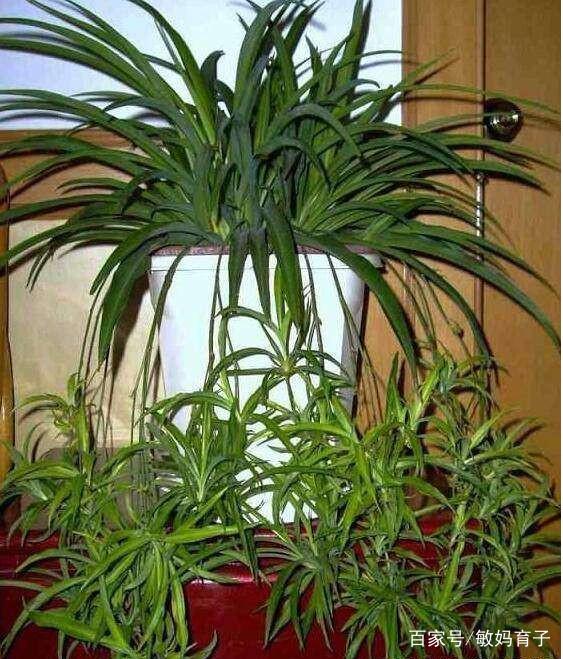
Add some of this to potting soil, and pothos and spider plants will grow like crazy upward until they burst and cover the wall
Crushed dry corn cobs, decomposed okara, or cake fertilizer are all excellent fertilizers for flower pots. These common "waste" fertilizers are rich in organic nitrogen fertilizer, which is the best for spider plants and pothos. They can make the plant leaves grow more luxuriantly and make the potted plants look even better!
Spider plants and pothos are both very good air-purifying plants. It is also quite normal that pothos has a strong ability to adsorb and break down formaldehyde in the air. Pothos has the reputation of being a green purifier. Pothos can convert formaldehyde into substances such as sugar or amino acids during metabolism, and can also break down benzene emitted by copiers and printers, and can absorb it as well. The stems of pothos are slender and soft, and the leaves are delicate and beautiful, pleasing to the eye.
But although spider plants and pothos are relatively easy to grow, they still need sufficient fertilizer. Just like people, only when they eat nutritious food and are full can they have the strength to work.
Let us first talk about fertilizing them, because only when there is fertilizer do they have the strength to grow!
1. Homemade okara flower fertilizer, spider plants' favorite
Decomposed okara, or cake fertilizer, is a very good organic fertilizer. It is rich in nitrogen fertilizer and is the best for spider plants. Nitrogen fertilizer can make plant leaves grow more luxuriantly.
The method is as follows
First cool the unwanted soybean milk residue, then put it into a large cola bottle, add water but do not fill it too full so there is some space, then screw the bottle cap tightly. It must be screwed tight, otherwise it may explode. Then put it on the balcony to sun for a month. There may be a bad smell during the process, so you can add some orange peel.
After a month, pour it out, dilute with water at 1:10, and then it can be used to water flowers. After a long time, there is actually no smell anymore; instead, it smells a bit like alcohol. I kept using these fertilizers last year, and I used up one bottle. The red one is carrot residue, the plant's vitamins; the white one is soybean milk residue; the smallest one is the previously used soybean milk water with rice-washing water added later. Expired milk and beer can actually all be fermented and then diluted with water to water flowers.
But I have also heard some flower enthusiasts say that their spider plants and pothos always tend to get yellow leaves, while other people's are lush green. I water and fertilize normally just as you said, right? Actually, this flower enthusiast does not need to worry. Most of this situation is caused by watering too much, which causes root rot. Flower enthusiasts can find some completely dry corn cobs and carefully crush them, but also be careful not to crush them very finely. Spread them at the bottom of the flower pot to help the soil breathe and absorb sufficient nutrients and water.
Because corn cobs have a relatively strong water-absorbing capacity, they can effectively prevent spider plants from root rot. The corn cobs will slowly decompose and then provide spider plants with very rich organic fertilizer, as well as the trace elements contained in the corn cobs, such as nitrogen fertilizer and so on. These are very beneficial to the growth of spider plants, and gradually the spider plants will grow wildly, and you will not be able to stop them even if you try!
Finally, let us look at other care knowledge for pothos and spider plants:
Watering frequency
Spider plants are afraid of waterlogging and not afraid of drought. They have fleshy roots and a very strong water-retention capacity, so they will not die if not watered for 10 days or half a month. On the contrary, watering every day may cause root rot! Huahua's spider plants are watered once every 5 or 6 days and still grow very vigorously.
Fertilizing frequency
Fertilizing also cannot be too frequent, otherwise they can rot roots and burn to death in no time! Spider plants are not that particular about fertilizer. Just ordinary compound fertilizer, once a month is enough. When using it, throw a dozen or so granules of compound fertilizer into water, and after it dissolves, water the spider plant with it.
Repotting frequency
Repotting will inevitably damage the roots! Even if the movements are gentle, it will still wear the root system to some extent, and the care during the recovery period after repotting is also very particular. So unless the roots have rotted and repotting is necessary, do not frequently disturb the soil. According to the growth condition of the spider plant, wait until the spider plant can no longer fit in the pot, and then repotting will still be in time. Basically, once every two or three years is enough.
That is all for today's sharing
Thank you for reading
I hope you like it