How to ecologically cultivate water chestnut bayberry? Technical details from Nanlian Village
Ecological Cultivation Techniques for "Ciji" Bayberry in Nanlian Village
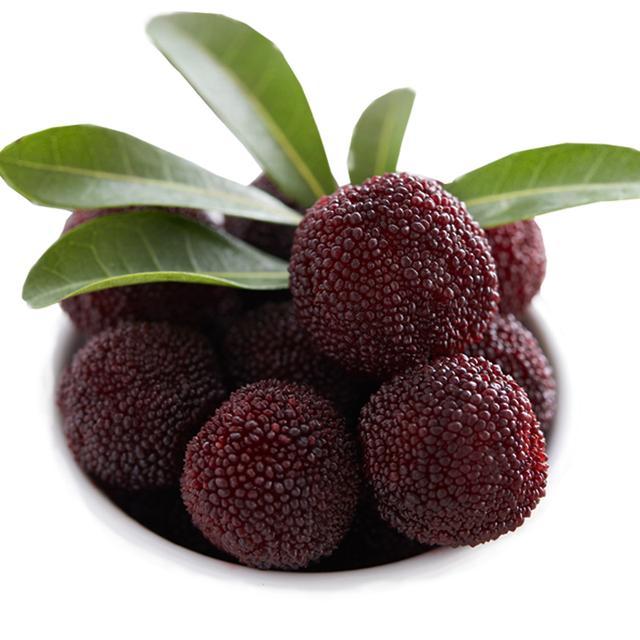
In Nanlian rural area, a batch of exceptionally large water chestnut-type bayberries was once selected and bred, and the locals named them "Ciji" (meaning the water chestnut-type bayberry of Cicheng, homophonous with "Cixi"), and in 2008 they obtained improved forest tree variety certification from the Zhejiang Provincial Forestry Department (valid for 3 years). According to surveys, the large "water chestnut"-type bayberry is purple-black, and its most prominent feature is its relatively large fruit type, with single fruit weight and fruit diameter reaching 14.25 grams and 3 cm respectively, both significantly larger than the single fruit weight (9.05 grams) and fruit diameter (2.55 cm) of ordinary water chestnut-type bayberries in the same orchard. Through testing of Ciji-type and ordinary water chestnut-type fruits, among all indicators, except that the content of the main organic acid, citric acid, showed no significant difference, the single fruit weight, fruit diameter, total anthocyanins, juice, pH value, soluble solids (SSC 13.31%), soluble sugars (total sugar 125.97 mg/ml), and organic acids (10.04 mg/ml) of the fruit were all significantly larger than or higher than those of ordinary water chestnut-type bayberry. In appearance, the flesh spines are more obvious, the hardness is higher, and it is more resistant to transportation and storage.
Nanlian's ability to produce such outstanding bayberries is inseparable from the local unique microclimate, and even more inseparable from the careful cultivation of the bayberry farmers. According to Fu Mingliang, chairman of the Kedi Bayberry Professional Cooperative in Jiangbei District, the large "water chestnut"-type bayberry of the "Mingliang" brand cultivated by the cooperative has successfully applied for green food certification, and has won honors such as the gold award of the "Top Ten Famous Fruits" from the Ningbo Forestry Bureau and the largest fruit type award in the bayberry competition. In Nanlian Village, villagers can generally cultivate such large bayberries. Generally, the selling price per 500 grams of bayberry is 20 to 25 yuan, and can reach as high as 200 yuan. Bayberry farmers generally earn more than 50,000 yuan per year, making it a magic weapon for local farmers to get rich. Through summarizing the local bayberry farmers' cultivation techniques, five key points are concluded:
1. Intertillage and weeding
For adult fruit trees, shallow tillage and loosening of the soil 2 to 3 times a year. Before mid-March, turn the soil in combination with soil improvement. Before fruit harvest, clear miscellaneous shrubs within a tree disk diameter of 2 m. After harvest, intertillage and loosen the soil, basically maintaining a weed-free state. On sloping land, the "natural grass-growing method" should be used, that is, after clearing miscellaneous shrubs and perennial grass auxiliary plants when turning the soil in winter, allow annual grass auxiliary plants to grow naturally, and only cut the grass types under the trees before harvest to facilitate harvest. Before summer drought, soil-surface grass prevents drought. Weeds, vines, shrubs, etc. under the forest are removed by manual methods such as hand pulling, hoeing, cutting, and chopping, without using herbicides such as glyphosate.
2. Timely pruning
Except during the fruiting period, pruning can be done at any time. It is suitable to prune from late October to March of the following year. All vigorous water shoots in densely branched parts should be removed, and short cutting can be carried out in empty parts to cultivate fruiting branches. Overdense branches, crossing branches, and diseased branches should be cut off from the base. If the central trunk grows vigorously, the strong can be removed and the weak retained for "changing the head," so that the central trunk rises in a zigzag manner. If there are too many thick and vigorous branches in the upper part of the canopy, 2 to 3 strong branches can be thinned out, implementing "opening skylights" in the canopy, so that the branches of the bayberry tree are evenly distributed, achieving the effect that wind can blow in, sunlight can shine in, and dew can be dried.
3. Emphasis on flower thinning
During the full bloom period of bayberry, after more than 1/3 of the flowers have faded, use flower-thinning agent to thin flowers. Generally, for each 40-gram packet of bayberry flower-thinning agent, first stir fully with a small amount of warm water, then add 12 kg of clean water to dilute. Particular attention should be paid to the spraying time. Generally, during the full bloom period, it is necessary to go up the mountain to observe every day. Do not spray when the flower color is bright red; spray when the female flower color changes, so that six-tenths of the flower clusters can be removed.
4. Slight fruit thinning
After spraying the flower-thinning agent, if the fruit-setting rate is still very high, manual fruit thinning must be carried out. The earlier and more uniform the thinning, the better the fruit quality.
Generally, long fruit branches of 15 cm or more retain 4 to 5 fruits, medium fruit branches of 15 cm retain 3 to 4, and short fruit branches below 5 cm retain 1 to 2. At the same time, thin out small fruits, diseased and insect-damaged fruits, and deformed fruits.
5. Scientific fertilization
Fertilize 2 to 3 times throughout the year. Generally, the ratio of nitrogen, phosphorus, and potassium for fruiting trees is 4:1:5. Compound fertilizer can be applied separately in March when the plants begin to grow or in early June when the bayberry is the size of a soybean. Apply 2.5 kg to large adult trees and 0.5 kg to small trees. Chlorine-containing fertilizers are prohibited. Apply autumn-winter base fertilizer from October to December, using 20 to 25 kg of coked mud ash and farmyard manure.