Orchids that only grow buds but never bloom: how can fellow orchid growers ease the pain in their hearts?
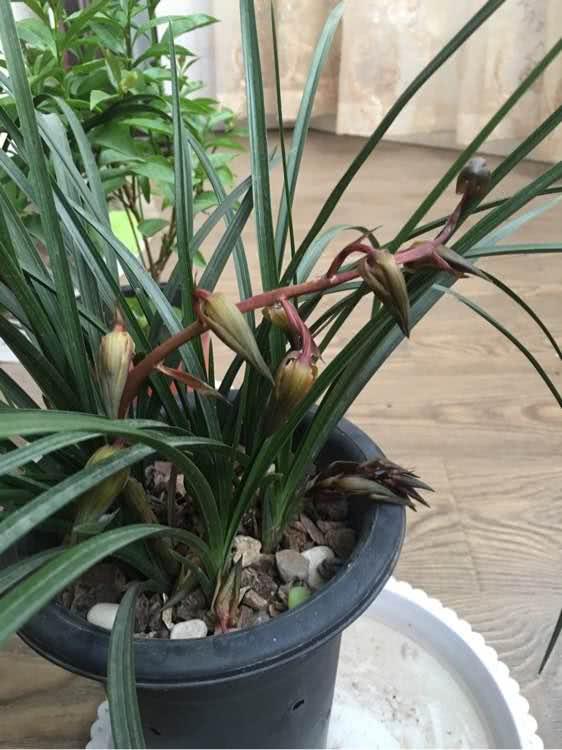
For some novice flower growers, or those who have not yet cultivated orchids long enough to be truly skilled, an orchid finally grows flower buds, but they just will not open for a long time, and some buds even shrivel and dry up before opening. So what exactly is going on, and how can we prevent this from happening?
When an orchid has buds like this but does not bloom, it is actually bud blasting. Orchid flower bud differentiation occurs during the maturation period of the new shoot and lasts nearly 1 year. Generally, after a year of nutrient accumulation, the flower buds of the orchid emerge from the medium. After the buds emerge, there is a relatively long process of growth, bud development and vernalization. This process is what most tests orchid-growing skill. If you know how to grow them, they can bloom in just over 20 days; if they are not grown well, you may not see a single flower for months, and in severe cases the flowers will shrivel and dry up.
During the process from bud formation to blooming, the following points must be done well to ensure that our orchids bloom abundantly.
1. Withholding water. The amount of watering is also a major condition for orchids to bloom, and moisture must be controlled well. Too much moisture will make the orchid plant grow leggy and make it difficult for flower buds to form. Appropriate moisture is one of the ways to promote blooming. However, if moisture is lacking, bud clamping will occur. When should you water? You can use a flower and plant soil moisture meter; insert it into the potting soil and it can detect whether the soil is short of water.
Never water with a half-soak, that is, the kind where the surface is wet but the inside is still dry. When watering, you must water thoroughly; you can use a fine-nozzle watering can to water slowly along the edge of the pot. It is recommended not to spray the leaves, because if leaf spraying is not done well, the leaves are prone to black spot.
2. Fertilizing. Generally, flower bud differentiation is enough to show that nutrition is sufficient, so there is no need to continue applying fertilizer to the roots; only foliar topdressing is needed. The so-called attention to fertilizer and water management during the flowering period is to promote the flower buds to swell and develop fully, that is, to pay attention to foliar topdressing. You can choose an organic nutrient solution specially for orchids; spraying it on the leaves about once every half month can promote blooming. But note that when fertilizing, do not spray it on the flower buds, as this will cause bud drop.
3. Light and ventilation. In summer, special attention must be paid to light and ventilation, otherwise the roots are very easily suffocated and damaged. During the day, you can place the orchid pot on an indoor balcony, but do not let direct sunlight hit it, then move it back indoors at night, and try to let the orchid grass receive wind bathing.