How to handle 130,000 illegal factories? The Executive Yuan will propose a plan in early July
The highly controversial counseling system for illegal factories under Articles 33 and 34 of the Factory Management Guidance Act (hereafter the Factory Guidance Act) has, over 8 years, helped fewer than 40 operators successfully convert to legal operation. Will the deadline of 2020 be extended further? Executive Yuan officials said that amending the law involves the responsibilities of multiple agencies, including the Council of Agriculture, the Ministry of Economic Affairs, the Ministry of the Interior, and the Environmental Protection Administration, and that the relevant ministries are coordinating, with no clear consensus yet. It is expected that cross-ministerial consensus will be built and a draft amendment prepared within one month, with a special report to the Legislative Yuan on July 2.
Avoid repeated extensions of the counseling period; the central government must now face the problem squarely
Lu Zhenhui, a counselor in the Economic, Energy and Agriculture Division of the Executive Yuan, explained on May 31 when accepting a petition at a protest press conference by environmental groups, "Legalizing illegal factories on-site and extending the counseling deadline will not be the version proposed by the Executive Yuan. According to the current direction of the amendment, counties and cities must propose cleanup plans, but the schedules for each county and city can still be discussed." Yun Ruilong, a section chief of the Central Region Office of the Ministry of Economic Affairs, who was also present, said, "The Ministry of Economic Affairs will deliberate carefully, and the counseling period should avoid repeated extensions as much as possible."
Hsu Cheng-tsung, director of the Central Region Office of the Ministry of Economic Affairs, which is mainly responsible for illegal factory affairs, also said, "For factories that can be guided toward compliance, the government will provide assistance; those that cannot be guided toward compliance must still be shut down." You Chen-wei, deputy director-general of the Industrial Development Bureau of the Ministry of Economic Affairs, explained, "Unregistered factories that existed before May 20, 2016 must meet three conditions: they must be in low-pollution industries, pose no public safety concerns, and pay taxes legally. Only then will handling options be discussed, including relocation, shutdown, or guidance toward legalization. We hope to solve this difficult problem through institutionalization in one go." The relevant legal framework and policies are still undecided, and the relevant ministries will conduct intensive consultations this month and give a special report to the Legislative Yuan on July 2.
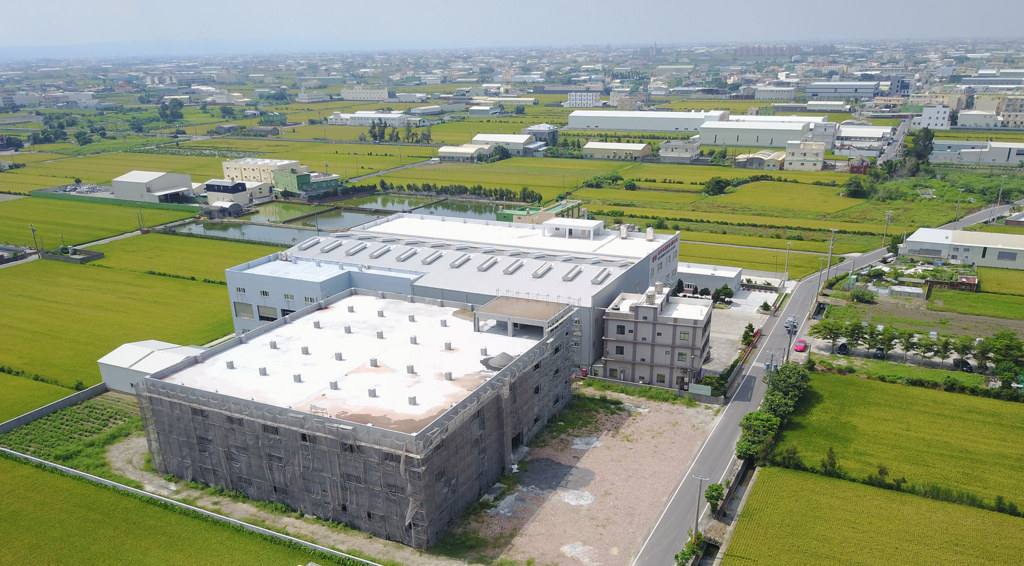
What is the specific plan for relocating polluting illegal factories out of farmland? Director Hsu Cheng-tsung said, "Counties and cities will first conduct inventories, and the relevant schedules and division of labor will also be planned out. Especially for major industrial counties where the problem of illegal factories is severe, the Executive Yuan will not muddle through this time and will face the problem of illegal factories squarely." A relevant official of the Ministry of Economic Affairs said, "At present, Changhua County and Taichung City have clearly proposed inventories of unregistered factories. Changhua County plans to conduct a street-by-street general survey of all 26 townships and cities in the county, while Taichung City will conduct a regional inventory around the Fazi River." Other counties and cities will maintain the approach of conducting inspections only after reports from the public.
Section Chief Lin Chi-chun of Changhua County explained that this inventory is part of the "Factory Management Geographic Information System Database Construction and System Update Plan," which is intended to combine counseling measures and survey manufacturers' willingness to relocate, but will only gather information and will not involve subsequent penalties for illegal use of land or buildings.
Kuo Hung-yi, a full-time lawyer at the Environmental Rights Protection Foundation, pointed out, "County and city governments already have the authority and responsibility to investigate factories under the Factory Guidance Act. As long as manufacturers have not completed factory registration and engage in manufacturing or processing of goods without authorization, local authorities should impose fines according to law and order them to improve within a deadline. If factory registration is still not completed by the deadline, continuous fines may be imposed until operations are suspended." Chen Jui-pin, secretary-general of the Taiwan Environmental Information Association, believed, "Even known illegal factories should be penalized first, and those discovered later can be added afterward. There is no need to wait until the entire inventory is completed before starting to handle them."