Bonsai teaching: Master the principles of branch point distribution in styling
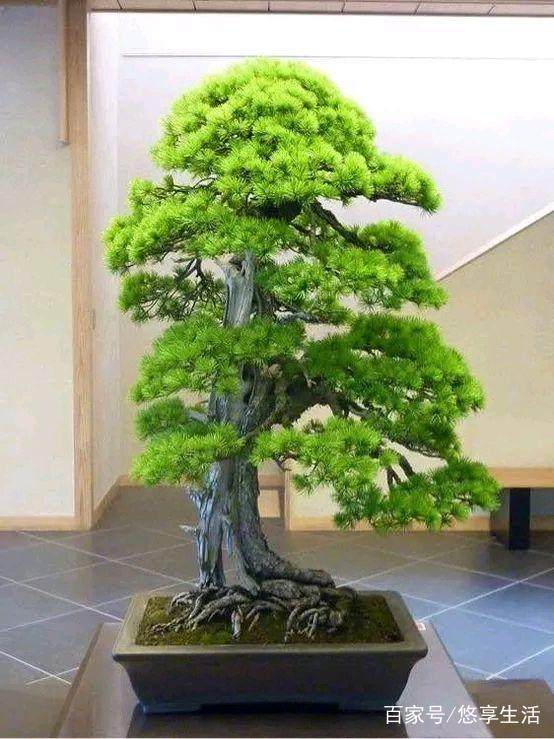
In the appearance of a bonsai, branches are the primary external element. Clever branch distribution and manipulation can increase the length of the embryo and avoid the embryo's shortness. If the branches are unevenly distributed, the entire bonsai gives people a sense of beauty. Here, let us talk about the basic distribution of potted plants and branches.
1. Determine the distribution of branches.
As usual, bonsai is beautiful. Song best embodies the ancient state of trees; the vitality and diversity of trees make bonsai more beautiful and thought-provoking. The distribution of branches should be close to the bottom. Secondly, we must match the shape of the tree embryo. (1) Straight trunk. When the first branch extends to the right, the second branch will come out, and the remaining third branch and fourth branch will move forward. The left branch is short, and the right branch is short. The front and back branches are both short and short; they cover the trunk and create rich depth. Straight-trunk bonsai branches usually droop, giving a sense of vicissitudes.
Correct and incorrect branches do not necessarily follow the required scale. As stated above. The left branch in the center is raised, the left side is empty, and the front branch and back branch are on the left and right sides. (2) Curved trunk style. Curves are divided into face and sun. The inner curved surface is the negative side, and the curved outer surface is the sunny side. The branches of a curved-trunk bonsai are usually on the sunny side, which makes the trunk's curves more natural and smooth, and the entire bonsai richer and more unsightly. As usual, the shady side is not suitable for branches; shaded branches fill the concave side of the trunk, and the bonsai looks mechanically fat. So curved branches in a bonsai must be removed.
On the side of a trunk-style bonsai, an occasional trunk coil will have a hard angle, which is very unnatural, but if it is matched with a side branch in this part, it can fill it better. Like a painting
In addition, we see that there is another branch method called bonsai. To deal with sparse branches and tall trunks, using deciduous branches often leads to an unexpected apex.
"Dropped branches" are usually used for straight-trunk bonsai. If the branches are too dry, or the trunk and branches are sparse, they can use the "hard-angle branching" technique. But hard-angle shaping is more difficult. The next stage will introduce the techniques of dropped branches and hard angles.
2. The three seasons of bonsai are inelegant and inelegant.
The three seasons of bonsai are unsightly. One season is inelegant three. It refers to the multiple seasons during the tree's growth in which the tree can be appreciated. This technique is to first remove all the leaves of the potted plant, so that all the branches can be seen in front of the appreciator, so that people can appreciate and evaluate each branch of the work. It best represents the bonsai artist's creation and the artistic skill of the work. This technique mainly uses branches as the main content to process the picture.
For a period of time, it has green leaves, dense foliage, and vigorous summer weather. Because of these three changes, the art is wonderful.