Bonsai exposed root technique tutorial, how much do you know?
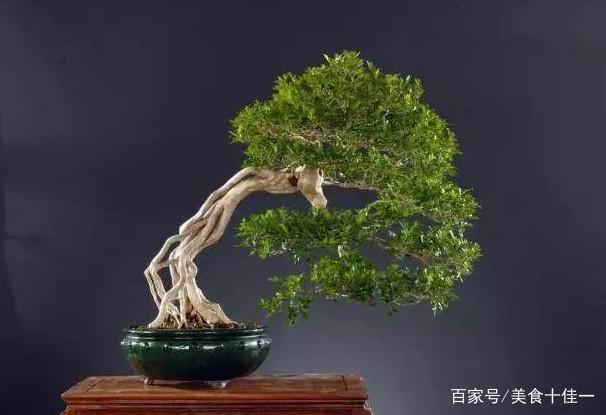
Bonsai is a tree growing between crevices, weathered and scattered by rocks or by trees along coasts and rivers. The sand around the roots has been washed away, the roots are exposed, the tree is laden, and the twisting, curving roots of the bent roots are exposed, and the weight of the tree propped up by sunlight can serve as the trunk. It is not surprising that local connoisseurs see such natural conditions. Common tree species include snow, Fujian tea, and Zhuangyuanhong. The pots are mainly round, oval, and deformed pots. Today, the Taishan Garden website introduces the notes and positions of bonsai culture for masters, hoping that masters can study together.
1. Root afforestation method: If the roots of a potted tree show on the surface of the pot, adding the ancient dragon-bell look of the potted landscape, the pot can be changed to upper roots, with the lower roots tied deeper, and the potted root system raised, appropriately thinned, some flying claws, some emerging from the soil. OP exercises, such as Panlong Cave, each showing thousands of autumns.
2. Rooting method: For randomly planted tamarisk species, green can be struck on the stump, and in spring the soil is soaked with moist bacon, and after 2-3 years the new roots age, then the soil is removed and shoveled, and then pruning is stopped as desired.
3. Sleeve rooting method: After the crown is pruned and formed, some tree species such as pomegranate that do not sprout easily can be pruned and formed on the crown, peeled in a ring for a week, and then the peeled stem is wrapped with a cola bottle for a week. A broken sleeve, filled with bacon soil, then watered to keep moist, and then after 2-3 years, then the barrel is removed, and the roots are removed, and the roots are removed. Type, root of roots, root tail drill, fine roots flying, each holding a burst, like a dragon claw.
4. Knot-ring method: For tree species with tender roots and branches such as ginkgo, Xiangxiang, and Daphne, the roots can be extended, and then the root tails are extended into the soil. The slender trunk and trunk branches also pass through the bow and ring, and the shapes of the branches and rings are attended to.
5. Crab claw LLT method: After cutting around the base of the stump, bury the soil. After the new roots have lignified, use ten as the outer shape of a crab claw, that is, two crabs and eight small tree roots are crab feet, the crab feet are lifted, and then buried. This can not only renew the roots, but also increase the artistic quality of the bonsai.
6. Gourd reed root method: If you want to cultivate a bonsai, we can choose tree species such as those with a main root and long and numerous roots, such as Chun and Jiuli. The main root is cut off, the lateral roots are surrounded by a long ring of natural ornamental stone, and then the root tails are whipped into the pot soil. Such as the potential of the golden rooster.
7. Shilu person method: First, use natural ornamental stone with artificially dug holes as an appendix to the stump, and then insert a slender root stump through the appendix perforation into the root head.
8. High exposed root method: If you want to cultivate a Panlong panorama, you can use a long root-shaped dragon root system to connect to the root of the trunk, graft it on the upper end of the trunk, and wind the tree roots around the trunk, then erect a long tube on the trunk to keep it moist. Regeneration of roots. The root tails are planted in the pot soil. After the roots heal, remove the sleeve and soil to show the coiling dragon posture.
9. Root art root method: This is a situation of a stump bonsai in which natural root art is connected with a bonsai, choosing underground roots, such as pictographic root materials like ginseng or He Shou Wu, as the stump, exposing the pot surface, the lower main root, and the lace. The reckless roots are planted in the pot soil, and after rooting, new roots sprout on the root head, composing the plant, He Shou Wu, how He Shou Wu, can stand upright.
10. Rooting method: Planting a banyan tree in a rectangular bowl can make the roots sprout. After forming the crown, use a rectangular glass cover, cover with a rectangular glass cover, to increase the moisture in the cover, to stimulate the lateral trunk of the bonsai to root and form new roots. The roots will grow into new trunks. After a few years, a potted dry bonsai can be produced.