Eight flowers mosquitoes fear most; keep one pot and you can skip mosquito coils and floral water
Once summer arrives, mosquitoes buzz around your ears, and it is truly unbearably annoying. Lighting mosquito coils only stuns them; a few hours later they are bouncing around again. Floral water has a strong smell; while it fumigates the mosquitoes, it also makes you dizzy... It would be better to keep a few pots of flowers at home; when mosquitoes smell them, they take a detour and do not even dare come in the door!
1. Mosquito repellent geranium
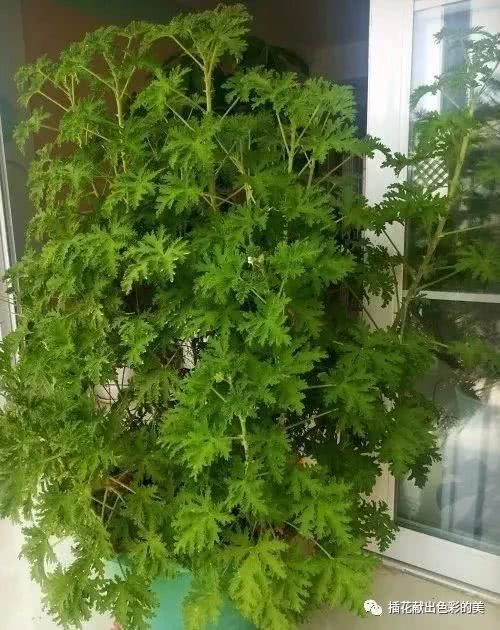
Mosquito repellent geranium is actually scented geranium (Pelargonium graveolens). Because it carries a rich lemon fragrance and can drive away mosquitoes, many people call it mosquito repellent geranium.
Benefits of mosquito repellent geranium
The scent of mosquito repellent geranium contains citronellal, and it becomes stronger when the temperature exceeds 15°C. It not only repels mosquitoes but also purifies the air at home. For a room of about 15 sq m, placing at most 2 pots is enough.
Cuttings and care of mosquito repellent geranium
Mosquito repellent geranium is very easy to propagate from cuttings, and it is not too late to plant it now! Cut 5-8 cm long branches; to ensure the survival rate, you can cut several and root them together.
Find a few plastic cups, poke a few holes in the bottom (for drainage and airflow), and fill them with moist sandy soil or coir soil, either is fine.
Insert the branches into the soil, one branch per cup, place them in a shady spot away from sun exposure, mist with water daily to keep them moist, and after about 7-15 days when they have rooted, you can repot them together with the soil.
Mosquito repellent geranium can be grown indoors or outdoors; just avoid high heat and strong sun exposure. Water only when the soil is dry. Because its metabolism is fast, the leaves easily turn yellow and wither, and after you remove them, it will keep growing.
2. Night-blooming jasmine
Many mosquitoes come out at night, which is maddening. Quickly keep a pot of night-blooming jasmine, so they cannot tell east, west, south, or north at night!
Benefits of night-blooming jasmine
Night-blooming jasmine has a strong fragrance, especially stronger at night, and can drive away mosquitoes that are active frequently at night. However, it is still recommended to grow it in the living room or on the balcony; placing it in the bedroom may affect sleep.
Cuttings and care of night-blooming jasmine
Besides sowing seeds, night-blooming jasmine can also be propagated directly from cuttings, which is faster and more convenient! Cut 1-year-old branches into 6-12 cm small sections, and remove the leaves to preserve nutrients.
Soak the branches in rooting water, or insert them into acidic leaf mold soil, coir soil, or cinder soil, all are fine. Keep them in a shady place, mist with water daily, keep the air and soil moist, and roots will form in about 2-3 weeks.
Night-blooming jasmine likes a hot and humid environment and can bloom from May to October. This heat-tolerant and moisture-tolerant flower is easiest to keep alive in summer; as long as it gets enough water every 1-2 days, it will grow vigorously!
3. Venus flytrap
This big shot catches both mosquitoes and flies. Although it looks like a mung bean sprout, its two "toothed mouths" are very fierce.
Once a mosquito or insect crawls onto the Venus flytrap's trap, its mouth immediately closes, trapping the mosquito or insect, then it secretes digestive fluid to digest the small insect and absorb it as its own nutrients.
Benefits of Venus flytrap
Although Venus flytrap can catch flies, mosquitoes, and fungus gnats, it is relatively passive and needs mosquitoes and insects to come to it, so you can plant more of them to increase the killing power! Note: Venus flytrap is harmless to people.
Sowing and care of Venus flytrap
Venus flytrap can be sown directly. Prepare a transparent disposable lunch box, poke a few holes in the lid for airflow, put some moist chopped sphagnum moss in the box, and scatter the seeds inside.
After sowing, place it in a shady place, do not let it be exposed to the sun, keep the moss moist, and it will sprout in less than a week.
Venus flytrap likes moisture. Usually keep it in a cool indoor spot, and it is best to grow it in sphagnum moss. Mist with water every 1-2 days, and it will soon grow small "pods."
4. Sundew
Although sundew is small, it can be called a real "mosquito nemesis." As soon as mosquitoes smell it, they come to throw themselves into the net; it kills mosquitoes fast, ruthlessly, and accurately!
A few days ago someone praised it: a small plant caught 12 small flying insects in one day.
Benefits of sundew
Sundew is relatively effective against mosquitoes and fungus gnats, and occasionally it also catches some large insects. It is best to remove large insects by hand, otherwise it has difficulty digesting them, and they also affect its appearance.
Sowing and care of sundew
Sundew is similar to Venus flytrap. Use moist chopped sphagnum moss, scatter the seeds, mist with water daily, and just wait for them to sprout.
Sundew takes about 20 days to grow into shape. Along the way, you can divide single plants into separate pots, or not divide them, according to your own preference.
The "little water droplets" on sundew are its unique sap, used to stick to small insects, so do not knock them off. When watering, be careful to water into the pot, or spray water upward into the air to increase air humidity.
5. Dalmatian chrysanthemum
Many people grow lots of flowers in their yards and balconies, which easily attracts mosquitoes and insects, giving them a headache. Quickly plant Dalmatian chrysanthemum. Its pyrethrins are one of the raw materials for mosquito coils, and can drive mosquitoes and insects far away!
Benefits of Dalmatian chrysanthemum
Dalmatian chrysanthemum is very suitable for planting in yards and balconies to repel mosquitoes and insects. Many botanical gardens plant Dalmatian chrysanthemum on a large scale to prevent excessive mosquitoes and insects in summer. The picture below shows a hillside of Dalmatian chrysanthemum in Hiroshima, Japan, and it is absolutely stunning.
Sowing and care of Dalmatian chrysanthemum
Ordinary garden soil can be used to sow Dalmatian chrysanthemum. During this period, keep the potting soil moist; there is no need to pour water heavily. Mist with a spray bottle every 1-2 days, and it will sprout in 3-5 days.
Dalmatian chrysanthemum is relatively heat-tolerant and drought-tolerant. Seedlings can be exposed to light after 2-3 weeks. In normal care, just avoid strong sun exposure, and it will bloom in about 1 month.
6. Fragrant wood
Fragrant wood is a common green potted plant for us; it can be grown at home and in the office. It not only absorbs formaldehyde and purifies the air, but also repels mosquitoes. However, 90% of fragrant wood on the market now is fake, substituted with pepperwood, so everyone must distinguish them clearly!
Benefits of fragrant wood
Fragrant wood also relies on scent to repel insects. Its scent is similar to citrus peel; when small insects smell it, they take a detour. Some have a relatively light scent, so you can keep 2-3 pots at home.
How to distinguish fragrant wood from pepperwood
The leaf tip of fragrant wood has a pair of leaves, while pepperwood has only one leaf. Friends who grow fragrant wood at home should quickly check whether you were also fooled.
The new leaves of fragrant wood turn red, while the new leaves of pepperwood are green.
Only fragrant wood has the mosquito repellent effect, while pepperwood cannot repel mosquitoes, so everyone must keep your eyes open.
7. Mugwort