How to grow gardenia? These 4 points are all different
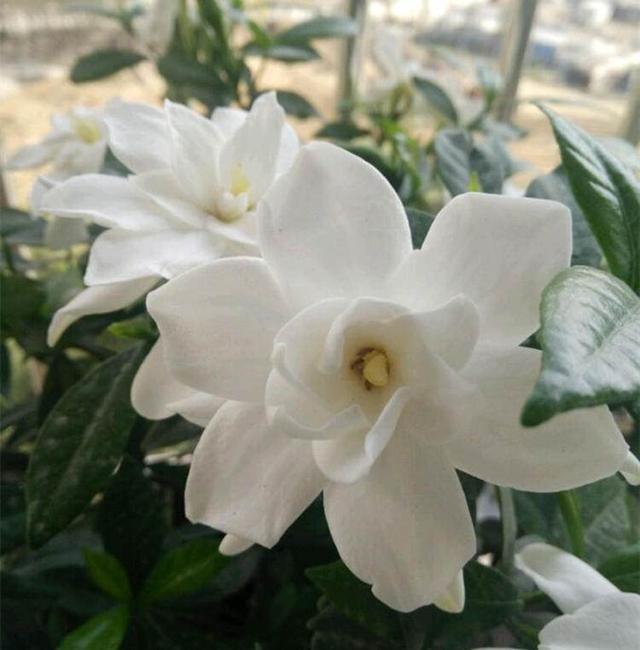
Gardenia is a precious flower, with glossy emerald-green leaves, thick and pure white petals, and a rich, fragrant scent, making it much favored by people. Gardeners in the south often plant it in open courtyards, while in the north it is mostly grown in pots for ornamental viewing, and it can also be used as a cut flower. Gardeners are all looking for ways to grow gardenia; although the methods vary, the following 4 points are not quite the same.
Point one: Planting
Gardenia has many varieties and cultivars. Among the commonly cultivated ones are little-leaf gardenia, with small obovate leaves and smaller, double flowers; and large-flowered gardenia, with large leaves and large flowers, usually double but sometimes single, with a strong fragrance.
No matter which variety it is, when cultivating it you need to know that gardenia likes a warm and humid environment and is relatively cold-tolerant. Gardeners in the south can leave it outdoors through the winter, while in the north it must be moved indoors to overwinter. Gardenia prefers acidic soil; in neutral or alkaline soil, the roots absorb less iron and other elements, which is often one of the main causes of yellowing leaves.
Therefore, for potted gardenia, a relatively fertile acidic soil is needed, generally made by mixing 3 parts leaf mold, 5 parts garden soil, and 2 parts sandy soil, and 1-2 grams of sulfur powder should also be added per kilogram of growing medium to increase the soil's acidity.
During cultivation, good light should be provided in spring and autumn, otherwise it is unfavorable for its growth, flowering, and overwintering. In summer, as the light intensifies, gardenia should be placed in a semi-shaded environment; if exposed to scorching sun, the leaves will turn yellow and even drop.
Point two: Watering
Gardenia likes water; in some regions gardenia is called water zhi zi, which exactly reflects its moisture-loving habit. So the soil should often be kept moist. In the dry seasons of spring and summer, water should also be sprayed on the leaves and the nearby ground every morning and evening to increase the relative humidity of the air; only in this way can it grow luxuriantly.
Point three: Fertilizing
Gardenia does not particularly like fertilizer. During the growing period, a flower organic nutrient solution can be applied once every half month, or a 500-fold diluted organic nutrient solution can be used alternately with 0.2% ferrous sulfate water. This can both meet the nutrient requirements and prevent the soil from becoming alkaline due to long-term watering with alkaline tap water.
Point four: Pinching
For gardenia, pinching should be used during the seedling stage to control its growth and help it form a graceful plant shape. Once it has taken shape, for large-flowered gardenia you can pinch the new branches in spring when vigorous growth is about to stop, to encourage plump buds at the base of the branches and the formation of flower buds; for little-leaf gardenia, there is no need to pinch.