Orchids: From Planting to Blooming, Get These 4 Points Right and the Flower Quality Won't Be Poor
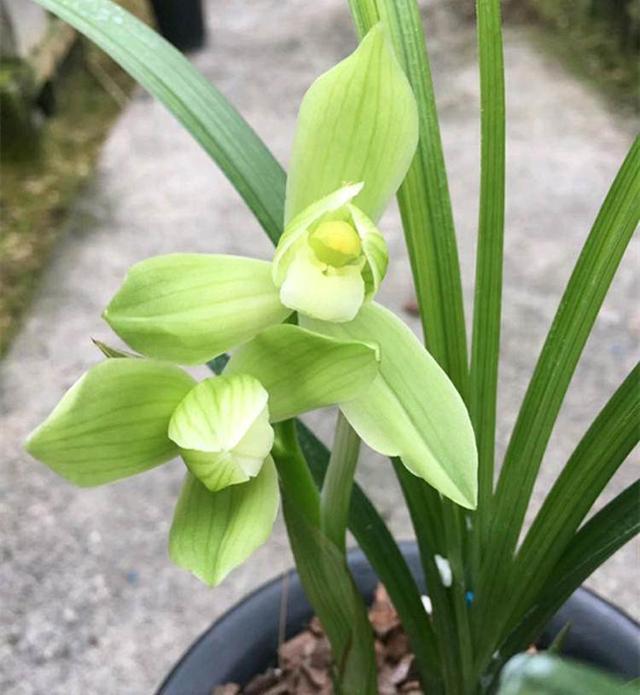
As a precious flowering plant, orchids are loved by many, yet few people grow them well. People say orchids are quite fussy, but that is not really the case. In orchid care, from planting to blooming, if you get these 4 points right, the flowers will not be poor.
1. Site selection
To grow orchids, the site should be open on all sides, well ventilated, and close to a pond or small stream, with moist air and no coal smoke pollution. Of course, for orchids kept at home, these requirements may not be met, but that does not matter, as long as the site faces south and the air humidity is around 70%. This way, the growing needs of the orchids can still be met. In addition, reduce afternoon sunlight exposure in normal times and adjust humidity and temperature well.
2. Watering
The water used for watering orchids is best neutral water; rainwater or spring water is preferable, and water containing salt and alkali or tap water should not be used. Watering should be determined according to temperature conditions. In spring, when the temperature is low and new shoots have not yet emerged from the soil, the potting soil should be dry and the amount of watering should be small; in summer and autumn, when the temperature is high, orchids grow vigorously and evaporation is large, so the amount of watering should be increased, and watering needs to be done in the morning or evening
If the plum rain season comes when orchids are sending out leaf buds, the potting soil should still be slightly dry; too wet will cause the leaf buds to wither. After autumn, when the weather turns cool, the amount of watering should be reduced as appropriate, keeping the soil moist. In winter, when the temperature drops significantly, indoors, autumn orchids should be kept dry, and spring and summer orchids should also be kept slightly dry, with watering frequency reduced accordingly, and watering should be done at noon.
3. Fertilizing
For planting orchids, cake fertilizer can be used. The mixing ratio is 4 parts plant ash, 10 parts soybean cake, and 6 parts bone meal. Mix evenly, put into a jar, and add water several times until the soybean cake swells fully. Cover the jar tightly and seal it; after one year it will be completely decomposed, then make it into dry granules, and place them on the surface of the pot when using. If you find this troublesome, it is recommended that flower lovers use an organic nutrient solution specially made for orchids, with comprehensive nitrogen, phosphorus, and potassium, purely plant-fermented, which will not damage the roots and promotes rapid orchid growth.
When using organic nutrient solution to fertilize orchids, generally start before the new shoots emerge from the soil in May and stop fertilizing at the beginning of autumn, applying once every 15-20 days, following the principle of applying thin fertilizer frequently. Especially in June-July, when orchid leaf buds have grown about 1.5 cm, you can water with an 800-fold diluted organic nutrient solution. Fertilizing should be done in the evening, and the next morning water once with clear water.
4. Shading
Except in early spring and winter, orchids should be placed under an open-air shade shed. The shade shed should be well ventilated. Before summer arrives, the reed curtain must be spread open after 9 a.m. every day. When orchids have just been brought out of the room in March and April, they can get more sunlight, and afterward the shading time should gradually increase, until the hot weather period from June to September in summer and autumn, when the reed curtain can be opened early and closed late.