Cool down with a watermelon on a hot summer day. If you want to enjoy a good watermelon, these selection tips are worth knowing well.
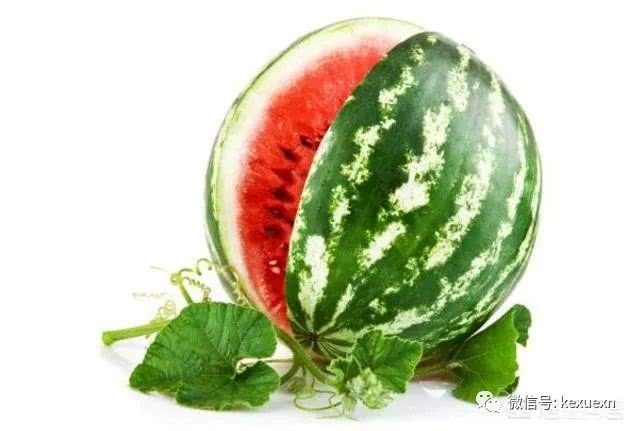
We have basically entered the season when watermelons hit the market in large quantities, and as the weather gradually gets hotter, watermelon has become everyone's first choice for beating the heat. So how to choose a watermelon has become a tricky problem facing everyone. With a layer of rind in between, we cannot see the flesh inside, and it is impossible to judge the ripeness, sweetness and taste of a watermelon. Below, Science Xingnong will explain how to choose a melon.
The simplest way is naturally to buy a watermelon that the shop has just cut open, which is simple and convenient and saves you from having to choose, and the quality of the watermelon is obvious at a glance. Some shops even let customers taste the watermelon and buy only after they are satisfied, which is naturally also the safest way to buy.
But sometimes we may buy a lot of watermelons, and then we can no longer buy the ready-cut ones from others, since after all our stomachs' capacity for consumption is still limited. At this point we have to buy whole watermelons.
First, looking at the shape of the watermelon, those misshapen and ugly ones, melons with an unattractive appearance, are naturally outside our purchasing range. Don't tell me that so-called misshapen melons taste good. Whether they really taste good or not, you are welcome to buy one and try it.
Second, regarding the shape of the melon body, there are generally two kinds of watermelon, the oval-spherical type and the round-spherical type, and each of these two has its own merits. Generally speaking, oval-spherical watermelons have relatively thin rinds, and the stripes on the surface of the melon body are usually quite clearly visible, though among this type there is a kind of black-rind melon, which also belongs to the thick-rind watermelons. Round-spherical watermelons mostly have relatively thicker rinds, but note that this is by no means absolute, it is only a rough situation.
The flesh of thick-rind watermelons generally has a good sugar content and tastes quite sweet, while the flesh is slightly on the firm side, with an excellent mouthfeel, and is also a type I personally like. As for thin-rind watermelons, the flesh is plentiful and the watermelon tastes relatively soft and loose, which is also a type many friends like. Here it also varies from person to person.
Next is judging the ripeness of the watermelon. In fact, for most friends, judging whether a watermelon is ripe by tapping it and relying on the vibration sound of the melon cannot succeed, because most friends have relatively little experience. Here Science Xingnong tells you a clever trick: pick up the watermelon and hold it by your ear, squeeze it with both hands, and listen to the sound inside the watermelon. If the watermelon makes a sizzling sound, it means the watermelon is very well ripened; otherwise it is not ripe. This method can achieve 100 percent accuracy, unless you fail to squeeze the watermelon.
This is Science Xingnong. You are welcome to follow, and let us grow our knowledge together.