Snip a stem from a flowering plant and grow a whole pot of it, so why buy more flowers
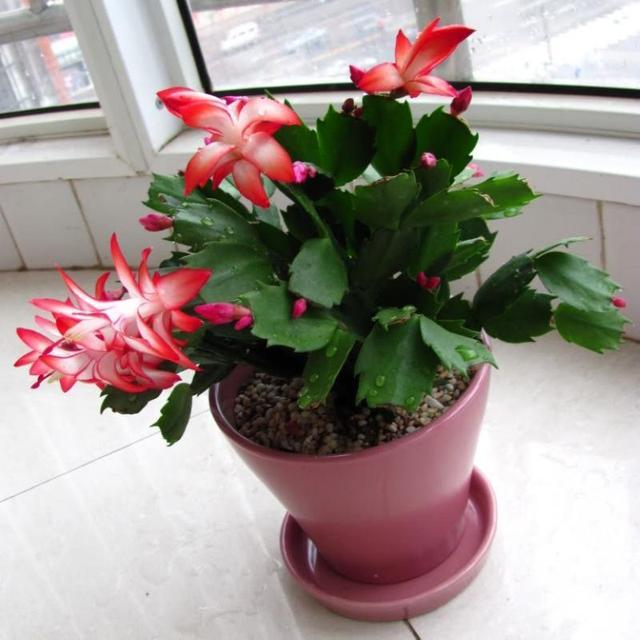
Besides being something to admire, growing flowers is really about enriching our spare time; tending to plants and flowers also lets us calm our minds, so taking cuttings from flowering plants becomes a most enjoyable pursuit. The new potted plants obtained through various propagation methods give an absolutely explosive sense of accomplishment!
1. Christmas cactus
The Christmas cactus (Schlumbergera) counts as a fairly easy potted plant to grow, but getting it to burst into full bloom is no easy matter. During the flowering period it must not be moved around at will, must not be watered too much, and needs to be guaranteed sufficient light, so that the Christmas cactus can produce more flowers.
The Christmas cactus is made up of many stem segments, and a section can be cut off for propagation by cuttings. Generally, choose a stem with two growth nodes, though it is best to choose the topmost stem segment when the flowers have withered; at this time the flowers have just fallen, and its leaves contain relatively more growth hormones, with fairly high biological activity. Usually after breaking it off, insert it into slightly moist sandy soil, keep it in a moist, warm and well-ventilated environment, and generally after one or two weeks it will take root and sprout.
2. Kalanchoe
Kalanchoe (Kalanchoe blossfeldiana) is a succulent plant and is also fairly easy to care for. When taking cuttings, you only need to pick off a relatively thick leaf, insert it into the potting soil, give it a little water, and keep it warm and it will quickly take root and sprout. Alternatively, choose a stem after flowering, let the wound dry slightly, and it can be inserted into the potting soil; generally it will take root in about a week.
3. Heartleaf ice plant
The heartleaf ice plant (Aptenia cordifolia) grows very fast and is a flowering plant suited to rough, low-maintenance care. To make it grow lushly, usually ensure sufficient scattered light and keep the potting soil slightly moist without waterlogging. Propagation is also very simple: just cut a branch about 5 cm long, let the wound dry slightly, then insert it into slightly moist soil, and generally in about one or two weeks it will take root and sprout.
4. Moss rose
The moss rose (Portulaca grandiflora) has rich flower colors and many varieties and is very suited to rough, low-maintenance care. In normal care it must be given sufficient sunlight; only with sufficient light can it grow robustly and bloom abundantly. Propagation is also very simple: just cut a section of stem, insert it into slightly moist sandy soil, and keep the potting soil moist.
5. String of pearls
The string of pearls (Senecio rowleyanus) has round, plump leaves that are very delightful. It relatively prefers slightly dry conditions and sufficient scattered light. When propagating, you only need to cut a section of stem and bury it in the potting soil; generally the string of pearls will produce quite a lot of roots, and at that point you can simply bury the stem and roots and it will grow.