Several sun-loving flowering plants that bloom more the more they are exposed to the sun. See how many you have at home.
Midsummer has quietly arrived. In recent days, temperatures across the country have generally risen, and in some areas the midday temperature has already approached 35°C. Some flower enthusiasts have asked, at such high temperatures, what flowering plants can still be grown in courtyards and on balconies? And which flowers are not afraid of the sun? As we know, plant growth cannot be separated from sunlight. Although some shade-loving plants cannot be exposed to the blazing sun, everything in nature has different habits. Some flowering plants actually grow better and bloom more the more they are exposed to the sun and the higher the temperature!
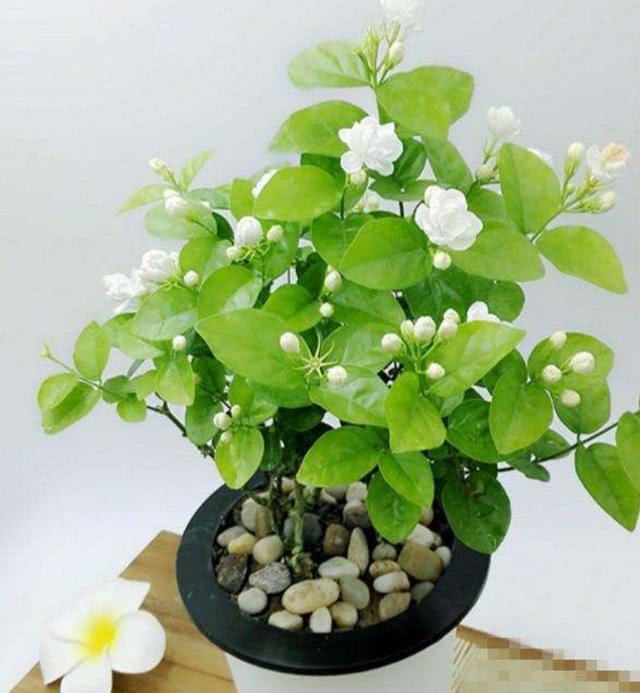
1. Jasmine. Jasmine is a flowering plant loved by many flower enthusiasts. The line from the song, "fragrant and beautiful, filling the branches," is perfectly suited to describe it. Jasmine is very fond of sunlight, and since ancient times there has been a folk saying that "jasmine cannot be killed by sun exposure." The more sufficient the light, the more jasmine blooms and the richer its fragrance. Besides sun exposure, a sufficient supply of water and fertilizer and timely pruning after flowering are also important conditions determining whether jasmine can be covered with flowers. The flowering period is from May to October.
2. Aglaia odorata. Aglaia odorata is also a flowering plant that very much loves sunlight. Its golden flowers are small and delicate like grains of rice, with an overwhelming fragrance. Aglaia odorata likes water, fertilizer, and the sun. During the vigorous growth period of branches and leaves, more nitrogen fertilizer can be applied to promote lush branches and leaves. However, during the flower bud differentiation stage, nitrogen fertilizer intake should be stopped or reduced in time, and phosphorus and potassium fertilizer should be increased; otherwise, Aglaia odorata will only grow leaves and not bloom. Around the pot, fully decomposed chicken manure fertilizer can be evenly buried, or fermented rice-washing water diluted with water can be used to water the roots of Aglaia odorata. Aglaia odorata blooms on new branches, and the inflorescences emerge from the leaf axils at the top of new shoots, so after each flowering, remove the spent flowers in time, and usually pay attention to pinching off shoot tips and topping to encourage the next flowering. The flowering period is from May to December.
3. Bougainvillea. Bougainvillea is a typical southern flower. It likes a warm climate and needs more than 8 hours of sunlight per day. The stronger the light, the more vigorous the growth. Insufficient light not only affects flowering but also causes a large number of leaves to fall. Bougainvillea is a plant that grows vigorously under strong light and flowers under short-day conditions. Bougainvillea is very fond of water. In addition to normal flowering, if you want bougainvillea to bloom within a fixed period, you can carry out appropriate water control and shading treatment. That is: 20 to 30 days before the preset flowering period, keep the temperature at 15 to 25°C. During this period, if the branches and leaves appear soft and drooping due to lack of water, water lightly or spray the leaves so that the plant remains in a state of not dying. Combine this with 8 hours of light per day, shade it for the rest of the time, then control water again. Repeat this for about three weeks, and flower buds can appear and bloom. Water control is to prevent new leaves from sprouting, so that all the plant's nutrients are supplied to the old leaves and the branches are promoted to mature. Stop fertilizing during water control to prevent root burn. The flowering period of bougainvillea is in winter and spring. When cultivated in greenhouses in the north, it flowers from March to July.
4. Rose. Everyone who grows flowers knows that roses love sunlight the most. The more sufficient the light, the more they bloom. Especially for garden-planted roses, growing under strong sun, combined with sufficient water and fertilizer management, can keep roses blooming batch after batch without stopping. Pruning rose flowers is an important part of the rose-growing process. It is generally recommended to carry out one heavy pruning during the winter dormant period. After the first flowering period, cut off 2 to 3 pairs of leaves below the flower, and at the same time cut off weaker-growing branches, which can promote roses to sprout new branches faster and help them bloom again. In midsummer, because the temperature is high and the plant's growth is relatively weak, roses can be lightly pruned according to the plant shape. It is only necessary to cut off the spent flowers and the two pairs of leaves below the flowers; there is no need to cut off too many branches and leaves, so as to avoid reducing the area for photosynthesis. After the flowers fade in August, carry out one moderate pruning of the roses, keeping 2 to 3 buds on each branch, and thin out overly dense branches and crossing or overlapping branches to increase the plant's air circulation.
5. Crown of Thorns. Crown of Thorns is also a flowering plant that very much loves sunlight. Its small, delicate flowers hang on the branch tips, "a few dots of red among a mass of green," very lovely! The more sufficient the light, the more it blooms and the more vivid the color. Sufficient water and fertilizer and light, with a reasonable temperature above 15°C, can keep Crown of Thorns blooming all year round. If the winter temperature remains below 10°C for a long time, Crown of Thorns will show dry, falling leaves. There is no need to worry; it is just dormant. When the temperature rises in spring, Crown of Thorns will soon grow new leaves and be full of vitality again. Crown of Thorns belongs to the Euphorbiaceae family, and plants in this family all have mild toxicity. Flower enthusiasts with children at home should try not to place Crown of Thorns in the bedroom and should put it in a place children cannot touch to prevent harm.
Besides the above plants, osmanthus, desert rose, geranium, blue plumbago, petunia, periwinkle, and other flowering plants also very much like light and are much loved by flower enthusiasts. What other plants do you know that are not afraid of sun exposure? Welcome to leave comments!