Using tree leaves to wrap zongzi at Dragon Boat Festival: the second method is the simplest, yet few people use it
The Dragon Boat Festival is just a few days away. For food lovers, the Dragon Boat Festival is zongzi festival, and there is also a short holiday of a few days, which is really something to look forward to. Zongzi is a traditional food of China's Dragon Boat Festival. Whether it is the plain glutinous rice white zongzi eaten dipped in sugar, or egg yolk and pork zongzi, they are all foods deeply loved by people. Besides the filling affecting the taste, the leaves used to wrap zongzi can actually affect the taste too. China is rich in plant species, and there are many kinds of tree leaves that can be used to wrap zongzi. Today let's talk about several common ones and see how many you have used.
The first: indocalamus leaves
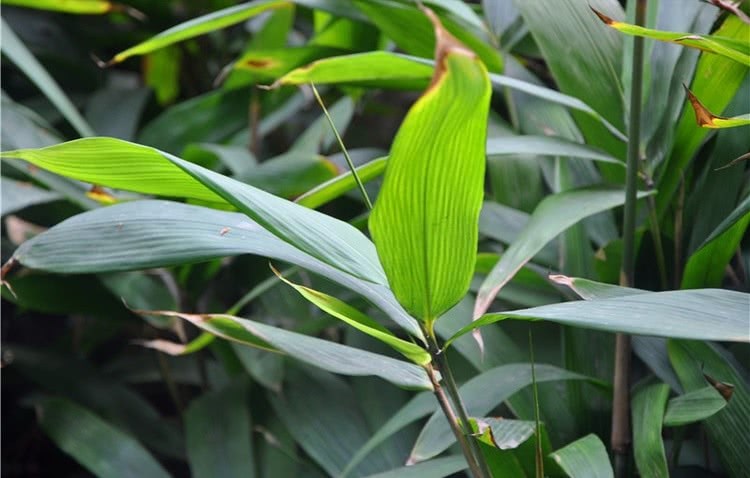
People in the south like to use indocalamus leaves, which are the leaves of indocalamus bamboo. Their advantage is that they are wide and large and can hold a lot of filling, making them quite suitable for wrapping the meat zongzi that southerners love to eat. Indocalamus leaves grow on indocalamus bamboo. There are many wild ones in the south, and they grow quickly. Around the Dragon Boat Festival every year, indocalamus bamboo leaves are growing vigorously. Farmers in the Jiangnan area pick large quantities of indocalamus leaves and, after simple packaging, ship them to zongzi processing factories, city vegetable markets and fairs to meet people's needs.
The second: corn leaves
The corn leaves mentioned here refer to the husks outside the corn cob. They have many advantages. First, they are extremely flexible and will not lose their shape no matter how you rub, knead or flatten them. Second, they carry the sweet fragrance of corn, making them very suitable for wrapping sweet zongzi. After zongzi wrapped in corn leaves are cooked, the fragrance fills the room, and the filling inside also takes on a faint yellow color. They taste fresh, fragrant and delicious, making it hard to stop eating them. However, corn leaves also have one drawback: the leaves are not large enough and are rather small and delicate, so very few people use them to wrap zongzi. This is actually a pity. Right now is the corn harvest season, so friends who like eating corn might as well use them to wrap zongzi. It is both simple and makes use of something that would otherwise be wasted.
The third: quercus leaves
Quercus leaves are leaves that grow in the Shandong area of China. People have used them as food wrapping paper since long ago. A quercus leaf is as big as two palms, with wavy edges, and is extremely beautiful. Around the Dragon Boat Festival every year, quercus leaves give off a strong fresh fragrance. After the Dragon Boat Festival is over, this fragrance slowly fades, so local people basically use only quercus leaves to wrap zongzi. Quercus leaves are also extremely popular in Japan and South Korea, where they are often used to wrap exquisite pastries, and large quantities are imported from China every year.
The fourth: reed leaves
Reed leaves are the leaves of reeds, and northerners use them more often. Reed leaves are slender and long and cannot hold too much filling, which makes them just right for the sweet zongzi that northerners love to eat. Reed leaves have a fresh fragrance and blend well into the glutinous rice. Even plain white zongzi with no filling at all are very delicious after being cooked. Therefore, in northern markets, reed leaves are the most common zongzi leaves. Reed leaves also have the effects of clearing heat and promoting fluid production, relieving summer heat and stopping vomiting, making them very suitable for eating in summer.