Introduction to the Tree-Enclosing-Rock Bonsai: Where Tree and Stone Blend, with a Distinctive Shape
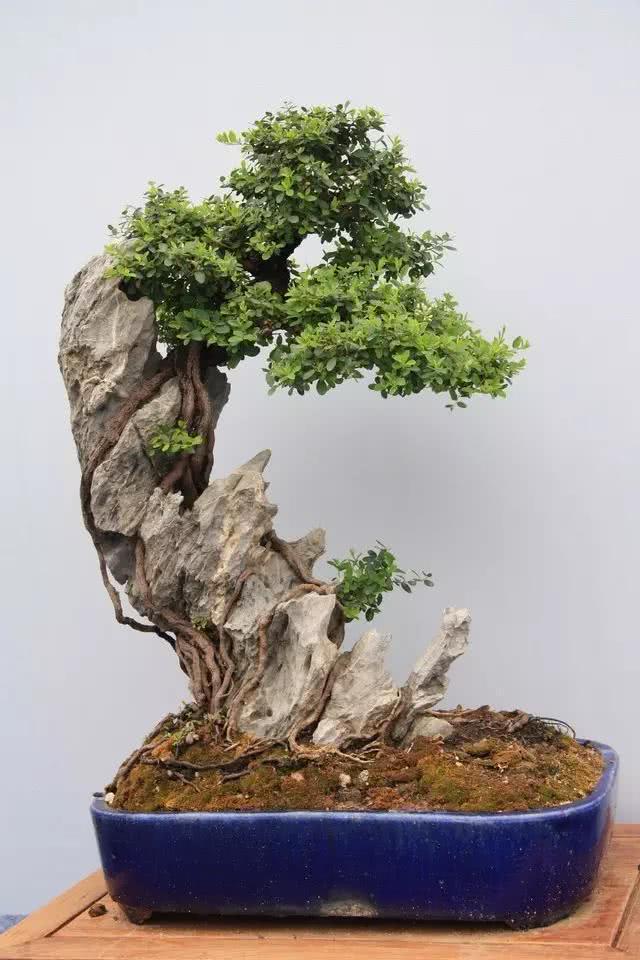
Compared with other types of bonsai, the tree-enclosing-rock bonsai carries a touch more wild charm. The tree and the stone complement each other, and its form looks bizarre yet full of interest, making it a treasured favorite among bonsai enthusiasts. Introduction to the tree-enclosing-rock bonsai: where tree and stone blend, a distinctive way to appreciate it!
The tree-enclosing-rock bonsai has a long history. Most of its materials come from the wild. Over decades of growth, the roots or trunks of Chinese elm (Ulmus parvifolia) and Chinese hackberry (Celtis sinensis) merge with the stone to become one. The bonsai maker cultivates the tree and stone that have fused into one, and through a series of pruning and shaping, it finally becomes the wondrous sight known as the tree-enclosing-rock bonsai.
Some say that bonsai is a work that presents one's inner philosophy, a channel through which people can release their inner energy. A formed tree-enclosing-rock bonsai is not only intriguing in appearance, but often also contains deep meaning that invites reflection. Some let people see humility, some let people see tenacity, some let people see inclusiveness, and some let people see goodwill, love and sincerity. In the blending of mountain stone and tree, at the moment you see it, hearts connect and endless imagination spreads.
While enjoying the visual pleasure brought by the tree-enclosing-rock bonsai, do not forget to care for it. Proper care is the only way to maintain its form and prevent phenomena such as dieback.
For the care of elm-type tree-enclosing-rock bonsai, place it in a ventilated spot with good light during normal times, and move it into a bright indoor area in winter. Watering does not need to be too frequent; keep the pot soil on the dry side. The soil is best mixed from yellow sand, pine needle soil and loess, which retains water without becoming waterlogged. In summer, do not spray water directly onto the leaves; instead, sprinkle water on the surrounding ground. Fertilizing is generally done after autumn, using well-rotted fertilizer that is not too thick; usually it can be applied once every 20 days.
During the growing season, cut away overly long and messy branches. In early to mid-August, all the leaves can be removed, then strengthen fertilizer and water management; in September new leaves can grow again, making it more ornamental. During the care of a tree-enclosing-rock bonsai formed by Chinese elm, the pot should be repotted once every 2-3 years.
For the care of hackberry-type tree-enclosing-rock bonsai, pay attention to pest control, generally spraying with omethoate solution to kill them. For pests such as longhorn beetles, manual removal is needed. Normally place it in a spot with ample sunlight, such as a balcony. If it is to be placed indoors for viewing, it must be put in a place with sufficient light, and the display time should not exceed 2 weeks. As for fertilizing, apply light fertilizer frequently during the spring and summer growing seasons, apply a light fertilizer once after autumn, and none in winter. In addition, do not fertilize for a short period after repotting; generally repot once every 2-3 years.
After the Chinese hackberry loses its leaves, it can be pruned and shaped by cutting back crossing branches, parallel branches, clustered branches and overly dense branches. If you want to enjoy it during the Spring Festival as well, then at the end of September cut off all the leaves so that it sprouts anew.