These 8 flowers are perfect for summer: easy to grow, long blooming season, and they look stunning cascading down like a waterfall
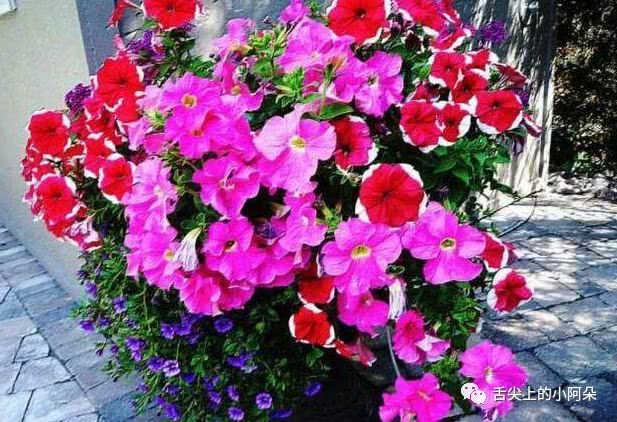
These 8 flowers are just right for summer: beautiful, easy to grow, long blooming season, cascading like a waterfall, absolutely gorgeous!
As soon as summer arrives, all kinds of flowers bloom in competition, incredibly beautiful. A reader left a message asking what flowers are suitable for growing in summer. Today Xiaohua is sharing 8 kinds of potted plants suitable for summer, beautiful, easy to grow, long blooming season, turning your balcony into a waterfall of blooms, especially especially beautiful!
I. Petunia
Petunias have large and numerous flowers, blooming profusely, with a long blooming season and rich colors. They are simple and easy to care for, and they bloom vigorously no matter how hot it gets, making them the most suitable potted plants for summer.
Open the Baidu App to see more beautiful pictures
Care instructions as follows:
The hotter it gets, the more this flower loves to bloom. During the peak growth period in summer, it needs plenty of water, especially during the high-temperature summer season. Water in the morning and evening to keep the potting soil moist, but not waterlogged. Adding a little fertilizer during the blooming period will result in bright, colorful flowers, cascading like a waterfall on the balcony
II. Plumbago auriculata (blue snowflake)
Plumbago auriculata is one of Xiaohua's favorite potted flowers~~ Plumbago auriculata has elegant, delicate colors and grows rapidly, naturally making it the top choice for a summer balcony! Friends who like it can grow a pot of their own!
It loves light. During the vigorous growth period of Plumbago auriculata, it needs plenty of water, and the environment around the plant should be kept moist. You can mist it or place the pot on wet pebbles. In winter, reduce watering; just don't let the potting soil dry out completely. During the growing period, apply liquid fertilizer regularly, fertilizing once a week during the spring and summer growing seasons.
III. Bougainvillea
The flowers of Bougainvillea are formed by three petal-like bracts that resemble leaves, with oval-shaped bracts, hence the name leaf flower, Bougainvillea. Its colors are brilliant and vibrant, pleasing to the eye. It is suitable for pots and loves to bloom the hotter it gets.
Care is not difficult either. It likes high temperatures and strong light, so place it in an area with plenty of sunshine to help it grow better. As long as drainage is good, it will grow well even in mineral-rich, heavy clay loam
Bougainvillea has a high water demand, especially in midsummer. Lack of water can easily cause leaf drop, affecting growth and blooming. However, 4 to 5 weeks before Bougainvillea blooms, water should be withheld: water once, then wait until the leaves or tender buds droop before watering again. This helps flower bud differentiation and formation.
IV. Jasmine
Jasmine likes a warm, humid environment with plenty of sunlight. Its leaves are emerald green, its flowers are pure white, and its fragrance is rich. It is the most common fragrant potted flowering plant.
Potted jasmine should be repotted once every 1 to 2 years, replacing the soil with fresh potting mix. Generally, do not remove the roots when repotting, but water thoroughly and place in a shaded area to recover and grow, and remember to loosen the soil
Jasmine likes slightly acidic soil. If the soil is on the alkaline side, the leaves will turn yellow. During the growing period, water with 0.2% ferrous sulfate solution once every 10 to 15 days to keep the potting soil acidic
Just water by the "dry-wet" principle: water when dry, stop when wet
V. Desert rose
During the growing period, potted desert roses should be placed outdoors in a spot with plenty of sunlight, or they can be grown in a greenhouse, as they need ample light. In winter, they need to be brought indoors and placed in a sunny spot. Growing them in a greenhouse is even better; the higher the temperature, the more abundantly they bloom.
Care is not difficult either: give it plenty of sun, water sparingly, and always wait until the potting soil is dry before watering, otherwise it will easily grow leggy and ruin the plant's shape. Desert roses quite like phosphorus and potassium fertilizer; supplement about once a month. During the vigorous summer growth period, they need plenty of fertilizer and water, so the flowers they produce will be lush and vivid.
VI. Mandevilla (Dipladenia)
Mandevilla likes a warm, humid environment, but its branching habit is not good. During the blooming period, Mandevilla often puts on a spectacular show with more flowers than leaves. When a breeze blows, waves of refreshing fragrance fill the air, hence the elegant name "Piaoxiangteng" (drifting-fragrance vine).
The more summer comes, the more abundantly it blooms
Mandevilla blooms continuously from early spring to late autumn. It likes a warm, humid environment with plenty of sunlight, and can also be placed in a slightly shaded spot; insufficient light will reduce blooming.
During the growing period, apply a compound fertilizer 3 to 5 times as a top dressing. Nitrogen fertilizer application should be controlled to avoid excessive vegetative growth that affects growth and reduces blooming.
VII. Moss rose
Moss rose is actually purslane flower, also called pine-leaf peony. It is a type of herbaceous small flower that is especially easy to grow. Grow it in a spot with particularly abundant sunlight, and avoid keeping it above 5 degrees in winter, and it can keep growing and blooming year-round.
Care is very simple: just give it plenty of sun and plenty of water (but no waterlogging), and it will bloom even without fertilizer. But if you give it a little fertilizer water, it will bloom especially brilliantly
VIII. Periwinkle (Catharanthus roseus)
Some flower enthusiasts grow periwinkle so well that it stays in bloom all four seasons. It is an excellent ornamental potted plant. Its leaves are emerald green, its flowers are small but delicate and colorful, and a periwinkle that bursts into a full pot is truly especially beautiful, and care is not difficult either.
When planting periwinkle, never use soil containing salt or alkali, and the soil must have good drainage and aeration. Water frequently and give plenty of sunlight. If no base fertilizer was applied at planting time, then during the growing period apply a water-soluble fertilizer once every 10 days.