Taiwan Sustainable Seafood Label Series Part 2: What Should the Fisheries Agency Do? Lin Ai-lung Explains
Text / Lin Ai-lung (CEO of the Sea Dragon King Loves the Earth Association, PhD candidate in Law at Pennsylvania State University, USA)
(Continued from the previous article) People often ask: Why not just guide Taiwan's fishing vessels to apply directly for foreign labels? Why promote a sustainable seafood labeling standard in Taiwan?
Reality: International certification is very expensive, and under Taiwan's current conditions it is almost impossible to apply
The cruel fact is that Taiwan's fisheries are currently not in good shape, and at present probably no fishery can pass MSC certification. In 2011, the Fisheries Agency spent money trying to apply for MSC certification labeling on behalf of Taiwan's saury fishery, but ultimately did not succeed, because at that time there was no management organization for North Pacific saury resources.
In 2015, the Xincheng Fishermen's Association of Taitung District commissioned the Chinese Taipei Overseas Fisheries Development Council to use MSC certification standards to conduct a pre-assessment of the dolphinfish (mahi-mahi) fishery operating by "surface longline fishing" in the waters near Xincheng Fishing Harbor. The assessment team's conclusion was: "At present, Taiwan's Xincheng dolphinfish fishery may not yet meet MSC's sustainable fishery standards and cannot pass certification."
The main problem is the absence of catch control measures, that is, when there is a risk of resource decline, there are no regulations to reduce catch (such as total allowable catch). Secondary problems include the lack of detailed information on bycatch species, lack of understanding of ecosystem conditions, and so on. Therefore, an "improvement plan" is needed to help the fishery meet the requirements of a sustainable fishery.
In addition, a Taiwan graduate student thesis used MSC labeling's preliminary assessment standards to conduct a trial evaluation of Taiwan's anchovy (whitebait) fishery, which Taiwan itself considered well managed, and the result was that "resource status" scored below 60 points. However, MSC requires each indicator to reach 60 points or above and the average score to reach 80 points or above in order to obtain the MSC label. Therefore, the whitebait fishery currently cannot obtain MSC certification, and there is still considerable room for improvement in fishery management and resource use. Donggang sakura shrimp, in another thesis, was also evaluated with MSC trial calculations and faced a similar predicament of being unable to meet the standards.
Finally, MSC verification fees are very expensive for many small fishers! (Hmm, a bit like the bottleneck of organic agriculture.) Through online searching, one can find that MSC charges vary depending on the scale of assessment, but one time generally starts at NT$2.5 million. There are also annual fees, store label usage fees, and so on... Quietly speaking, who knows whether the fish can even be sold for such a high price. How many housewives, home cooks, and company employee cafeterias in Taiwan would be willing to pay?
Taiwan is no longer a poor developing country, and no international organization will kindly sponsor us (they will only issue us a yellow card). So we should still develop our own marine sustainability label.
So how did other countries begin this difficult journey?
The model of the Australian government intervening to assist fishery certification
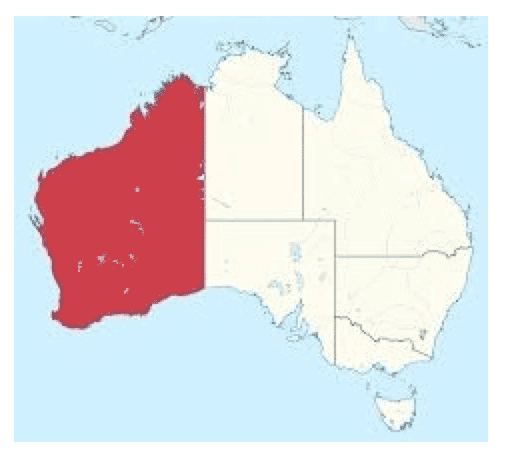
From online information, it was found that in 2012 the Western Australian state government, in order to help 50 large and small fisheries along the Western Australian coast obtain MSC certification together, including shrimp trawl, crab, pearl, and shellfish fisheries, allocated a budget of AUD 14.5 million -- about NT$320 million -- and planned to spend four years on it. Its projects were broken down as follows:
1. AUD 6.5 million in verification costs
About NT$140 million, with each fishery on average paying NT$2.86 million in verification fees. The AUD 6.5 million in verification costs included payment of MSC's preliminary review fee, main review fee, and the first annual fee after passing the review. Subsequent annual fees were to be borne by the fishing industry itself.
2. Four consecutive years of AUD 2 million per year (about NT$44 million) in scientific research funding to assist in passing the MSC review.
In addition, the Fisheries Department of the Western Australian government hired more than ten additional staff to handle MSC certification, including assisting in providing MSC with official data such as "resource status, catch data, bycatch data, ecosystem impacts, and fishery management systems."
This was set according to the concept of "eating mid- and low-trophic-level fish" promoted by conservation groups and Academia Sinica. With this standard, fisheries applying for verification in the future, such as mackerel, dolphinfish, squid, and seaweed, could all be scored through scientific research. Surely a great white shark and a squid would not get the same score?!
Recommendation that the Fisheries Agency use the "Ocean Fisheries Foundation" as the "verification body" to promote follow-up work
We estimate that if the Fisheries Agency is proactive, it can complete within one year the formulation of preliminary scoring standards for a total of 20 questions, each scored from 0 to 5 points.
After the Fisheries Agency's certification standards are announced, the newly established "Taiwan Ocean Conservation and Sustainable Fisheries Foundation" (abbreviated as the Ocean Fisheries Foundation) can serve as the "verification body," carrying out project assessment, guidance, and marketing supervision.
Of course, the Ocean Fisheries Foundation must first pass accreditation by Taiwan's "Foundation of Taiwan Industry Service" National Accreditation Foundation, completing the second "accreditation procedure" recommended by FAO guidelines. After obtaining accreditation and becoming a "verification body," the Ocean Fisheries Foundation can follow MSC's example and form an "assessment team" for each project applying for verification.
In the future, the state (such as the Council of Agriculture, Fisheries Agency, Ministry of Science and Technology, Ocean Affairs Council, etc.) can jointly work hard for several fisheries with the potential to reach the "improvement stage or sustainable" label, including annually allocating marine scientific research budgets, investigating ecological and resource conditions, setting up fishery management groups, improving regulations such as announced fishing bans, guiding fishing vessels to install AIS (as well as the "i-Fishers Fisheries Smart Management Integration System" advocated by the Sea Dragon King Association), implementing landing declarations, and monitoring illegal fishing, and so on.
More importantly, the "production and marketing audit" of the sustainable ecology label (to avoid rule-breaking bad actors and petty offenders fraudulently using the label) and the "promotion system" must both be established in a complete and synchronized way in order to establish the label's credibility and value over the long term.
Of course, fishers still have to bear part of the verification fees and annual fees, pooling funds together to upgrade the industry, since Taiwan is currently not yet fortunate enough to have a rich parent like Japan's Fisheries Agency or the Western Australian government. However, if we can obtain the NT$2 billion per year in marine fishery green measures supported by President Tsai, the situation should be somewhat better.
For the promotion system, it is recommended to take the Ocean Fisheries Foundation as the core, strategically combine civil society's small and large enterprises and consumer-related alliances, and establish a production-marketing matchmaking platform and promotion window for certified seafood, accepting everyone's feedback. We believe that the domestic market for environmentally friendly fresh products has great room for growth. A chain organic store with revenue reaching NT$1 billion currently has very few local environmentally friendly seafood options it can procure. As for the fresh food sections of hypermarkets such as PX Mart, Carrefour, and RT-Mart, many online shopping malls, and even many small restaurants with ideals that have asked the Sea Dragon King Association where to buy sustainable seafood, we believe they are important drivers supporting marine conservation and sustainable fisheries.