What to Do About Sweet Cherry Fruit Cracking? Cause Analysis and Prevention Measures
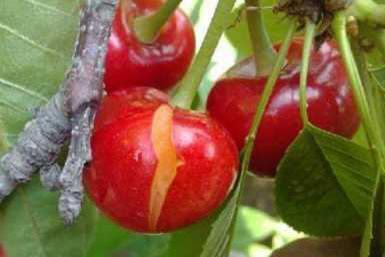
Causes of Sweet Cherry Fruit Cracking and Their Prevention Measures
1 Factors Affecting Fruit Cracking
1.1 Relationship Between Varietal Genetic Characteristics and Sweet Cherry Fruit Cracking It is generally believed that sweet cherry fruit cracking has a certain correlation with the characteristics of the variety itself, and sweet cherry cracking susceptibility is determined by genetic characteristics. The degree of cracking varies significantly among varieties, and the cracking susceptibility of the same variety also differs with different rootstocks. The cracking trait of the parents can be passed on to the offspring through inheritance. Yamaguchi et al. investigated the cracking behavior of 37 sweet cherry varieties and also found significant differences in cracking among varieties, which were positively correlated with fruit weight and flesh firmness. Greco et al. [Jishan Huayao] studied the cracking resistance of 30 sweet cherry varieties in the Apulia region of Italy, and the results showed that the cracking susceptibility of sweet cherries is related to genotype. Simon analyzed the cracking susceptibility of sweet cherry varieties and classified the cracking resistance of 51 major sweet cherry varieties grown worldwide into 5 levels: extremely resistant to cracking, resistant to cracking, relatively resistant to cracking, prone to cracking, and extremely prone to cracking. Among them, extremely resistant varieties include "Star" and "Sue"; resistant varieties include "Lapins" and "Sam"; relatively resistant varieties include "Summit", "Sunburst", and "Sylvia"; prone varieties include "Santina", "Stella", "Van", and "Sweetheart"; and extremely prone varieties include "Bing" and "Tieton". The cracking resistance performance of some of these varieties in Hungary differs slightly from their performance in China, which shows that the cracking susceptibility of the same variety also differs across different cultivation regions. Balbontín et al. used sweet cherry varieties with different cracking resistance as test materials and found that expansin genes are expressed at higher levels during the ripening stage of resistant fruits. Expansin genes can loosen the fruit skin cell walls and rapidly buffer cell wall tension, thereby preventing sweet cherry fruit cracking. Other studies have shown that fruit cracking is strongly correlated with the characteristics of epidermal cells at the fruit apex. Varieties with short epidermal cells at the fruit apex have milder cracking, while varieties with long epidermal cells at the fruit apex crack severely. Varieties with thick skin and neatly, tightly arranged cells are not prone to cracking; varieties with thin skin, large intercellular spaces, and loosely arranged cells are prone to cracking. Fruit cracking is related to poor skin extensibility and increased osmotic pressure of the flesh during fruit ripening.
1.2 Influence of the External Environment on Sweet Cherry Fruit Cracking
Water is the main environmental factor affecting fruit cracking. Whether it is water adhering to the fruit surface or soil moisture, both are important factors inducing sweet cherry fruit cracking. Varieties whose ripening period avoids the rainy season are not prone to cracking, while varieties whose ripening period encounters continuous rainfall or heavy rainstorms are prone to cracking. Some studies concluded that cracking results from rainwater directly adhering to the fruit surface, and osmotic absorption is the driving force of water movement, while other studies believe that water absorbed by fruit tissues from the fruit surface is not the main factor affecting cracking. Knoché et al. showed that when external humidity is >=75%, the incidence of sweet cherry fruit cracking increases; when external humidity reaches 100%, the incidence of cracking is consistent with the incidence when the fruit skin is immersed in water. Low-lying orchards that easily accumulate water and heavy clayey soil are both likely to cause cracking. Soil that "alternates between dry and wet", or excessive irrigation before harvest causing a sharp increase in soil water content, can also cause cracking. Temperature is another important factor affecting sweet cherry fruit cracking. When the external temperature is between 10°C and 40°C, sweet cherry cracking susceptibility increases with rising temperature. Sunburn sites on the fruit skin caused by strong light are often the initiation points of fruit cracking. In addition, poor soil fertility or unbalanced fertilization can reduce the tree's cracking resistance and cause cracking. Many studies have confirmed that the cracking rate and cracking index are significantly negatively correlated with the calcium content in the fruit, and spraying calcium-containing compounds externally can reduce preharvest cracking of sweet cherries.
2 Fruit Cracking Prevention Measures
Agricultural measures: When selecting sweet cherry varieties, in addition to considering the ecological conditions of the planting site, varieties resistant to cracking should be chosen as much as possible. Relatively speaking, varieties such as "Rainier", "Lapins", "Van", "Summit", and "Hongmanao" crack less. Keep soil moisture content relatively stable, and irrigate with small amounts but multiple times, especially during the fruit ripening period, and never let the soil "alternate between dry and wet". For orchards with poor drainage performance, pay attention to timely drainage to prevent waterlogging. Keep the soil loose so that the root system has good aeration. Where conditions permit, deep plowing and mixing in legume straw can be used for soil improvement. Avoid prolonged water accumulation, which affects the normal physiological functions of the tree. Physical measures: The main physical method to prevent sweet cherry fruit cracking is to set up rain protection barriers. Before the fruit colors, a simple plastic film rain shelter can be built; spread the plastic film when it rains and fold it up after the rain. Chemical measures: Apply more organic fertilizer, increase the organic matter content of the orchard soil, and strengthen the vigor of sweet cherry trees to improve their cracking resistance. After fruit set and before harvest, spray a 0.2% calcium chloride solution or a 0.25% concentration solution of "Guoshen brand" boron-calcium treasure once every 10 days, for 3 consecutive sprays, which can effectively prevent fruit cracking.