If grain can be self-sufficient, what is the point of importing grain?
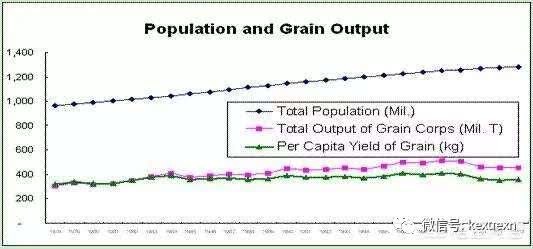
The claim that our country can achieve grain self-sufficiency is still somewhat inaccurate. To put it precisely, our country can currently achieve national food security, but at present it is still not enough to maintain self-sufficiency. What does that mean? It means that at present, even without relying on any grain imports, our country can still solve the problem of feeding its people, but solving the problem of having enough to eat and eating well are two completely different concepts.
Given the current national conditions, if the people of our country are to eat their fill and also eat well, then large quantities of grain imports are unavoidable. Take 2017 for example: for the whole year, our country imported 130 million tons of grain, but of that, imported soybeans alone accounted for 95.53 million tons, meaning soybeans took the vast majority of the share, while the rest - corn, rice, wheat, sorghum and so on - together accounted for a share of less than 40 million tons.
As everyone knows, our country's grain production has achieved 12 consecutive years of growth, with output stable at over 1.2 trillion jin for three consecutive years. However, although our country's total grain output has been continuously increasing, judging from import data in recent years, grain imports have also been increasing year after year.
Although our country's grain output has increased again, this does not mean that all grain output can meet domestic demand, and looking at the current domestic grain structure, one major problem is structural imbalance. What does that mean? Here let me mention another term, "de-stocking." Seeing this, everyone should already understand - this is also a slogan the state has raised in recent years, supply-side reform, to balance domestic grain supply. Take current corn for example: up to now there is still more than 100 million tons in stock, yet at a time when corn cannot find a market, our soybeans are being imported year after year. This is also a major problem in our country's current grain structure.
Since our country joined the WTO in 2002, our country's trade exchanges with countries around the world have been continuously increasing. According to WTO trade rules, our country has no grounds to prohibit other countries' grain from entering our country, since our country must also gradually integrate into the WTO circle. Strengthening trade exchanges with countries around the world is in line with the demands of the times.
Moreover, foreign grain prices are relatively cheaper than domestic ones, which for many domestic enterprises means a very big market. In an era of free trade and merchants seeking profit, imported grain naturally has demand.
Let me give an example here: American Apple phones long ago entered our country for sale on a large scale, and every generation of the model has been sought after by Chinese people. May I ask, is it that our country lacks the ability to manufacture phones? Can China's own phones not meet the needs of Chinese people?
Obviously not. In today's free trade, regardless of whether our country's grain can meet domestic demand, foreign grain and agricultural products will still be imported, let alone the fact that our country currently cannot meet its people's grain demand.
This is Science Promoting Agriculture; welcome to follow and let us grow our knowledge together.