Persistent drought in Northeast China may affect corn production, corn prices are viewed favorably
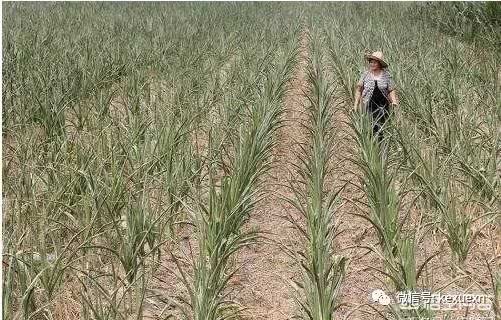
From the available data, the drought in Northeast China has directly made a reduction in this year's corn output a foregone conclusion. Although varying degrees of drought occur during both spring and summer planting in Northeast China in most years, this year's drought is still quite severe. Because the drought has persisted, it has directly led to delayed sowing, lower emergence rates and even dead seedlings in parts of Liaoning, Jilin and Heilongjiang. The continued drought has also directly affected the growth and development of corn at the seedling stage, and a reduction in output has therefore become inevitable.
Given the above situation, grain prices will still be affected to some extent in the future, even though no impact seems visible at present. Judging from the current trend in corn prices, the market should still be in a policy-driven phase, determined by the temporary storage auctions. As of now, the temporary storage system has continuously released nearly 50 million tons of auctioned grain onto the market, and the auctions have still not stopped. As long as the auctions continue, the situation in which grain prices do not rise will persist.
However, one point worth viewing favorably is that the effects of the drought will gradually become apparent in the future. In July the auctions are about to stop, and grain traders' expectations for corn prices will also be reflected afterwards. First, the reduction in corn output caused by this year's drought has already made many sharp-sensed traders and deep-processing enterprises aware of the tightening of future corn grain supply, greatly boosting their confidence in future corn purchases. In addition, because the state strongly promoted soybeans this year, soybean planting increase targets were issued in many provinces and regions, and at the same time corn planting subsidies were reduced, which has directly led to a reduction in this year's corn planting area. This also means that even without help from the heavens, this year's total corn output is unlikely to exceed the 215 million tons of 2017.
This year, because hog prices were sluggish, corn demand declined somewhat, but with the recovery and expansion of capacity at corn deep-processing enterprises in recent years, corn demand has also reached its peak level of past years. Therefore, overall, corn demand this year is still expected to increase.
Looking at the above information as a whole, the drought does have an influence on future corn prices, but exactly how large it is remains hard to say, since there are simply too many factors affecting prices in the market. As for the future corn market, it is still worth viewing favorably.
This is Science Promoting Agriculture. Welcome to follow, and let us grow our knowledge together.