Stop growing crown of thorns (Euphorbia milii); switch to this flower that is easy to care for and harmless
A couple of days ago, Huahua saw a news story about a child who accidentally ate dumb cane (Dieffenbachia), started foaming at the mouth, and was rushed to the hospital! In fact, quite a few flowers and plants in everyday life are toxic. So today, Huahua is going to talk about which flowers are toxic, and which non-toxic flowers can be used as substitutes?
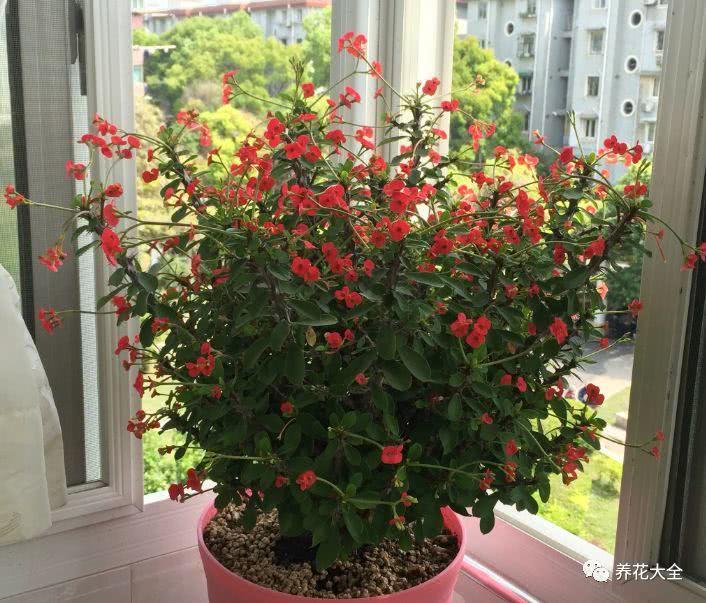
Crown of Thorns (Euphorbia milii)
All About Flower Growing
Why it is toxic:
The stems of crown of thorns contain toxic proteins, alkaloids and other substances. If you accidentally touch them, they can cause redness, swelling and itching. The stems are covered with many sharp thorns, so children at home must never touch them, as there is a risk of puncturing the skin.
Solution:
If you grow crown of thorns at home, it is best to place it up high where children cannot reach it. Never put it in a frequently used walkway or anywhere children can touch it. If the sap accidentally gets on the skin, rinse it immediately with plenty of water.
Alternative plant: Wax begonia (Begonia semperflorens-cultorum)
Like crown of thorns, wax begonia is a flower that blooms in all four seasons, and it is very easy to care for. It is also a non-toxic, harmless flower, making it very suitable to replace crown of thorns as a potted plant at home.
Dumb Cane (Dieffenbachia)
All About Flower Growing
Why it is toxic:
Dumb cane contains a substance called calcium oxalate needle crystals, which irritates our skin and causes itching and redness. If accidentally eaten, it can also trigger various symptoms and even endanger life.
Solution:
If you grow dumb cane at home, it is best to place it somewhere relatively high so that children and pets at home cannot touch it. If it is accidentally eaten, induce vomiting immediately and seek medical attention promptly.
Alternative plant: Potted taro
Since dumb cane is toxic, let's not grow it. Instead, how about a potted taro that looks similar to dumb cane? Not only are the leaves similar to those of dumb cane, but the tubers can be dug out and eaten too!
Poinsettia (Euphorbia pulcherrima)
All About Flower Growing
Why it is toxic:
The stems of poinsettia secrete a white sap that contains toxic alkaloids. If it accidentally gets on the skin, it causes redness, swelling and itching, and in severe cases even ulceration.
Solution:
For flower lovers who grow poinsettia at home, it is best to keep it in the yard so children cannot touch it and pets cannot chew on it. If it is accidentally eaten, it is best to drink plenty of boiled water and go to the hospital to induce vomiting.
Alternative plant: Kalanchoe (Kalanchoe blossfeldiana)
Poinsettia is also called Christmas flower, so we can use kalanchoe instead. Kalanchoe is also known as Christmas kalanchoe. It not only has richer flower colors than poinsettia, but also blooms for a long time, almost all year round!
Night-blooming jasmine (Cestrum nocturnum)
All About Flower Growing
Why it is toxic:
Night-blooming jasmine blooms at night and has a very strong fragrance. If placed in the bedroom, it can stimulate the nervous system and cause insomnia. Some flower lovers are also allergic to its pollen, which may cause sneezing and a runny nose, and in severe cases may even cause asthma.
Solution:
Generally, it is best to put night-blooming jasmine in the yard to avoid insomnia and frequent dreams caused by the strong fragrance. If you do not have a yard, you can put it by the living room window and open the window at night so the fragrance of its flowers can disperse as quickly as possible.
Alternative plant: Orchid tree (Aglaia odorata)
If you want the room to smell nice, you can buy a pot of orchid tree instead. Orchid tree is much easier to grow than night-blooming jasmine. As long as you give it enough sun every day, it will soon bloom abundantly, and its flowering period lasts a long time. It is no problem to put it in the living room at night.
Azalea (Rhododendron)
All About Flower Growing
Why it is toxic:
The flowers and leaves of yellow azaleas contain a highly toxic substance called grayanotoxin, while white azaleas contain tetracyclic diterpenoid toxins. If eaten by mistake, they can cause difficulty breathing and paralysis of the limbs, and in severe cases even coma.
Solution:
Flower lovers who grow yellow azaleas and white azaleas must pay attention: place the azaleas on a relatively high cabinet indoors, do not let children at home touch them, and never let pets at home eat them by mistake.
Alternative plant: Common red azalea
For flower lovers who want to grow azaleas, Huahua suggests growing common red azaleas instead. After all, red azaleas are not only beautiful when in bloom, but also come in many flower shapes. Especially those grafted multi-layered azaleas, when they bloom, layer upon layer, they are very beautiful!
Coralberry (Solanum pseudocapsicum)
All About Flower Growing
Why it is toxic:
The berries of coralberry are mildly toxic. If accidentally eaten, they can cause nausea and vomiting, and in severe cases even shock!
Solution:
If there are children at home, never grow coralberry. If someone eats it by mistake, drink plenty of water immediately to induce vomiting, and go to the hospital for medical treatment right away.
Alternative plant: Cherry tomato
Cherry tomato, like coralberry, has round little fruits, but its fruit is sweet and sour and very delicious. If you have children at home, you can grow a pot!
That is all Huahua has to share today.
Dear flower lovers, if you grow these flowers at home,
be sure to pay attention!
?