Add a little something to your hydroponic Alocasia macrorrhizos (giant taro), and its roots will be plump and its leaves big and glossy
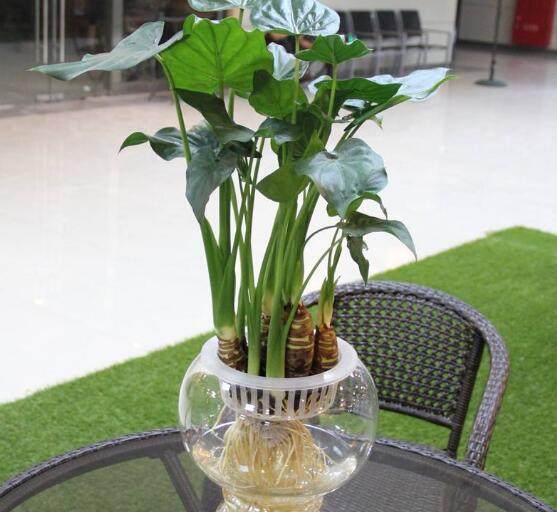
Alocasia macrorrhizos can absorb dust and purify the air, and its leaves even drip crystal-clear water droplets from their edges, which is very beautiful.How do you grow Alocasia macrorrhizos hydroponically? What little tricks are there?
If you want to grow a hydroponic Alocasia macrorrhizos, you can first try growing a small one, so it can grow slowly on its own. Large ones are more expensive, and hydroponic growing is also difficult. Growing Alocasia macrorrhizos hydroponically is very simple:
1. First take the Alocasia macrorrhizos out of the soil in the pot, wash the roots clean, then cut off some of the excess roots.
2. Disinfect with carbendazim, then let it dry in the air for one or two days. The hydroponic container does not need to be too large, and tap water can be left to sit for a while before use.
3. When growing Alocasia macrorrhizos hydroponically, add water to the container, but do not submerge all the roots; only part of the roots should be in contact, and even more importantly, do not submerge the stems and leaves of the plant.
4. If you feel it is not stable enough, add cleaned vermiculite and perlite to the hydroponic bottle in a ratio of 2:1, then add some small stones.
5. Place it in a shaded spot, and do not expose it to strong sun, as it is a shade-loving plant. Do not spray water on the leaves. Be sure to open the windows often for ventilation.
6. Place the Alocasia macrorrhizos in the middle of the medium. Alocasia macrorrhizos is a very easy plant to grow; a flower enthusiast started with a very small seedling, and in half a year it grew very large.
7. Also be careful to give it enough fertilizer. Once it has grown roots, regularly pour some nutrient solution into the water every month, or use water from a fish tank, and it will grow very fast, with glossy, shiny leaves.
8. As long as temperature, light, and nutrients are sufficient, a hydroponic Alocasia macrorrhizos can be grown just as well as one grown in soil, equally lush and flourishing.