Freshwater fish that lived alongside the dinosaurs were no smaller than the dinosaurs themselves
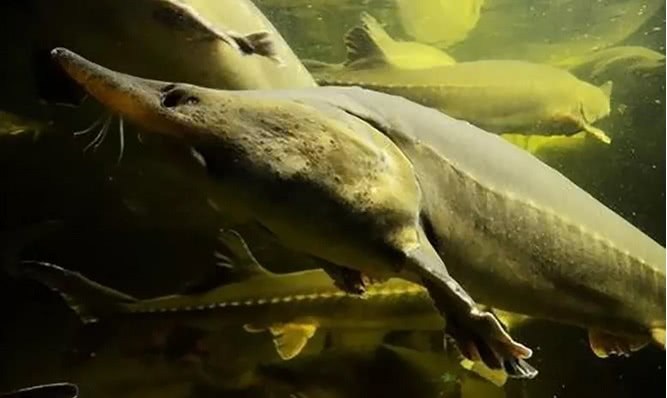
There are about 20 known species of large freshwater fish in the world. The better known ones include the Mekong giant catfish, stingrays, the Chinese paddlefish, the arapaima, and the kaluga sturgeon. These are all giants of rivers and lakes, most weighing over 100 kg. Among these fish, the kaluga sturgeon is the largest.
The kaluga sturgeon belongs to the family Acipenseridae and is mainly found in the waters of the Heilongjiang River. It is a fish with a large body, a long lifespan, a big appetite and great strength, reaching up to 2000 jin at most. It is a large predatory fish and is known as the king of freshwater fish. The kaluga sturgeon is one of the ancient biological groups preserved from the Cretaceous period, and its appearance has barely changed in over 100 million years, earning it the title of "living fossil".
The kaluga sturgeon grows quickly. According to relevant literature, the largest kaluga sturgeon measured 5.6 m in length and weighed over 1000 jin. The kaluga sturgeon reaches sexual maturity late, at over 12 years for males and over 16 years for females, and generally carries 400,000 to 4 million eggs. This is also why kaluga sturgeon have been heavily hunted, because their eggs make the best caviar sold worldwide.
In the 19th century there were many kaluga sturgeon in the Heilongjiang River, but starting in the 20th century they began to be caught in large numbers. These big fish had almost nowhere to hide, and combined with late sexual maturity and low survival rates of juvenile fish, by 1998 they had become a critically endangered species.
China began using artificial breeding in the late 1950s, and release stations have been set up in many places along the Heilongjiang River. After 5 or 6 years of farming, they generally reach over 80 or 100 jin, and the price is much cheaper than wild ones, but many people still prefer wild ones, which has also led to kaluga sturgeon being continuously hunted.
Although the kaluga sturgeon is an endangered species, our country has not listed it as a national-level protected animal, so it is nothing new for fishermen to hunt them. In 2009, a fisherman caught a wild kaluga sturgeon 3.5 m long and weighing 830 jin. Many locals said they had not seen such a large kaluga sturgeon in four or five years. In the end, the fish was bought by the owner of a restaurant for 70,000 yuan.
In 2014, 4 fishermen caught a kaluga sturgeon 2.5 m long and weighing 537 jin. Fortunately, a woman bought it from the fishermen for more than 60,000 yuan and released it back into the river. In 2015, 3 people caught a kaluga sturgeon 2 m long and weighing 700 jin, and this fish was bought by a merchant for 95,000 yuan.
Once the net goes down, no matter whether they are big or small, as long as they are fish, they will all be scooped up. This "cutting off sons and grandsons" fishing technique is very common in China. Never mind wild kaluga sturgeon growing to 2000 jin; at this rate, in the future even wild kaluga sturgeon of a dozen or so jin will be rare.
My WeChat public account is guanshangyu-88. If you have any questions about ornamental fish breeding, you can contact me anytime!