A Detailed Guide to the Correct Methods of Pinching and Topping Flowers
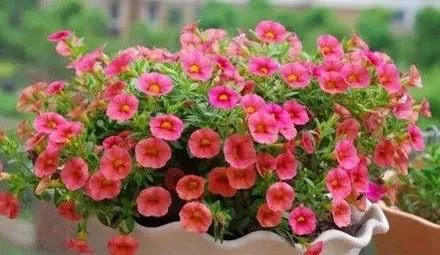
Learn pinching and topping, and your flowers will bloom in a spectacular burst, just as the grower hopes. So how do you pinch? When is the best time to pinch?
The purpose of pinching: pinching is when, once the seedling has grown to the desired height, you nip off the growing tip with your fingers. It is mainly used for herbaceous flowers. It is also used for pruning woody flower seedlings, as it encourages more side branches to grow and gives the plant a more attractive shape later on.
When to pinch: usually, once the plant has grown to about 8 cm to 10 cm, you carry out the first pinching. The first pinching is fairly important, as it can control the height of the plant.
How to pinch: remove the tender leaves and young buds at the top. When the seedling has grown to about 10 cm, pinch off 1/3 or 1/2 of the growing tip, at a point 0.5 cm above the axillary bud. This can be repeated as many times as needed. As shown in the picture below.
Before herbaceous flowers are transplanted or planted out, removing the front end of the central main stem to encourage side branches to sprout is called the first pinching. If, after some time, you pinch again at the tips of each sprouted side branch, even more side branches will grow, and this is called the second pinching.
For ordinary herbaceous flowers, such as scarlet sage, snapdragon, wax begonia, fuchsia, chrysanthemum, and Madagascar periwinkle, once the seedlings have established after planting out and the plants are about 10 cm tall, you can top them to encourage more branching and more flowers. But for flowers whose blooms become smaller or fail to flower after pinching, such as garden balsam, cockscomb, and China aster, pinching is not advisable.
Some woody flowers grown as single plants, such as Chinese rose, osmanthus, oleander, and hibiscus. For some, once the seedling has grown to 20-30 cm tall, cut it back so that 3-4 side branches develop; then, once the side branches have grown to 10 cm long, cut back the tip of each side branch again, and before long a rounded plant with 9-12 side branches in a "three forks, nine tips" form will take shape.