This wild vegetable in June can clear the lungs, nourish the stomach and liver; the neighbors eat it every few days
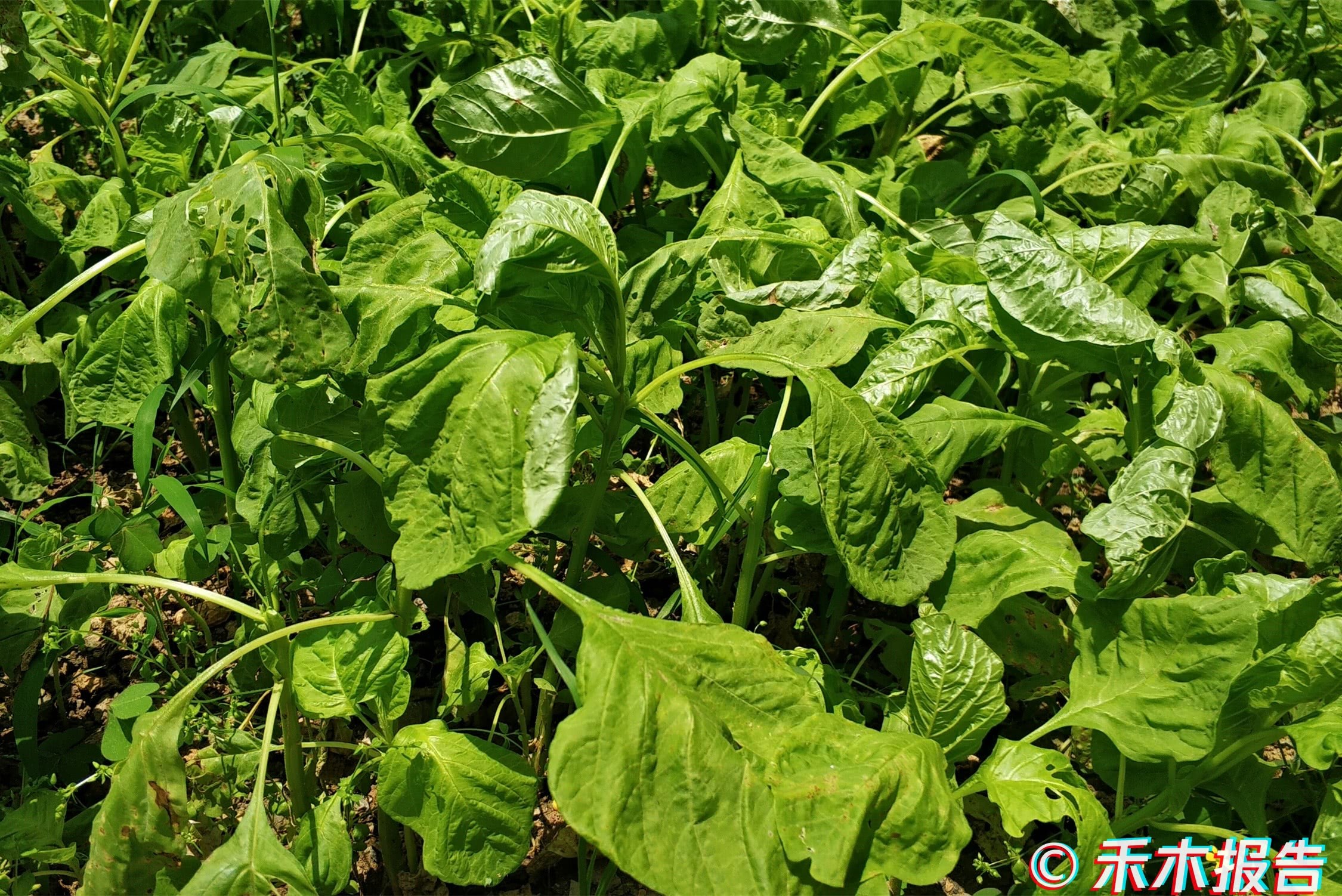
Most friends who live in rural areas have their own vegetable gardens, and they also plant plenty of seasonal vegetables to eat in the garden. After all, growing vegetables in the countryside is quite convenient, and it feels reassuring to eat them. The author's home has a vegetable garden, and quite a few vegetables are grown there, such as green peppers, eggplants, tomatoes, cucumbers, potatoes, chives, and so on. Basically, they can be rotated for meals every day, and a month is not enough to finish them all. Last month, my mother planted a rare kind of "vegetable" in the garden, which made the neighbors come over every few days to pick some to eat.
Speaking of this rare "vegetable," many friends who have lived in the countryside have probably seen it. It is "hancai" (Rorippa indica, known in English as Indian fieldcress or yellowcress).
Hancai is a fairly common wild weed in the countryside. It can be said to be found in rural areas of almost every province and city in our country. However, in the past, hancai was not welcomed by farmer friends at all, and quite a few farmer friends even hated it, because hancai likes to grow near moist farmland and paddy fields, and hancai has especially strong adaptability and vitality, and it also robs crops of nutrients. Therefore, in the past, many farmer friends treated it as a harmful weed, and often after pulling it up, they took it to feed pigs as pig feed.
But now, as the value of hancai has been discovered, people like it more and more. Quite a few farmer friends also dig some hancai from the wild in spring or early summer to bring home and eat, and there are even many farmer friends, such as the author's family, who plant some hancai in their own vegetable gardens.
So what values does hancai have? The first is its medicinal value. According to "Chinese Materia Medica," the whole plant of hancai can be used as medicine. Hancai contains a substance called roripamine, which gives it effects such as clearing heat and promoting diuresis, activating blood and unblocking menstruation, relieving cough and resolving phlegm, strengthening the stomach and regulating qi, and detoxifying. It can be used to treat cough with phlegm and asthma, cold with fever, incomplete eruption of measles, rheumatic arthralgia, sore and swollen throat, boils and abscesses, lacquer rash, closed menstruation, traumatic injuries, jaundice, edema, and other conditions.
Compared with the medicinal value of hancai, its edible value makes farmer friends like it even more. The tender stems and leaves of hancai can be eaten as a wild vegetable, and its nutritional value is also quite rich. According to data, every 100 grams of tender stems and leaves of hancai contains 4.15 mg of carotene, 0.6 mg of vitamin B2, 9.8 mg of vitamin C, 30 mg of potassium, 28.9 mg of calcium, 4.63 mg of phosphorus, 0.47 mg of iron, and other nutrients, as well as components such as roripamine and roripamide. This also gives hancai a dual-use value as both medicine and food.
It is precisely because of this that hancai is increasingly loved by farmer friends, and even in the city it is loved by quite a few friends. Eating hancai regularly also has the effect of clearing the lungs, nourishing the stomach and nourishing the liver. Therefore, if you do not eat this wild vegetable hancai in June, you are missing out big time, because this season is exactly when it grows.
Ever since hancai was planted in the author's vegetable garden, the neighbors have come over every few days to pick some and take it home to eat. Hancai is very good whether stir-fried plain or stewed in soup, but the most common way to eat it is garlic hancai, which is light and tasty. (The picture shows the garlic hancai the author made at noon.)
Dear friends, have you ever eaten hancai? Do you like eating hancai? You are welcome to leave a message and share!