What are the characteristics of Huashan pine bonsai? Beautiful tree forms with varied styles
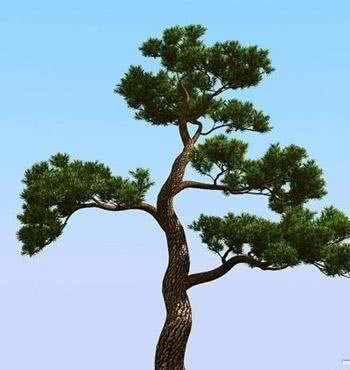
In China, the pine is a plant rich in symbolic meaning, cold-resistant and tough, and together with bamboo and plum it is known as the "Three Friends of Winter." Besides growing pines naturally in courtyards, pines are also often used to make bonsai, among which Huashan pine bonsai is very popular with the public because of its beautiful tree form and varied styles. Introduction to Huashan pine bonsai: beautiful tree forms, varied styles!
Form:
Huashan pine bonsai comes in styles such as the cliff-hanging style like a green dragon raising its head, the upright trunk style that is vigorous and towering, the curved trunk style winding like a serpent, and the slanting trunk style that is elegant and forceful, and so on. Different styles have different charms, with extremely strong ornamental value.
Symbolism:
Besides being highly ornamental in form, Huashan pine bonsai also carries the symbolism of longevity. Because Huashan pine is an evergreen tree, it stays green no matter what wind and rain it endures, and so it is regarded as a symbol of longevity. This is also one reason why pine bonsai are so popular.
Care:
Huashan pine is suited to a cool and humid climate, is relatively shade-tolerant, and is not tolerant of high temperatures or drought, so it cannot be exposed to strong sun. Therefore in summer it should be placed in a shady spot and given shade treatment. In winter, in the north the Huashan pine bonsai needs to be moved into a low-temperature indoor room, while in the south it can be placed in a sunny, wind-sheltered spot with the pot buried in the soil.
For watering, just keep the soil moist. In summer, sprinkle water on the surrounding ground more often, and also spray the leaves frequently. In winter, because little water is lost through evaporation, water less. In addition, during the growing season of Huashan pine, keep the potting soil on the dry side, as this helps control the growth of branches and leaves, so water appropriately less.
Fertilizing does not need to be done too many times. No fertilizing is needed in summer and winter; apply fertilizer twice in spring and twice again in autumn, and it is best to use a thin, well-rotted fertilizer.
There are two times when Huashan pine bonsai needs pruning. One is when new buds sprout in spring, when some new buds need to be removed according to the desired shape, removing more new buds on strong branches and fewer on weak branches. The other is during the winter dormancy period, when a comprehensive pruning can be carried out, cutting off or shortening branches that hinder the beauty of the shape.
Repotting should be done according to the age of the Huashan pine and the size of the pot. If it is in a period of vigorous growth, it needs repotting once every 2 or 3 years; if it is an old stump, it can be repotted once every 3 years, or once every 4 or 5 years. In addition, if the pot is relatively small and shallow, it needs repotting once every 2 years.
Huashan pine bonsai is also prone to pests, so pest and disease control is necessary. For pine gall disease and leaf blight, after cutting off the heavily diseased branches, spray with a chemical solution (65% wettable ferbam 300x dilution); for the oil pine caterpillar and Huashan pine bark beetle, spray with 50% dichlorvos emulsifiable concentrate 1500x dilution; for pine sawflies, spray with trichlorfon 1000x dilution.