There is no single method for orchid care, but 4 general rules are enough
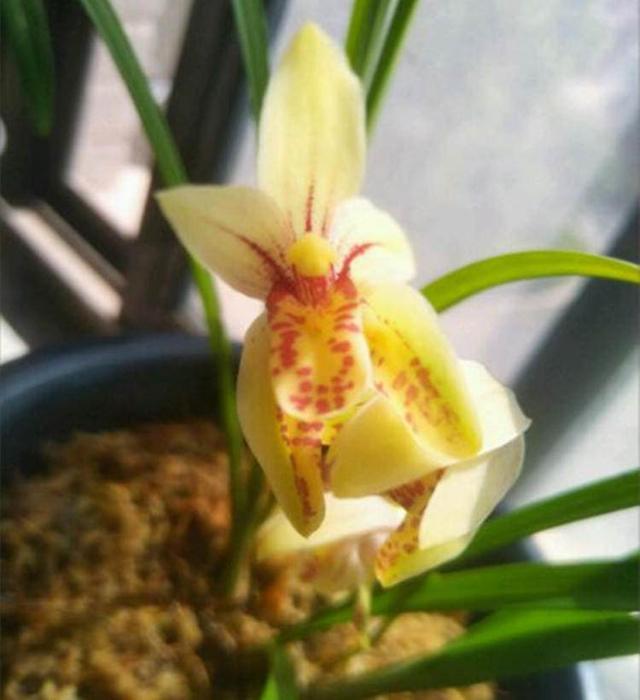
As a precious flower, orchids are loved by many flower enthusiasts. Not only because of their unique plant shape, but also because their flowers, leaves, and plants all have high ornamental value. However, when it comes to growing orchids, it is often hard to find a unified care method. But for growing orchids, there are 4 general methods.
1. Planting essentials
Orchids originate from areas south of the Yangtze River basin in China and the Yunnan-Guizhou Plateau, growing wild in sparse forest areas in valleys, and they like warmth and humidity. In various parts of North China, they are grown in pots and brought indoors to overwinter. Orchids like fertile, well-drained, slightly acidic soil, and a pH of 5.5~6.7 is more suitable.
The best potting soil is leaf mold taken from under mountain forests. You can also use half leaf mold and half sandy loam, or a mixture of 5 parts leaf mold, 3 parts compost soil, and 2 parts coarse sand. When planting, first put coarse gravel or broken pot pieces in the pot to improve drainage. The roots should be straightened, and the soil should be packed firm. The depth should be such that the top of the pseudobulb is level with the soil surface. For appearance and to prevent rain from washing away the potting soil, the pot surface can be covered with Selaginella uncinata or white crushed stone. After planting, water thoroughly and place in a cool place, then move to the growing area after 1~2 weeks.
2. Watering essentials
Orchids like humidity and are slightly drought-tolerant. In northern China, the weather is dry in spring and early summer, so pay attention to watering and keep the potting soil slightly moist. In summer and autumn, keep the soil moderately moist. In late autumn, watering should be gradually reduced. In winter, do not water unless the soil is dry. High air humidity is beneficial to orchid growth. Therefore, in dry, hot weather, spray water around the flower pot to increase air humidity. Orchid leaves are small, and the roots are fleshy, so it is not suitable to water too much.
3. Fertilizing essentials
Orchids do not particularly like fertilizer. No fertilizing is needed in the first year after newly planting or repotting. But after the second year, fertilizer still needs to be supplemented appropriately. Generally, from May to September during the vigorous growth period, apply a liquid organic fertilizer specially for orchids once every half month. It is better to apply it diluted rather than concentrated, generally diluted 500 times and poured at the roots.
4. Shading essentials
The shade frame for orchid care is best set up in a place surrounded by trees and with good ventilation. Every morning and evening, the shade frame can be opened so the orchids can receive light and dew. If it is too shady, growth will be excessive, and flowering will be poor.