4 Key Points for Planting Jasmine That You Should Never Cut Corners On
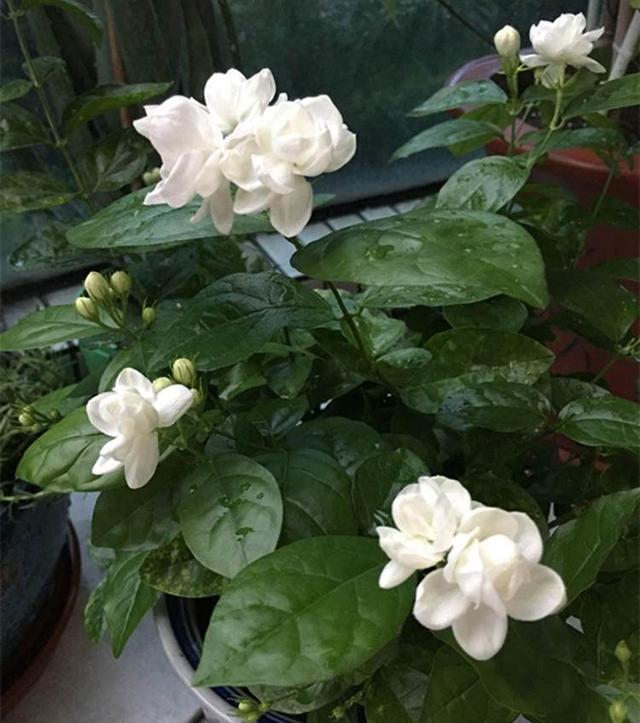
Jasmine has bright green leaves and pure white flowers. At night it releases wisps of fragrance from the heart of each bloom, a scent that is sweet, fresh and far-reaching, and it is hailed as "the finest fragrance under heaven." But if you want to grow this "finest fragrance under heaven" well, there are some points to observe when planting, and fellow gardeners should never cut corners.
1. Before potting, give it a little sun
Before potting jasmine, you can lay the seedlings out in the sun for a short while; this helps prevent root rot after potting. After planting, place them in a shaded spot and spray with water 2~3 times a day. After about a week, once the seedlings have recovered, move them into the sun to grow.
Jasmine likes warmth and moisture, and grows fastest in the high-temperature, high-humidity conditions of summer. Jasmine needs plenty of light; in a shaded environment its branches are thin, its leaves are sparse, it bears few flowers and the scent is faint, though it does tolerate partial shade. Jasmine likes fertile, loose, acidic soil, with a pH of 6.0~7.0 being ideal. For a potting mix, you can blend 4 parts fertile garden soil, 4 parts leaf mold and 2 parts river sand, then add horseshoe chips and granular phosphate fertilizer to the pot as a base fertilizer.
2. Fertilizing starts when new shoots emerge
Keeping the potting soil rich in nutrients is an important condition for jasmine to grow vigorously and bloom abundantly. In spring, from the time buds break and shoots emerge, apply a fairly dilute organic liquid fertilizer (fertilizer 1 : water 500) once a week. Strong fertilizer harms the growth of new roots and keeps the plant from thriving for a long time. When new branches are forming buds (once new branches have grown 2~3 pairs of leaves), you should hold back on fertilizer and water, and may even stop both for a while; when some of the new tips begin to wilt, apply a dilute organic liquid fertilizer.
This controls the elongation of the branches and directs nutrients into the flower buds. After flowering, apply a stronger fertilizer (fertilizer 1 : water 300) and water heavily to encourage new buds to sprout and grow, then continue using the method above to promote and control the flowering period.
3. Watering should alternate between "heavy" and "light"
Jasmine is quite thirsty, but too much water can also cause leaves to rot. In spring, when temperatures are low and evaporation is slight, water once every 1~2 days, and you can also alternate between "heavy" and "light" waterings to avoid the soil holding too much moisture. As temperatures rise, the plant's water needs increase, so watering should gradually increase as well, and you can water once each morning and evening. In addition, be sure to spray the leaves with water regularly.
4. Pruning and leaf removal are both necessary
Prune in spring before the buds break, thinning out weak, overcrowded and diseased or pest-infested branches. Cut the branches you keep back to 10~25 cm to encourage new shoots, and after each flush of flowers, cut the flowering branches back moderately. Before the buds break, you can also remove leaves to encourage earlier and more uniform sprouting and flowering: you may keep only 1~2 pairs of leaves at the cut and remove all the rest, or alternately remove one leaf at each node.