The rubber plant is a healthy houseplant that purifies the air, a helpful ally for indoor air
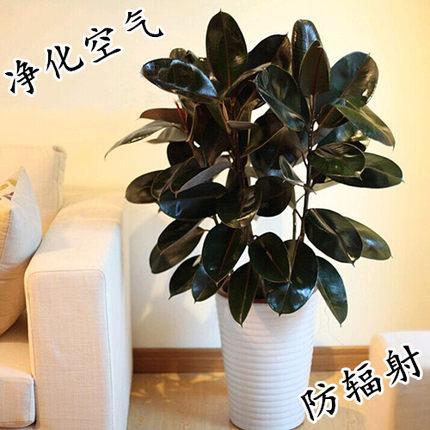
The rubber plant, a healthy houseplant that purifies the air and a "helpful ally for indoor air"
The rubber plant is also known as the Indian fig and Indian rubber. Common varieties include the variegated rubber plant, the golden-edged rubber plant, the white-spotted rubber plant, and the golden-star broadleaf rubber plant; the photo shows a potted rubber plant.
1. Environmental benefits
The rubber plant can purify volatile organic compounds such as formaldehyde from the air, and its leaves can also absorb fine particles such as dust from the air, making it quite effective at purifying indoor air.
2. Care guide
(1) Soil selection For potted rubber plants, fertile, loose soil with good drainage is best; it can be mixed from leaf mold, garden soil and river sand with a small amount of base fertilizer.
(2) Light The rubber plant prefers a hot, humid environment with plenty of sunlight, dislikes direct sunlight, and can also tolerate shade.
(3) Temperature The rubber plant is not cold-tolerant; a room temperature of 22-32°C is suitable for its growth, and the overwintering temperature must not be lower than 10°C.
(4) Watering During routine care, the rubber plant should be kept with moist soil; during the hot summer season, the amount of watering should be increased, but waterlogging in the pot should be avoided. After autumn begins, gradually reduce watering, and in winter water sparingly.
(5) Fertilizing During routine care, the rubber plant grows vigorously in spring, summer and autumn, and needs liquid fertilizer or compound fertilizer applied 1-2 times a month. After autumn, gradually reduce fertilizing, and in winter stop fertilizing.
(6) Pruning When the rubber plant seedling is 80-100 cm tall, it should be cut back to encourage 4-5 side branches to grow; afterward, cut back the side branches once a year, which can make the plant round, full and attractive.
(7) Propagation
① Cuttings. Generally done in late spring and early summer in conjunction with pruning. Choose a lignified middle section of a one-year-old branch as the cutting; keep 3 buds on the cutting, cut off the lower 1 leaf, bring the upper 2 leaves together, and tie them with a plastic bag. Insert the prepared cutting into river sand or vermiculite, then during subsequent care keep the temperature and humidity relatively high; it will root after 2-3 weeks [Jishan Huayao].
② Air layering. Choose a two-year-old branch, first girdle a 2 cm wide ring on the branch, then wrap moist moss or peat soil around the wound, cover it tightly with plastic film, and tie both the upper and lower ends; it will root after 1-2 months.
(8) Placement The rubber plant has high ornamental value and is a common potted foliage plant, suitable for indoor potting to beautify the living room, study and other places.