How Do You Go to the Toilet in the Fields? Eight Female Farmers Across Generations, Including a Transgender Woman, Speak Out
By Lin Pei-chun, reporter for News & Market
Women play an important role in agricultural production and must adapt to the working environment in the fields, yet the public rarely knows what their actual working conditions are like. Take the most basic physiological need: how do female farmers go to the toilet in the fields? Do they have trouble finding a place to relieve themselves? How do they solve it? What do they do when there is no cover in the fields? Is there a need for toilets to be installed in farmland? In a preliminary survey, the reporter interviewed eight female farmers in Taiwan, ranging in age from their twenties to their sixties, hoping to learn more about female farmers' views on going to the toilet.
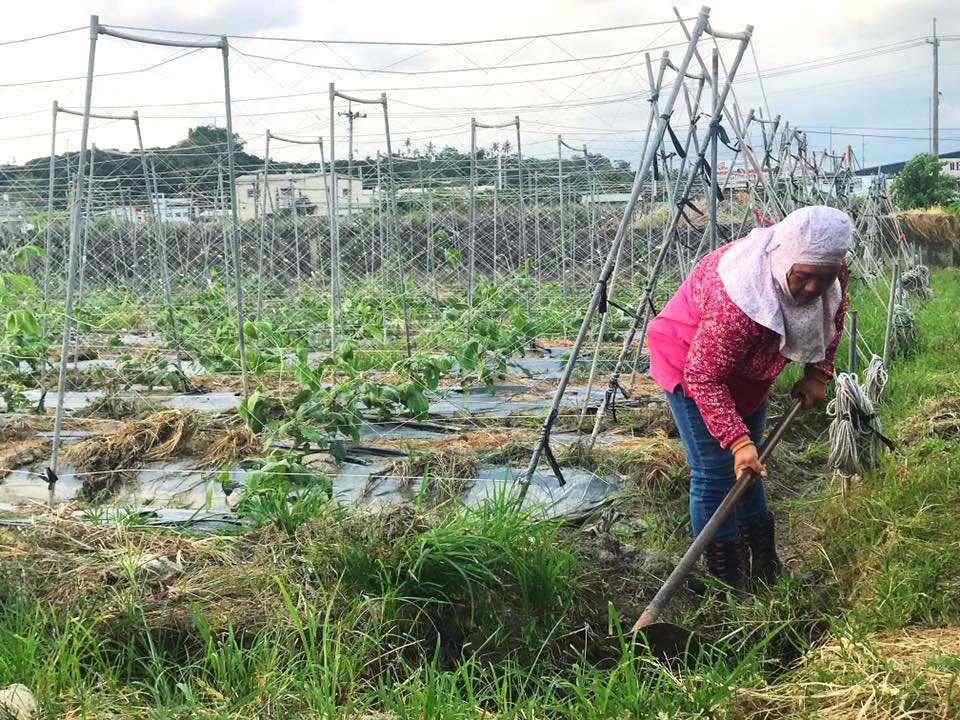
Build Toilets in the Fields? Older Female Farmer: "You've Seen a Ghost!"
A female farmer surnamed Hong in Miaoli, who has been farming for decades and is now in her sixties, was asked whether toilets need to be installed in farmland. She responded in surprise: "You've seen a ghost!" She admitted that building a toilet requires running water and electricity, and exclaimed, "Would that even look right?" and "What do you think the farmland would turn into?"
She said she always goes home to use the toilet, and the trip takes only two minutes. "If it's really impossible, I can just borrow a neighbor's toilet, which is also convenient." Most of the female farmers around her are in their fifties and sixties, and generally no longer have menstrual periods or toilet troubles. Speaking of her own past menstrual periods, she said: "Just pad it with cloth, everyone did that."
A female farmer in Chiayi in her twenties, who has helped with her family's farming since childhood, said she only needs to go home to use the toilet during her period; otherwise she relieves herself in dense grass. She said outright that she has no trouble going to the toilet, and normally would not go home just for that. "It's such a hassle, and it interrupts the work."
What About Toilet Paper?
In addition, regarding the toilet paper needed for going to the toilet, most of the female farmers said they bring their own small packs of tissues when needed, but in practice they do not necessarily have to use them. Several female farmers also pointed out that they bag up used tissues and take them home, stressing that they care about keeping their farmland tidy. Compared with many hiking spots littered with toilet paper, these female farmers show even more environmental awareness toward their farmland.
What outsiders assumed would be a thorny toilet problem was shared by the female farmers interviewed with poise and ease, as they stressed that going to the toilet is not a big issue. A female farmer surnamed Li in Kaohsiung respects that people of different ages may see things differently, but she said frankly, "(Going to the toilet) is a small matter for all of us!" This shows that although the toilet problem exists, the female farmers have clearly found their own solutions.
"GLOBAL G.A.P." Requires Farms to Prepare Toilets. What Do Farmers Think?
The international "GLOBAL G.A.P." standard requires farms to provide hand-washing facilities and install toilets; however, Taiwan's farmland varies widely and conditions differ, so the "toilet requirement" appears difficult to implement on ordinary small-scale farmland.
The Chiayi female farmer interviewed said that most of the workers on nearby farmland are older men, and there is generally no willingness to install toilets. She also said frankly that building toilets in farmland involves drainage and cleanliness maintenance issues. "Are you going to hire someone just to clean them?" "There's no need to specially build toilets!"
On the toilet issue, most of the female farmers believe the environment should come first. A female farmer surnamed Yang in Tainan pointed out that Taiwan's farmland plots are small and finely fragmented, making them unsuitable for further toilet installation. "That would damage the environment." The Miaoli female farmer surnamed Hong also believes the toilet matter is minor and there is no need to build them.
The Kaohsiung female farmer surnamed Li further stated that it is gender inequality and differences in society that have instilled in women the idea that they "need to use the toilet indoors." She stressed that female farmers' ways of going to the toilet should not be met with prejudice or discrimination, and called for respect and acceptance of female farmers' physiological needs at work.
The fruit farmer surnamed Yang, who has obtained "GLOBAL G.A.P." certification, said the certification requires toilets to be installed within a 10-minute walk, about 500 meters, of the farmland. He noted that he already had a portable toilet at the boundary between his farmland and the collection and packing site, so he meets the requirement.
Having a toilet may make it convenient for female farmers to relieve themselves, but wastewater treatment and environmental maintenance for toilets are both problems. They require extra money and regular cleaning. "It's really a hassle," said the fruit farmer surnamed Yang. Therefore, he mentioned that nearby farmers sometimes still relieve themselves on the spot. He also stressed that whether to install toilets depends on farmers' needs. "It's not a necessity!"
Are Ecological Toilets Possible?
However, some female farmers said that when they visited farms in Japan in the past, they saw that some farms had toilet facilities, and pointed out that having toilets might increase women's willingness to take up farming. "(Farmland toilets) can be promoted," said a female farmer surnamed Hsu in Kaohsiung.
In the discussion about installing toilets, a female farmer surnamed Tsai in Tainan proposed the idea of "ecological toilets." She pointed out that building concrete or portable toilets in the fields is unsuitable. "That would damage the farmland!" Therefore, she suggested that discarded materials such as bamboo, wooden boards, canvas and plastic buckets could perhaps be used to build more environmentally friendly "ecological toilets," allowing human waste to be further converted into organic fertilizer. However, current regulations do not allow organic fertilizer made from human feces and urine, so she also admitted that the idea still needs more communication and discussion in the future.