These 5 flowers are the easiest to root and fill their pots when propagated by cuttings in summer, no need to spend money buying them
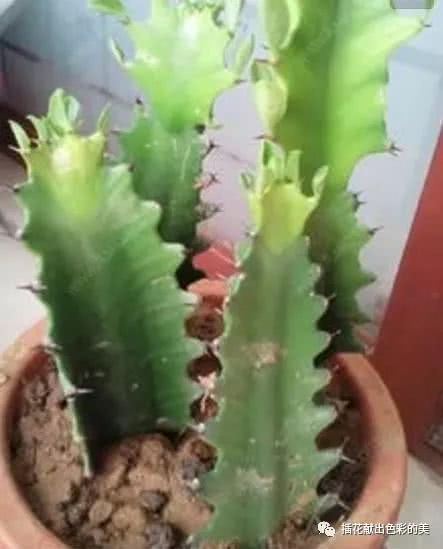
Are you still spending money on flowers? These 5 flowers are the best for summer cuttings, with big white roots sprouting like crazy and pots bursting at the seams!
1. Orchid cactus (Epiphyllum hybrid)
1. The cutting medium can be coarse sand, vermiculite and perlite mixed in a 1:1:1 ratio, and after inverted cuttings have rooted in this medium, they do not need to be transplanted.
2. On a robustly growing orchid cactus plant, use sharp scissors to cut off a fairly thick stem segment 10-15cm long, making sure the upper end of the stem segment has the leaf tip portion.
3. Let it dry in a ventilated place for 1-3 days, insert it to a depth of 1/3 of the cutting, mist it frequently, and it will generally root in about one month.
2. Bougainvillea (Bougainvillea)
1. Because bougainvillea has thorns, it is best to wear gloves when cutting branches. Generally cut a branch facing the sun as the cutting, and new branches are best taken with a bit of old branch. If you take bougainvillea cuttings after June, semi-lignified new branches alone are enough.
2. Commonly used cutting media include river sand, vermiculite, perlite, plain sandy soil, peat soil, rotten moss, rice-husk ash, sawdust, floral foam and so on. For simplicity, plain sand and perlite are enough.
3. Bury the cutting 7-8 cm deep in the soil, leaving the leaf-bearing part exposed. Then place it somewhere out of direct sun (sparse sunlight is enough).
3. Gardenia (Gardenia jasminoides)
1. For choosing gardenia branches for cuttings, you can generally choose branches that have grown for about two years, and cuttings can usually be taken around June.
2. Put the trimmed gardenia cuttings in a glass bottle or transparent container filled with water for easy observation; if the water becomes very cloudy, change the water as appropriate.
3. Generally in about 7 days you will find the gardenia has grown white root filaments. After the gardenia has rooted, you can let it grow for a few more days, then move it into soil for cultivation; it is best to choose humus soil, with soft soil, and keep the soil moist.
4. Rose (Rosa chinensis)
1. Choose a robustly growing branch that has not yet sprouted flower buds, cut the upper part flat and cut the lower part into a horse-ear shape, leaving the two small leaves at the top.
2. Choose vermiculite as the growing medium, insert the rose branch about 3-5cm, with a plant spacing of 5-6cm.
3. Give it sun in the morning and evening; for the first 4-5 days mist it more times each day to keep the leaves from dehydrating, afterwards mist once each in the morning, noon and evening, gradually reducing to once every 3-5 days, and it will gradually root.
5. Umbrella tree (Schefflera arboricola)
The umbrella tree is an excellent plant for absorbing secondhand smoke
1. Cut a 10-15 cm one-year-old branch as the cutting material. Remove the lower leaves, keep the top 3-4 leaves, and cut the lower end into a slant.
2. Insert 2/3 of the cutting into a pot with perlite (or sifted clean river sand) as the medium, one plant or 3 plants per pot. After inserting, spray water to keep it moist, place it in a low-light spot indoors, mist once a day on sunny days, and adjust according to the specific situation on overcast and rainy days.
3. Keep the room temperature at 15-25°C; it can root 1.5 months after cutting. 15-30 days after rooting, transplant it into a pot with a medium mixed evenly from 5 parts garden soil, 3 parts humus soil and 2 parts fine sand, water thoroughly, place it in partial shade, and move it to normal light after 1 week.