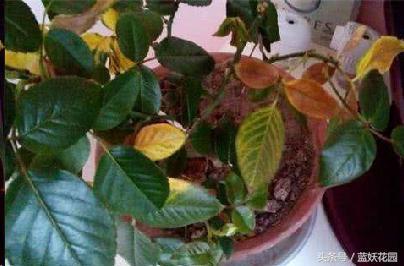
The roses wilted after several days of continuous rain, and it turns out this was the culprit
Click the [Follow] button in the top right corner to follow the Lanyao Garden Toutiao account, and send a private message with "Gardening Encyclopedia" to receive a free e-book that can solve 70&-80% of gardening problems (updated regularly)
- This is day 898 of Lanyao's daily original articles
- Rose growing series articles: No. 95
The weather these past few days has been constantly overcast and rainy, and the Jiangnan region has already entered its rainy season mode. A gardening friend asked Lanyao why the roses outside turned yellow and wilted after just a few days of rain?
Many gardening friends think this problem is caused by too much rain, but actually rain is not bad for roses at all. Think about the roses planted in the ground and the outdoor potted roses, they are all getting rained on, and aren't they all growing just fine?
Moreover, plenty of rainwater is greatly beneficial for roses to send out shoot buds, so we can see that ground-planted roses often send out many shoot buds during the rainy season.
So why do potted roses turn yellow and wilt after just a few days of rain?
The most common reason roses have problems after rain is water accumulating in the potting soil, which leads to root rot.
The causes of water accumulation are usually the following:
1. The potting soil does not drain well enough
Many gardening friends use coconut coir soil to grow roses, or use general-purpose nutrient soil to grow roses. Both of these soils hold water very well, and after long periods of rain, the potting soil often does not dry out easily, leaving the roots stifled in a hot and humid environment, which causes root suffocation.
For example, when Lanyao grows roses, I always mix my own soil, with granular material making up 1/3 of the total volume, ensuring good drainage and aeration, so that even during the rainy season water accumulation does not happen.
2. The drainage holes of the flower pot are blocked
Some gardening friends use flower pots with relatively small drainage holes that clog easily. If you do not pay attention to drainage during the rainy season and let the drainage holes of the flower pot get blocked, it can also easily cause water to accumulate in the pot.
3. Improper use of saucers
Besides the soil mix and blocked drainage holes of the flower pot, sometimes our own small oversights can also cause root suffocation in potted roses.
Many people like to use saucers for indoor balcony growing. Since watering causes excess water to flow out, they choose to use a saucer to catch the water to avoid water flowing everywhere.
But when growing outdoors, if you use a saucer during long periods of rain, it causes poor drainage. There is always water in the saucer, and the potting soil cannot go through a wet-dry cycle. So during the rainy season with several consecutive days of rain, yellow leaves and wilting problems appear.
You may ask, even without a saucer the roses are still getting rained on and are still damp, yet they do not have problems, so why do problems appear once a saucer is used?
Speaking of this question, many gardening friends may find it hard to understand, so Lanyao will briefly analyze the difference between the two.
We say that although both are getting rained on, the rain does not fall 24 hours a day, and there is always a time when it stops. When the rain stops, the excess water in the flower pot will flow away, but if a saucer is used, the excess water will be stored in the saucer.
Furthermore, water accumulation and root rot are mostly caused by stagnant, waste water. Without a saucer, when the rain keeps falling, the excess water keeps flowing away, so it is living water. But when a saucer is used, the water in the saucer is retained stagnant water, and after the potting soil dries slightly it will be absorbed back, causing the potting soil to accumulate waste water. When the roots are stifled in waste water for a long time, root rot easily occurs, and the roses will show yellow leaves and wilting.
Isn't this explanation from Lanyao easy to understand?If you love growing flowers and want to learn home gardening tips, please follow Lanyao's WeChat public account: Lanyao Garden (ilanyao)
Welcome to follow the [Lanyao Garden] Toutiao account, to accelerate your growth together and become a gardening expert. If you like my articles, feel free to like, forward, and save them!