Understory Wild-Simulated Cultivation Techniques for Dendrobium officinale in Mengla County
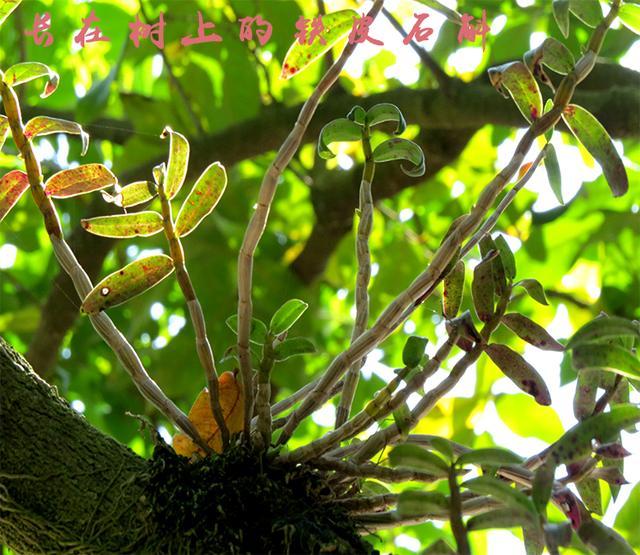
Understory Wild-Simulated Cultivation Techniques for Dendrobium officinale in Mengla County
1 Introduction
Dendrobium officinale has high health-preserving and wellness benefits and is a very precious and long-established medicinal herb in traditional Chinese medicine, known as the "first of the nine immortal herbs," with high value for artificial cultivation and industrial development. However, in light of the current status of artificial cultivation and industrial development of Dendrobium officinale, driven by economic interests, many regions of our country have launched artificial cultivation and specialty industry development projects for Dendrobium officinale. Among them, the artificial greenhouse cultivation model is the most common; however, this cultivation model for Dendrobium officinale changes its growth pattern of growing on trees, adopts a ground-planting method, and in cultivation management, in order to maximize economic interests, uses pesticides and chemical fertilizers to promote its growth or uses additives during processing, which not only greatly reduces the medicinal quality of cultivated Dendrobium officinale but also creates problems such as pesticide residues and excessive heavy metal content, which is very detrimental to the cultivation and industrial development of Dendrobium officinale. Under these circumstances, Mengla County, based on the current market situation of Dendrobium officinale cultivation, proceeded from aspects such as improving its medicinal quality and carrying out organic agricultural cultivation, and explored a set of understory wild-simulated cultivation and management techniques for Dendrobium officinale suitable for the region. The Dendrobium officinale cultivated not only meets the standards for organic agricultural crops, but its medicinal quality can also reach wild quality standards, and good results have been achieved in promotion and application.
2 Natural Environment for Understory Wild-Simulated Cultivation of Dendrobium officinale
Mengla County is located in the southeastern part of Xishuangbanna Dai Autonomous Prefecture in Yunnan Province, China, and is also the southernmost area of Yunnan Province. Its geographical coordinates are between longitude 101°05'-101°55' E and latitude 21°09'-22°23' N. It belongs to the northern tropical humid monsoon climate zone, with no extreme heat in summer and no severe cold in winter, abundant rainfall throughout the year, and distinct dry and rainy seasons, with an annual accumulated temperature above 7500°C. Mengla County is one of the places of origin of Dendrobium. The climate and environment here are very favorable for the growth of Dendrobium, and it is a region with relatively rich Dendrobium resources in the prefecture and even the whole country, with more than 50 species, mainly including Dendrobium officinale, Dendrobium devonianum, Dendrobium aphyllum, Dendrobium nobile, Dendrobium chrysotoxum, Dendrobium fimbriatum, and other varieties. Mengla County began artificial cultivation of Dendrobium in 2000. At present, there are already 6 Dendrobium cultivation cooperatives and one Dendrobium industry association, and the cultivation area has now reached more than 5000 mu. In addition, the ecosystem in this area is well developed, with extensive forestry planting and forest coverage. It is the most suitable environmental region for the cultivation and growth of Dendrobium officinale, and it has a good foundation for the cultivation and natural growth of Dendrobium officinale, creating favorable environmental conditions for the development of wild-simulated understory cultivation of Dendrobium officinale in this region.
3 Tree Species Selection Techniques in Wild-Simulated Understory Cultivation of Dendrobium officinale
Unlike artificial greenhouse cultivation, wild-simulated understory cultivation of Dendrobium officinale is based on the natural growth patterns of Dendrobium officinale, using original ecological cultivation development techniques, by planting Dendrobium officinale on trees and creating a good understory environment according to its growth needs, ensuring that the forest area where Dendrobium officinale is cultivated is not logged, destroyed, or damaged, and while ensuring biodiversity of biological resources in the forest area, promoting the cultivation and growth of Dendrobium officinale to achieve the corresponding cultivation objectives. It can thus be seen that in wild-simulated understory cultivation of Dendrobium officinale, the selection of cultivation trees and forest resource environment is very critical.
Generally, for trees used in wild-simulated understory cultivation of Dendrobium officinale, the diameter is about 15-30 cm, and the bark thickness should reach about 0.5-1 cm. Trees with bark that is too thick or too thin should not be selected. At the same time, the surface of the trees used for cultivation should not be too smooth; it is best if there are cracks, so as to ensure that the cultivated Dendrobium officinale can achieve good moisture retention and microbial absorption and fungal mycorrhiza production effects through the trees. In addition, in wild-simulated understory cultivation of Dendrobium officinale, Toona sinensis, longan trees, and chestnut trees are generally used as the best tree types for cultivation selection.
4 Cultivation and Transplanting Techniques for Wild-Simulated Understory Dendrobium officinale
(1) In the planting of Dendrobium officinale seedlings, cutting seedlings or tissue-cultured seedlings are generally used. Among them, tissue-cultured seedlings about 5 cm in size are the most suitable. It should be noted that in order to improve the survival rate of seedling planting, hardening treatment for about half a year must be carried out before planting. Taking cutting seedlings as an example, strong cutting seedlings that have not undergone hardening have a planting survival rate of only about 10%, but after hardening management, their planting survival rate can reach about 60%. In addition, regarding the survival rate problem in the planting of Dendrobium officinale seedlings, it is also necessary to replant seedlings in the second year after planting to improve the yield and benefits of cultivation.
Generally, the planting of Dendrobium officinale seedlings is carried out in February to March each year. The seedlings are tied to trees, and then compressed cow dung or pig dung and other animal dung blocks about 5 cm x 10 cm x 2 cm in size are used to paste the roots of the seedlings. The dung blocks are made from tree leaves, rice straw, and cow/pig dung in a ratio of 3:2:5, after fermentation, mixing, and compression treatment, ensuring that the pH value reaches about 7, and then used in seedling planting to ensure that the seedlings absorb the needed nutrients during growth. After seedling planting, fermented cow dung water is used for fertilization management 3 times from January to June of the following year, and the pH value of the fermented cow dung water needs to be controlled between 7 and 7.5. When selecting animal manure such as cow and pig dung as fertilizer for Dendrobium officinale cultivation, attention should be paid to avoiding the use of cow/pig dung and other animal manure from the market as much as possible, so as to avoid adverse effects on the cultivation and growth of Dendrobium officinale from the large use of antibiotics and additives in their breeding. It is best to choose cow/pig dung from one's own cattle raising or from breeding operations whose management conditions are familiar, ensuring that the manure fertilizer does not contain feces from diseased cows/pigs, thus providing good conditions for the organic cultivation and growth of Dendrobium officinale.
(2) During the cultivation and growth period of Dendrobium officinale, attention should also be paid to timely transplanting management in combination with its growth conditions and environmental changes. Because wild-simulated understory cultivation of Dendrobium officinale is an epiphytic or adjacent-growing plant, its cultivation and growth are directly related to the growth changes of the trees it attaches to or grows beside. The bark moisture and microbial supply of the trees provide corresponding conditions for its growth. However, because the root system of Dendrobium officinale is relatively developed, after the trees or attached growing branches die, generally, as the root humidity conditions of Dendrobium officinale become insufficient, it will begin to wither around January. Therefore, although in this case Dendrobium officinale can still bloom and send out new shoots the following year, its nutrient source and dependence are mainly on the mother plant, and when yellowing and withering changes in its appearance are found, the stems of Dendrobium officinale have already become empty shells or have died. In response to this situation, during the cultivation and growth period of Dendrobium officinale, once trees or branches die, transplanting should be used to move it onto living trees or branches. Moreover, during relatively dry climate periods, attention should be paid to increasing the air humidity of its growth environment through artificial spraying, so as to create an environment favorable for the growth of Dendrobium officinale.
5 Management Techniques for Wild-Simulated Understory Cultivation of Dendrobium officinale
The management of wild-simulated understory cultivation of Dendrobium officinale mainly focuses on changes in the humidity conditions of the cultivation and growth environment, increasing air humidity conditions through artificial humidification to promote the growth of Dendrobium officinale. Because wild Dendrobium officinale mostly grows in moist forests or on rocks, the probability of direct sunlight exposure is very small, with a shade rate basically between 70% and 90%, and because photosynthesis is relatively low, its growth process is also relatively slow. Therefore, in the cultivation process of wild-simulated understory Dendrobium officinale, in combination with its wild environment and growth patterns, its shade rate is appropriately reduced to promote growth through the action of sunlight, while also improving its disease resistance and prevention ability. It should be noted that in this wild-simulated understory cultivation, the humidity condition requirements of its growth environment are also relatively high. Generally, it is necessary to satisfy an environmental humidity of about 80% from October of the cultivation year to June of the following year, so as to achieve better growth conditions for wild-simulated cultivation of Dendrobium officinale. According to this situation, in the cultivation of Dendrobium officinale, by establishing an early warning mechanism for the humidity conditions of its cultivation environment, and in combination with humidity changes, artificial spraying is used to increase the environmental humidity of the wild-simulated cultivation forest of Dendrobium officinale, so as to meet the humidity conditions required for its growth, thereby increasing its cultivation growth speed while improving its wild environment, meeting higher cultivation yield requirements, and improving the economic benefits of its cultivation.
6 Pest and Disease Control in Wild-Simulated Understory Cultivation of Dendrobium officinale
In wild-simulated understory cultivation of Dendrobium officinale, pest and disease control can be carried out from aspects such as biological control and targeted disease control, strengthening the prevention and management of pest and disease impacts on wild-simulated cultivation of Dendrobium officinale.
(1) The biological control method for insect pests in the growth of Dendrobium officinale is to plant fruit trees such as olive, longan, and cherry around the Dendrobium officinale cultivation forest, so as to attract birds through the fruit and strengthen pest prevention and control. In addition, solar insect traps can also be used to capture and kill pests, so as to reduce the impact on the cultivation and growth of Dendrobium officinale. It should be noted that when using the method of planting fruit trees to attract birds for pest control, avoid blindly introducing exotic tree species, try to plant native fruit trees, and at the same time strengthen bird protection and prohibit the killing of birds.
(2) In view of the black spot disease, leaf rust, soft rot, anthracnose, blight, and termite pest situations that are likely to occur in wild-simulated cultivation of Dendrobium officinale, attention should be paid to strengthening prevention according to the causes of the diseases, so as to reduce the threat of the corresponding diseases. Among them, black spot disease, leaf rust, soft rot, anthracnose, blight, and other disease situations in Dendrobium officinale cultivation are mostly most common in artificial greenhouse cultivation. Under wild-simulated cultivation conditions, through the application of biological control methods, they basically rarely occur, and their impact on Dendrobium officinale cultivation is relatively small, but attention should still be paid to strengthening preventive management through monitoring of the cultivation environment. In addition, for termite pests, the threat and impact of termite pests can be reduced by clearing dead trees and dead branches in the Dendrobium officinale cultivation forest to eliminate the living environment of termites, or by roasting eggshells until yellow, crushing them, and scattering them in areas where termites appear, and by sprinkling a mixture of pepper, tobacco, and lime mixed with water around the tree roots and applying it to the tree root areas. It is also possible to introduce pangolins into the Dendrobium officinale cultivation forest, at a rate of one per 300 mu, to control termite pests and eliminate the impact on the cultivation and growth of Dendrobium officinale.