Detailed Explanation of Cultivation Technology for Red Peony (Radix Paeoniae Rubra) under Mulch with Drip Irrigation
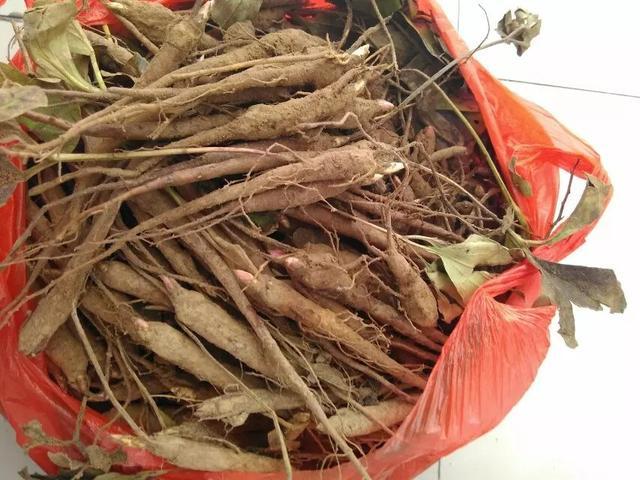
Cultivation Technology for Red Peony under Mulch with Drip Irrigation
Red peony is a famous wild authentic medicinal herb with a long history of use and wide application in traditional Chinese medicine in China. Market demand is relatively rigid, and a considerable quantity is used for export. Red peony has a long growth cycle and relatively high investment costs, and at present the area under artificial cultivation in China is very small, with market supply relying entirely on wild resources. With the annual harvesting of wild red peony, the resource quantity in the production areas is already seriously insufficient, and market supply can no longer be guaranteed. Chicheng County, Hebei Province, is located in the Yanshan mountainous area of northern Hebei, with abundant wild red peony resources and excellent varieties, and is the authentic production area for red peony. On the advice of authoritative experts and well-known pharmaceutical enterprises, Chicheng County has demonstrated, driven and promoted artificial cultivation of red peony through a Chinese medicinal herb planting professional cooperative, with an area reaching 500 mu. The development goal is to build a ten-thousand-mu red peony planting base and create a distinctive red peony production area.
1 Cultivation Technology
Chicheng County belongs to the mountainous area of northern Hebei. The soil types are mainly cinnamon soil, chestnut calcareous soil, brown earth soil and meadow soil. The county's altitude ranges from 500 to 1,540 m, with an average altitude of 945 m. It is located in a mid-latitude region, with an East Asian continental monsoon climate, a mid-temperate arid zone, four distinct seasons, abundant sunshine, rain and heat in the same period, and a large diurnal temperature difference. The average annual temperature is 6.5°C, the frost-free period is 90-140 d, with an average frost-free period of 128 d. The sunshine duration is 2,737.9 h. The average annual precipitation is 417.1 mm. The Northwest Hebei Medicinal Materials Experiment and Extension Station of Chicheng County, Hebei Province, combined the integrated water and fertilizer drip irrigation under mulch dryland farming technology to demonstrate and promote the integrated water and fertilizer cultivation technology for red peony under mulch with drip irrigation in Xiaoxigou Village, Yangtian Township, with a planting area of 300 mu, achieving good results. It has the advantages of saving water, saving fertilizer and saving labor, and is suitable for large-scale and standardized planting. It is of great significance for protecting the ecological environment, increasing yield, reducing production costs and increasing economic benefits.
1.1 Site Selection and Land Preparation
Red peony is suitable for planting in loam and sandy loam. Choose flat land or sloping land with loose soil texture, deep soil layer, fertile soil and good drainage. Before planting, deep plow more than 30 cm, and at the same time apply fully decomposed organic fertilizer and an appropriate amount of insecticide, remove all root stubble and straw, and ensure there are no large clods or hidden lumps in the field, to prevent puncturing the plastic film when laying it.
1.2 Cultivation Methods
Adopt advanced planting technologies such as intensive seedling raising and transplanting of seedlings to ensure the seed utilization rate and seedling survival rate, so as to reduce costs and improve efficiency and benefits.
1.2.1 Seedling Propagation. In mid-to-late August, collect mature and plump seeds, and sow while the collected seeds have not been sun-dried and contain sufficient moisture. Adopt high-ridge cultivation, with a ridge height of about 15 cm, a width of 100-120 cm and a spacing of 35 cm. Use mechanical sowing or manual sowing, in rows, with a row spacing of 25 cm, a plant spacing of 2.5-3 cm and a sowing depth of 3-5 cm. The seed rate per mu is 40-50 kg. Slightly compact the soil after sowing. In addition to applying organic fertilizer during land preparation, apply 15-20 kg of diammonium phosphate per mu at sowing. Seedlings begin to emerge in May of the second year. After that, apply organic fertilizer or urea once each year in May-June. In winter, spread mixed soil and manure on the ridge surface or earth up the ridges to ensure safe overwintering. The seedling-raising period is generally 2-3 years, and the time for digging and transplanting is determined according to the growth vigor and the size of the seedling roots. Seedlings are generally 10-12 cm long and 5-8 mm thick. The digging time is September-October or April-May, and digging must be done before the new buds grow large, to prevent damaging the young buds.
1.2.2 Seedling Transplanting. Spring planting is from mid-April to mid-May, and autumn planting is from October to before the ground freezes. First dip the dug seedlings in a prepared rooting powder and fungicide solution, and keep them ready for planting. Cultivation method: adopt the integrated water and fertilizer cultivation technology under mulch with drip irrigation, lay mulch mechanically, and complete the laying of the plastic film and drip irrigation tape in one operation. The plastic film is black or white film 80 cm wide and 0.008 mm thick; the drip irrigation tape is φ16 labyrinth tape. After laying the film, plant the seedlings by hand, using a special tool to prick and dig a 12-15 cm deep hole in the plastic film, at the same time place the seedling vertically, and then compact the soil. Use one film with two rows, with a row spacing of 40 cm and a plant spacing of 30 cm, and it is advisable to bury the seedling bud head 2-3 cm deep. Then seal the film opening firmly with soil to prevent moisture loss and the film being lifted by strong wind. After transplanting the seedlings, water timely through drip irrigation to prevent the seedlings from withering and ensure the survival rate.
1.3 Field Management
1.3.1 Fertilization and Weeding. Topdressing can be carried out from May to July each year, using quick-dissolving fertilizer combined with drip irrigation watering, through the integrated water and fertilizer facility. Remove weeds in the furrows promptly according to weed growth.
1.3.2 Bud Removal and Seed Retention. In the first and second years after planting, when the plants show buds, remove all the flower buds to promote root growth. Starting from the third year, retain seeds, and some flower buds may be appropriately removed to make the seeds plump and full. After the seeds mature in mid-August, harvest them in a timely manner and raise seedlings promptly.
1.4 Pest and Disease Control
1.4.1 Diseases. The main diseases of red peony are leaf mold, root-knot nematode disease, root rot and Alternaria leaf spot. They are all caused by fungi and bacteria, and generally occur easily in continuous rainy weather. Leaf mold: leaves, stems, flowers and other parts are all affected. The pathogen mainly overwinters in the soil as sclerotia that fall off with diseased leaves. In the early stage of the disease, spray the plants with 1:1 (200-250) Bordeaux mixture, or 30% difenoconazole 3,000 times solution, 10% duomycin 1,000 times solution, 60% carbendazim 600 times solution, etc. Spray once every 10-14 d, for 3 consecutive times. Remove the affected branches and leaves and burn them in a centralized manner or bury them deeply. Root-knot nematode disease: the roots are affected. Before or at planting, spray the ground soil with 1.8% abamectin 500-1,000 times solution for treatment, or apply metham sodium at an effective ingredient rate of 2 kg in furrows, or use 10% fosthiazate granules at 1.5 kg per mu. Root rot: the roots are affected. In the early stage of the disease, irrigate the roots of diseased plants with 50% carbendazim 500 times solution, or methyl thiophanate (70% thiophanate-methyl wettable powder) 1,000 times solution, or 75% mancozeb complex 800 times solution, or 50% copper (DT fungicide) wettable powder 350 times solution, or 3% guangkuling (hymexazol + metalaxyl) 800 times solution, or pull out the diseased plants and pour the fungicide into the diseased holes to prevent the disease from spreading. Alternaria: when the disease occurs, black spots appear on the leaves and gradually expand until they wither and die. Spray with 30% difenoconazole 3,000 times solution, once every 7-10 d, for 3 consecutive sprays.
1.4.2 Pests. These include white grubs and aphids. White grubs: they damage the roots. For each mu, 2 kg of phoxim can be made into poisonous soil and spread into the soil during land preparation to kill them, or 3% guangkuling (2 kg each of hymexazol and metalaxyl) mixed with 10 kg of fine sandy soil can be made into medicinal soil and spread at sowing or planting, which also controls root rot. Aphids: they damage stems and leaves. Spray with 10% imidacloprid wettable powder 1,000 times solution, or 2.5% bifenthrin emulsifiable concentrate 3,000 times solution, or 4.5% beta-cypermethrin emulsifiable concentrate 1,500 times solution.
1.5 Harvesting
Harvesting can be done 4-5 years after planting. At harvest, it is best to use special root harvesting machinery, which can greatly reduce production costs. The harvest period is in spring and autumn, spring from April to May and autumn from September to October. Generally, autumn harvesting is better, as at this time the sap is full, the nutritional content is high and the weight is sufficient. After digging out the roots, remove the rhizome and fibrous roots, wash off the soil and dry them in the sun. Dry until half-dry, then tie into small bundles to prevent bending after drying. Turn and sun them frequently, and store or sell when fully dry.
2 Analysis of Planting Cost and Benefits
Taking large-scale planting with seedling transplanting and a 4-year growth period as an example: the cost of standardized red peony planting is 7,000 yuan per mu. This includes: land rent for 4 years of 2,000 yuan (calculated at 500 yuan per mu per year), hired labor and machinery costs totaling 2,100 yuan, fertilizer and pesticide 500 yuan, and seedlings 2,400 yuan (4,000 plants per mu, 0.6 yuan per plant). Each mu produces 500 kg of dried goods, and the market price is no less than 30 yuan/kg, giving an income of 15,000 yuan per mu. In addition, in the third and fourth years of the growth period, about 25 kg of seeds can be harvested per mu each year. Calculated at 160 yuan/kg, the total seed harvest is 8,000 yuan. The total income is 23,000 yuan per mu. After deducting the cost of 7,000 yuan per mu, the profit is 16,000 yuan per mu, with an average annual profit of 4,000 yuan per mu. The benefits are considerable.