How can Chaenomeles speciosa be planted for higher returns?
How can the planting returns of Chaenomeles speciosa be improved?
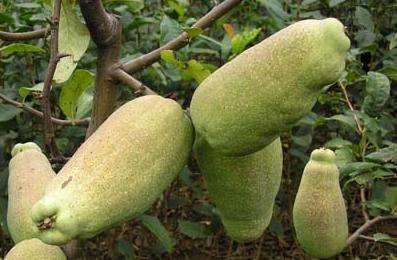
Chaenomeles speciosa is a perennial deciduous shrub of the genus Chaenomeles in the rose family. Its dried fruit is used as medicine, known in materia medica as "Zhoupi Mugua" (wrinkled-skinned Chinese quince), and it has the effects of soothing the meridians and invigorating the collaterals, and harmonizing the stomach and resolving dampness. Chaenomeles speciosa has strong adaptability, likes light and also tolerates semi-shade, tolerates cold and drought, and is mainly distributed in Anhui, Hubei, Shandong and other places, among which Changyang County in Hubei Province is the main producing area of the genuine medicinal material "Ziqiu Zhoupi Mugua". Chaenomeles speciosa usually grows in clumps of 2~5 stems, with skeletal branches densely overlapping each other and poor ventilation and light penetration; the fruiting branches in the inner canopy are mostly shaded, the flowers are numerous but poor in quality and poorly nourished, flower and fruit drop is serious, and the alternate bearing phenomenon is prominent (two harvests lost out of three years). Farmers in the main producing area of Langping Zhoupi Mugua in Changyang County, under the guidance of technicians, after long-term cultivation practice, have summarized a pruning and shaping method suitable for shrubby Chaenomeles speciosa: single-plant planting, single-trunk shaping, and layered canopy. This method has the advantages of high and stable yield, and is simple and easy to learn, increasing economic benefits while also improving ornamental value.
1 Technical key points
1.1 Trunk training
After planting and survival, remove small weak branches, wipe off clustered buds, and cultivate a robust, upright main trunk or central leader; at the same time, use the method of driving stakes or inserting rods beside the seedling to fix the main trunk or central leader, ensuring the main trunk grows vertically upward.
1.2 Promoting side branches
Timely top the central leader and pinch the growing tips to promote its thickening and the sprouting of new shoots, and cultivate side branches at all levels. Depending on their growth status (including attachment position and extension direction), generally evenly select and retain 2~4 side branches in each direction at each level, with a spacing of 40~50cm between levels (leaving a full 60cm for the trunk portion). Through 4~6 years of cultivation, when 4 levels are reached, top off the tree.
1.3 Pruning and shaping
1.3.1 Branch pressing For upward-growing branches that do not need adjustment of their horizontal extension direction, use the method of pressing down to help them grow horizontally and fix their shape. Generally, a suitably weighted cement block (manually cast) is tied with a rope and hung on the middle-to-rear part of the branch.
1.3.2 Branch pulling and branch twisting For branches that need adjustment of their horizontal extension direction, drive stakes in the field and pull the branches diagonally downward; when necessary, first twist and break (soften) the base of the branch or another suitable part before pulling the branch, so as to achieve the corresponding effect; in addition, for branches that grow too vigorously and whose extension direction is unsuitable (including the central leader), use the method of twisting the branch to assist and solve the problem.
1.3.3 Cultivating fruiting branches While cultivating the skeletal tree shape, through means such as heading back, pinching, bud wiping, and shoot control, focus on cultivating fruiting branches (branch groups), with special attention to cultivating fruiting branches transformed from spur-like branches, helping them bear fruit early and bear fruit in the inner canopy.
1.4 Points for attention
After trunk training, Chaenomeles speciosa will sprout many sucker seedlings from the root crown and main roots, which must be removed as early as possible. When using methods such as branch twisting to assist the central leader and other skeletal branches, never twist the branches off. Other management measures should refer to those for fruit trees of the rose family (apple, pear), reaching a fine level, to ensure high and stable yield.
2 Trial and demonstration situation
2.1 Basic situation of the control orchard
A Chaenomeles speciosa plantation managed with traditional pruning techniques was used as the control orchard. According to statistics, during the 5-year production period from 2003 to 2007, the fruit yield of the control orchard was comparable to that of the demonstration orchard; but from 2007 to 2016, there were four years of obvious yield reduction (alternate bearing phenomenon), with yield accounting for 60% of a normal year; in the other 6 years it was comparable to the demonstration orchard, with average yield per clump (plant) 1~3kg more. The cumulative yield over 10 years was 32.3% less than that of the demonstration orchard. 2017 was an average-yield year, and the yield per mu was only 5.3% less than the previous year, and 6.5% less than the demonstration orchard. At the same time, 10 clumps were selected in the same way and the measured averages were: 2.8 stems per clump, trunk diameter 4.05cm, crown diameter 271cm, main branches at all levels 8.9, fruiting branches (branch groups) 31.2 (groups), converted to fruiting branches (branch groups) per square meter of ground
72.12 (groups).
2.2 Basic situation of the demonstration orchard
2.1 mu of Chaenomeles speciosa with tree age, tree vigor, and soil fertility similar to the control orchard was selected as the demonstration orchard. In the 2.1 mu demonstration field, 410 Chinese quince trees were planted, and cultivation management was carried out using the method of single-plant planting and single-trunk shaping, with other management the same as the control orchard. Planting was done from the end of 2000 to the spring of 2001, fruiting began in 2003, with a yield that year of 32kg/mu, and in 2004 the fruit yield was 340kg/mu; from 2003 to 2007 the yield increased by 1~3 times each year, reaching 4 050kg/mu by 2007, and thereafter increased by 10%~30% each year, reaching a peak of 6 500kg/mu by 2016, with the highest yield per plant 26kg and an average of 15kg; in 2017 the total yield and per-plant yield were basically the same as the previous year; on August 10, 2017, ten consecutive plants were randomly selected for evaluation, and the measured averages were: trunk diameter 6.08cm, crown diameter 195.2cm, height 205cm; branching levels 3.8; main branches 11.3; fruiting branches (branch groups) borne on main branches 32.1 (groups), converted to fruiting branches (branch groups) per square meter of ground 122.96 (groups) [Jishan Huayao].
From this it can be seen that: in single-trunk-shaped Chinese quince trees, skeletal branches increased by 27% and fruiting branches (branch groups) increased by 70.5%, laying the foundation for increased yield; at the same time the plant type is obviously dwarfed, making operation and management easier; more importantly, the increase in fruiting branches (branch groups) greatly increases the probability of alternate fruiting, thereby effectively overcoming the alternate bearing phenomenon.
3 Main advantages
3.1 Good canopy permeability
The branches are graded and staggered in layers from one another, with ventilation and light penetration; in spring the leaves mature concentratedly, and the good permeability satisfies the demand for light and air during the young fruit swelling period, ensuring the light exposure of functional leaves and adequate nutrition, promoting healthy development of the fruit, thereby reducing fruit drop and increasing the fruit-setting rate.
3.2 Effective branching increased
Flower quality is good, inner-canopy fruiting is good, fruiting is three-dimensional, increasing the space for fruit setting, reducing ineffective flowers and lowering unnecessary nutrient consumption, which both increases the fruit-setting rate and improves fruit quality; at the same time, because inner-canopy fruiting branches (spurs, branch groups) increase, the probability of alternate fruiting in each year increases, effectively controlling the alternate bearing phenomenon, and fruit yield grows steadily.
3.3 Convenient management and convenient harvesting
Single-trunk-shaped Chinese quince trees have good uprightness and distinct layers, making cultivation management in all aspects convenient and also making fruit harvesting convenient.
3.4 Good ornamental value
In early spring, Chinese quince flowers can be seen distributed evenly, brightly colored, robust and fresh, especially delightful to the eye; in midsummer, the canopy can be seen full of fruits both inside and out, truly pleasing; even after leaf fall in winter, its well-proportioned canopy and fine bark color still have relatively high ornamental value.