How to choose locally suitable varieties for potted blueberries and get fruit year after year
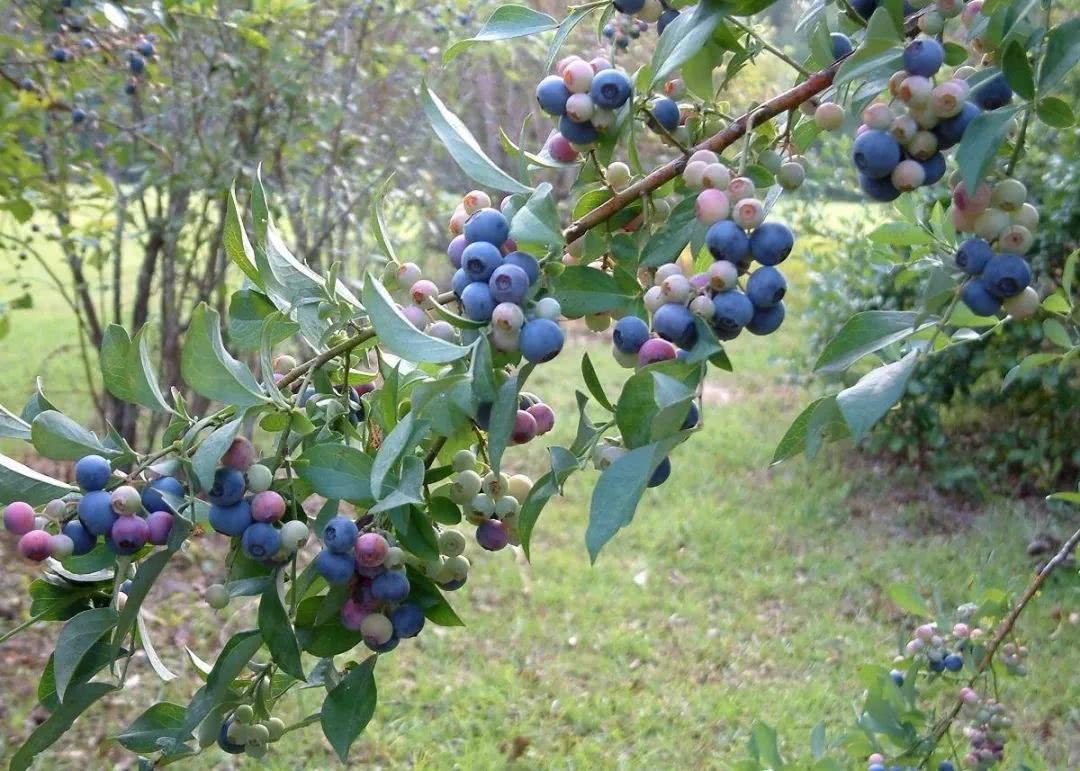
The shrub-like blueberry is very easy to grow. It produces delicate white or pink flowers in spring and is very ornamental, and it also has leaves that change colour. In autumn the leaves of the blueberry turn striking red or chestnut, making the blueberry even more ornamental, and it can even be used as a hedge decoration.
The picture above shows rabbiteye blueberry
Which blueberry variety is suitable for growing where you are? This depends entirely on the climate conditions you live in. Gardeners in the southern subtropical regions should of course choose rabbiteye blueberry, the variety in the picture above, because its plants are relatively tall and it has a strong tolerance to heat and humidity. Although its cold hardiness is poor, that is exactly the advantage of the south, so friends south of the Yangtze River can consider it.
Friends in the north can choose lowbush blueberry and highbush blueberry. Once these blueberries are broken down into categories, there are very many varieties to choose from, and their flavour is better than that of the rabbiteye blueberry of the south. Growing some blueberries is really great: they taste sweet and also have anti-cancer and antioxidant effects.
The picture above shows lowbush blueberry
1. Climate conditions:
There is no way to change the climate conditions of your own living environment, which places high demands on variety selection. There are very few heat-tolerant blueberry varieties, while there are relatively many blueberries suited to the north temperate zone.
Most blueberries have good cold hardiness and can survive at more than 10 degrees below zero. However, beginners had best choose varieties with good resistance to pests and diseases, since blueberries do suffer from quite a lot of pests and diseases when cultivated. You can choose Baldwin and Legacy blueberries; they have strong resistance to pests and diseases and are suitable for beginners.
The picture above shows lowbush blueberry
2. Sunlight
Blueberries need a lot of light to grow. Although they can also grow in partial shade, it will affect fruiting. If you want higher yields, giving as much sunlight as possible every day is essential.
When growing them in a sunny position, you must also avoid excessive drought. This is very crucial, and another key point is to pay attention to maintaining the pH of the soil.
When planting blueberries, watering and sunlight are both crucial in the first year. During dry periods you need to replenish water in time. The root systems of most blueberries are relatively shallow, so long-term drought will not do.
The picture above shows lowbush blueberry
3. Tips for choosing soil
Before cultivating blueberries, you must test the pH value of the soil. The soil pH for growing blueberries is best kept between 4 and 5.5.
If the soil is too alkaline, you need to mix in an appropriate amount of sulfur powder to lower the soil pH, or add enough organic matter such as compost soil and peat soil, which can also improve its pH. Check the pH value every two to three years.
When cultivating blueberries, never use old soil or old pots, to avoid infection by fungal diseases.
The picture above shows highbush blueberry
4. Cross-pollination
To ensure that blueberries have a sufficiently high yield, do not plant only one blueberry; make sure it can be cross-pollinated, that is, make sure you plant several. Although many blueberry varieties are self-pollinating, in order to increase their yield and fruit size you should plant one or two more.
I rather suggest planting multiple varieties, which can extend the flowering and fruiting period, allow continuous pollination, and help you get more and more delicious fruit.
The picture above shows highbush blueberry
5. Watch out for birds
Before the blueberries are ready to ripen, birds will eat most of your fruit. Most small birds are very fond of berries like blueberries.
To protect these small berries, you need to put bird netting over each blueberry. It is best to install some removable frames and then put the bird netting over them.
The picture above shows rabbiteye blueberry
6. Pruning
Proper pruning of blueberries is also very necessary, as this can increase the yield of blueberries and make the berries grow larger. The best time to prune is in late winter, specifically preferably after the frost is about to end.
You can prune once every two to three years. For some blueberries that are very short or not old enough, do not cut too much; their small branches need about two years of growth before they can fruit again, so be careful not to prune too severely.
Once the blueberry plant is about 3 years old, you can cut the higher branches. After the blueberry has grown for 5 to 6 years, there are more old branches and the yield begins to decline, so you need to cut off some old branches.
When pruning, you should also cut off all old branches, dead branches, diseased leaves and diseased branches. Some crossing or overly numerous branches should also be pruned to maintain ventilation and light penetration, otherwise they are prone to fungal diseases. Pruning also requires skill.
As long as you master the above 6 tips for caring for blueberries, you will basically be able to grow blueberry shrubs that bear fruit year after year.