Growing jasmine in summer: full sun is the key to repeated blooming
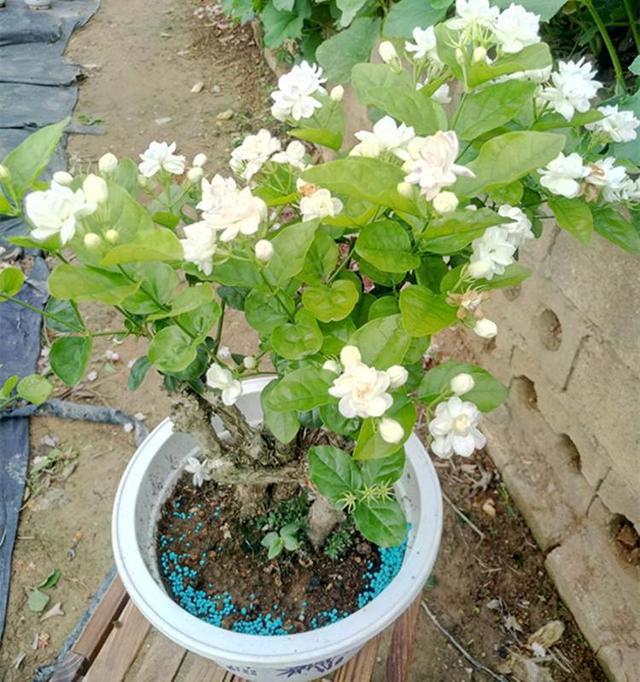
Everyone says jasmine "can't be killed by sun," and fellow gardeners really shouldn't doubt it. Jasmine indeed blooms even better the more it is exposed to sun. So in summer, for those growing jasmine, master one word - "sun" - and jasmine will bloom multiple times.
Fellow gardeners, when caring for jasmine normally, you can place jasmine on a west-facing or south-facing balcony for management, with a south-facing balcony giving the best cultivation results. During its vigorous growth stage, it is best to place jasmine in full sun. If conditions do not allow it, then at least ensure 4 hours of direct sunlight each day. In summer, keep the environment properly ventilated. Only this way can it bloom abundantly.
In addition, jasmine likes strong light, so it is best to ensure full sun. Even at noon in midsummer, placing it under direct sunlight will actually allow it to grow more robustly. It should not be placed in a shaded environment, otherwise the plant grows slowly and is reluctant to bloom. Ensuring environmental ventilation is very beneficial for jasmine's growth.
Jasmine likes high temperatures, so in summer it is not afraid of sun or heat. However, it is not cold-tolerant. It grows well within a temperature range of 20C~30°C, and the overwintering temperature should not be lower than 0C.
For potted jasmine, it is suitable to use sandy loam rich in humus as the growing medium. If fellow gardeners have the conditions, the potting soil can be made from leaf mold, fine sand, and garden soil at a volume ratio of 1:1:1. Jasmine plants are moderate in height and grow slowly, so a medium-sized flowerpot is usually chosen for planting, though a large flowerpot can also be used.
Jasmine likes a moist soil environment, but if watered too much during the flowering period, it is not beneficial for blooming. In winter and spring, the soil should be kept slightly moist and tending dry. In addition to applying about 25 grams of dried fish heads and the like at the bottom of the flowerpot as base fertilizer when planting, during the vigorous growth stage a dilute organic liquid fertilizer should also be applied once every 10 days. Jasmine likes heavy feeding, and under conditions of sufficient fertilizer it grows rapidly.
In balcony cultivation, jasmine is prone to chlorosis. This disease is mainly caused by iron deficiency, and fellow gardeners should regularly apply some ferrous sulfate solution to prevent and treat it. In addition, jasmine is also susceptible to scale insect infestation, which can be eliminated by manual scraping. It is best to repot large plants over two years old once every year in March of spring.
Jasmine is a perennial plant and the plant is not easy to age. Its best ornamental period can reach 3~5 years after the seedlings are planted, or even longer. Without repotting, continuous cultivation should not exceed 2 years, otherwise the plant's ornamental effect will be affected.
Image from fellow gardener: Amu by the River