These plants are best avoided - you will regret growing them, and once they take over, you will not even be able to give them away.
Plants have now found their way into countless homes. Some people grow them for the flowers, some for the leaves, and some for the shape, so everyone ends up with a few pots according to their own tastes. But these plants are best avoided - once you grow them, they become a hassle, and the moment they fill their pot, you will not even be able to give them away.
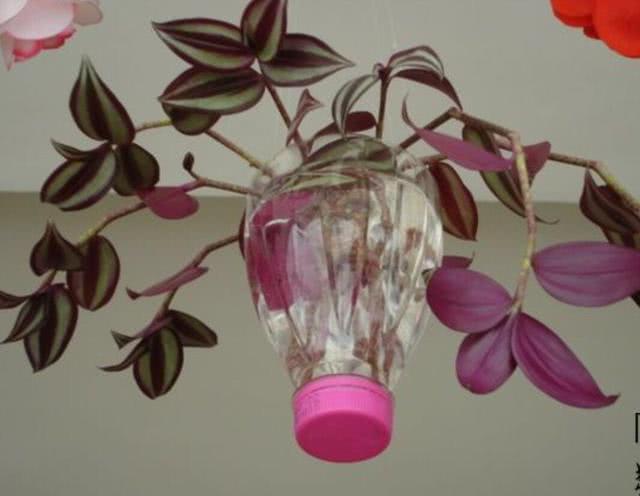
Tradescantia zebrina (inch plant): The leaf color is beautiful, and the leaves are small and delicate, very cute. It can be hung up without taking up space, and it grows both in water and in soil. It is not demanding about soil, and everyday care is simple. It likes a semi-shaded, humid environment. In summer, water once a day; in winter, just water when the soil is dry. It is a plant that grows well even with rough, minimal care. It propagates quickly, and its biggest trait is that it fills its pot before you even realize it. It can also absorb formaldehyde, has a strong ability to resist pollution, can trap indoor dust, and keeps the air fresh.
Aptenia cordifolia (heartleaf ice plant): The leaves are thick and fleshy, and the leaf color is emerald green; the flowers bloom at the tips of the branches and are rose red. Aptenia cordifolia likes sunlight and suits a dry, well-ventilated environment. It fears high temperatures. During the growing season it needs plenty of water; in winter, water when the soil looks dry, giving one thorough watering. It is not demanding about soil and grows well in well-drained sandy soil. It propagates extremely quickly - cut off a stem, stick it in the soil, and it will live. It also has the ability to absorb formaldehyde.
Goldfish plant hanging basket: The leaves are emerald green, and the flower shape is beautiful. Care is simple; it likes sunlight and also tolerates semi-shade, and it is fairly cold-tolerant. In everyday care, keep the potting soil moist, but do not water too much, as too much will cause the roots to rot. It suits fertile, loose, well-drained soil. The goldfish plant has strong resistance to hydrogen chloride and can help purify the air.
Ivy (English ivy): Evergreen all year round, with maple-leaf-shaped leaves, and long trailing vines that are quite distinctive, making it very suitable for shaping. Ivy has strong vitality and is cold-tolerant, making it a very easy plant to grow. It suits growing in weak light. In summer, keep the potting soil moist and mist the leaves often; in winter, water once every 3-4 days. It is not demanding about soil, and its biggest traits are that it is easy to grow, grows fast, and propagates easily - just cut off a branch and stick it in moist soil and it will live. Ivy is the champion of formaldehyde absorption and can also effectively suppress nicotine. The scent it gives off has antibacterial and sterilizing effects, and the whole plant also has medicinal properties. Keeping a pot at home is beneficial and harmless.
String of pearls (Senecio rowleyanus): Also called "Buddha beads," its little emerald green beads are especially cute, and it also helps purify indoor air and has a certain ability to absorb formaldehyde. Buddha beads are very easy to grow; they like semi-shade and do fine in diffused light. In summer they must not be exposed to strong sun, so place them in a cool, ventilated spot. The principle for watering is "water when dry, dry out between waterings," and it is better to keep them dry than wet. Choose soil with good air permeability. Buddha beads also propagate easily by stem cuttings - bury the part with aerial roots into the soil, and before long a new string of Buddha beads will grow. Looking at these little emerald green beads one by one, do you not just love them? What is rather willful about them is that they can grow as long as you want them to...
String of tears (Senecio herreianus): It looks somewhat like string of pearls, also made up of little beads one by one, but the beads of string of pearls are round, while the beads of string of tears look like teardrops, which is why it is called string of tears. It is also very cute, and placing it or hanging it indoors is a delight to the eye. String of tears likes soil rich in organic matter that is loose and fertile. It grows best in a warm environment with relatively high air humidity and strong diffused light. It likes semi-shade, and when watering, it is better to keep it dry than wet; when the weather is hot, you can mist the beads more often. Its propagation method is the same as that of string of pearls - one plant can produce many, the propagation method is simple, and it easily survives.
String of bananas (Curio radicans): It is a succulent plant that can be planted in a flowerpot or hung up. When small, they give a cute, adorable feeling; when grown, they give a majestic, spectacular presence. Succulents should not be watered too much - better dry than wet, with one thorough watering at a time. They also cannot be exposed to strong sun for long periods. Growing them is simple, propagation is easy, and a fallen leaf stuck into the soil will grow into a small string of bananas. String of bananas also fills its pot very easily.
String of coins (Crassula perforata): A succulent plant whose leaves look like ancient coins, which is why it is named string of coins. It is a very likable plant. The growing method is simple. String of coins likes light, but must not be in direct strong sunlight, and it suits a humid, on the dry side environment. It has strong drought tolerance, so do not water too much; the soil should be well-drained sandy soil. Propagation is done by beheading - stick the extra heads you cut off into the soil and they will survive. Keeping a pot of string of coins at home can be said to symbolize good fortune, and it also helps purify the air.
Rat tail cactus (Aporocactus flagelliformis): A cactus-family plant that looks very much like a rat's tail, bearing large red or pink flowers that are especially beautiful. It can be grown hanging, and a rat tail cactus that has filled its pot looks wonderful at home, offering value both for its flowers and its shape. What is more, the rat tail cactus also helps purify the air. The rat tail cactus likes light, tolerates blazing sun, and also tolerates semi-shade. During the growing period it needs plenty of water; in winter, reduce watering frequency. If you want the stems of the rat tail cactus to grow long and thick, you must prune diligently, removing the new small stems and overly dense branches, and then stick these small stems into moist soil, and after some days they will survive. Friends who have a rat tail cactus at home, look forward to your rat tail cactus filling its pot and blooming...
Boston fern (Nephrolepis exaltata): The leaf shape is like feathers, grass-green all year round, with a beautiful plant form. It can be placed in the bedroom, kitchen, or bathroom, and grown hanging so it does not take up space. The Boston fern can also purify the air, having a certain absorption effect on carbon dioxide, formaldehyde, toluene, and xylene, as well as the ability to remove dust. It likes bright diffused light and must not be exposed to strong sun. In summer, water once every 1-2 days; in autumn and winter, water when the soil is dry. It suits loose, fertile, well-drained sandy soil. It grows rapidly and fills its pot very easily.
Friends, seeing these plants that have filled their pots, do you not like them? Let me quietly tell you one thing: it is very easy for these plants to fill their pots. Watching them grow bit by bit and finally become a full pot - some like a waterfall, some like a treasure bowl, some like a sea of flowers - does it not feel very satisfying? I hope all the plants you grow can fill their pots...